• balsamic-glazed roasted butternut squash and brussel sprouts

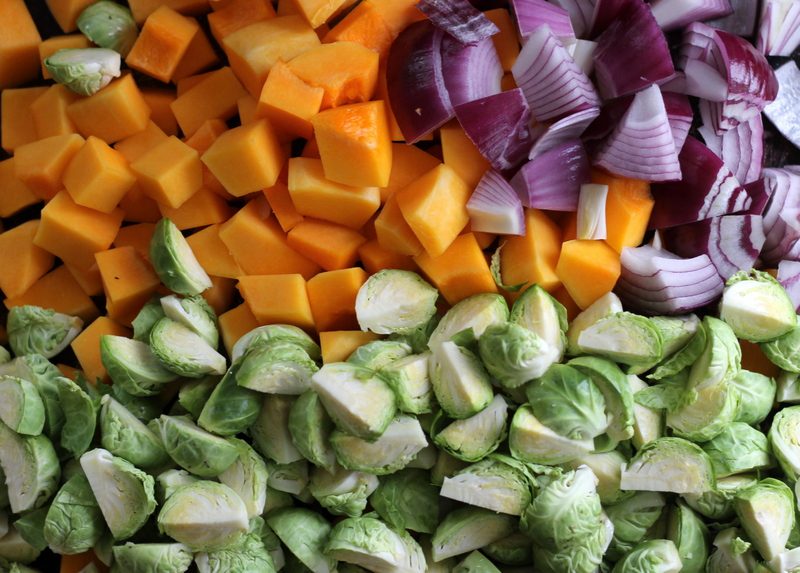
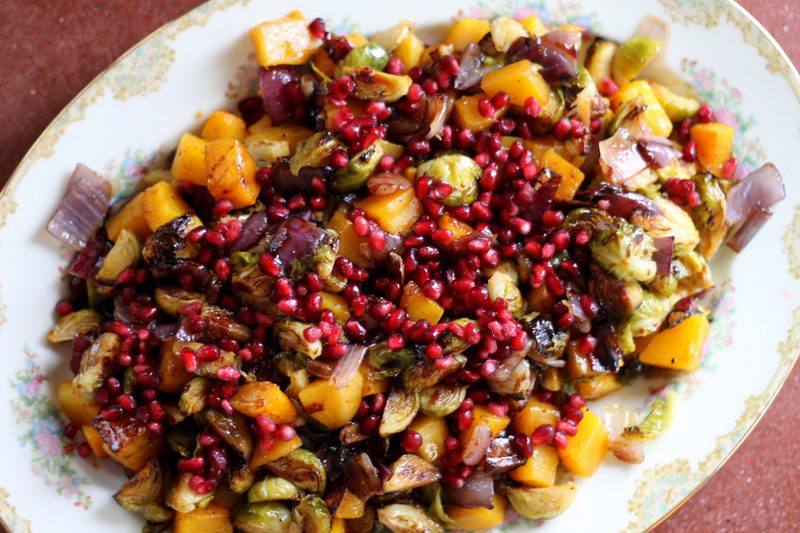
    Last week, my mom came over to finish the second season of Stranger Things with my older daughter and I. We ate Eggos to celebrate. Also, coffee and ginger cookies. And, in keeping with our snacky supper theme, the roasted brussel sprouts and butternut squash with a balsamic reduction glaze and pomegranate seeds that I had made as an experiment…and to counterbalance all the sugar. We — mostly my mother and I — ate all of it, every single little caramelized chunk of sweet butternut, blackened lacy piece of sprout, and juicy pomegranate jewel.

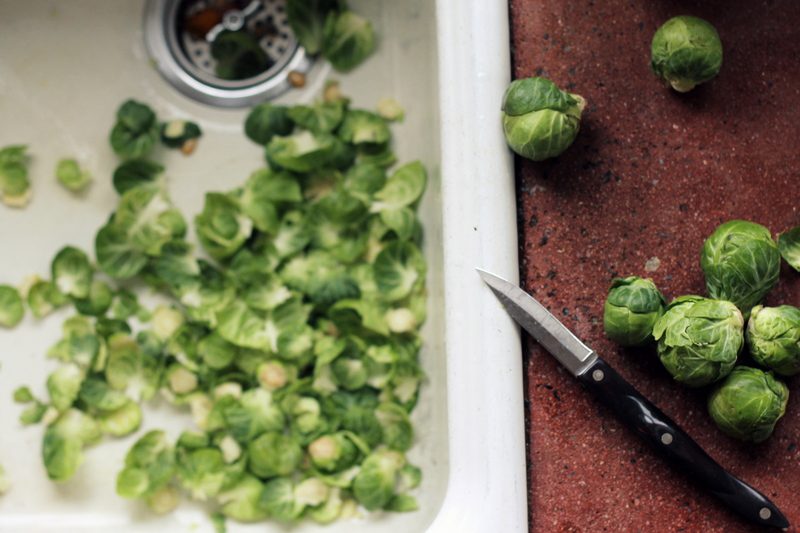
    I made it again Saturday afternoon, this time when there was still daylight so I could take photos. Some friends had popped in for a visit, so while we caught up on life, I chopped veggies and snapped photos.
    Once the veggies were roasted, I transferred them to a platter and dressed them prettily before snapping the last couple pictures and then scooping some into a bowl and plopping back down on my rocker.

    “Feel free to help yourself,” I said, gesturing at the platter with my fork, my mouth full.
    And they did.

    Balsamic-Glazed Roasted Butternut Squash and Brussel Sprouts
    Adapted from Ree Drummond of The Pioneer Woman.

    Leftovers are great, but I still think this is best served fresh from the oven, either warm or at room temperature.

    For the glaze, I used a fancy blackberry balsamic vinegar that my aunt gave me. Unfortunately, the fruity flavor dissipated with the cooking, so maybe just use regular balsamic and then add the fancier stuff at the end for a flavor boost?

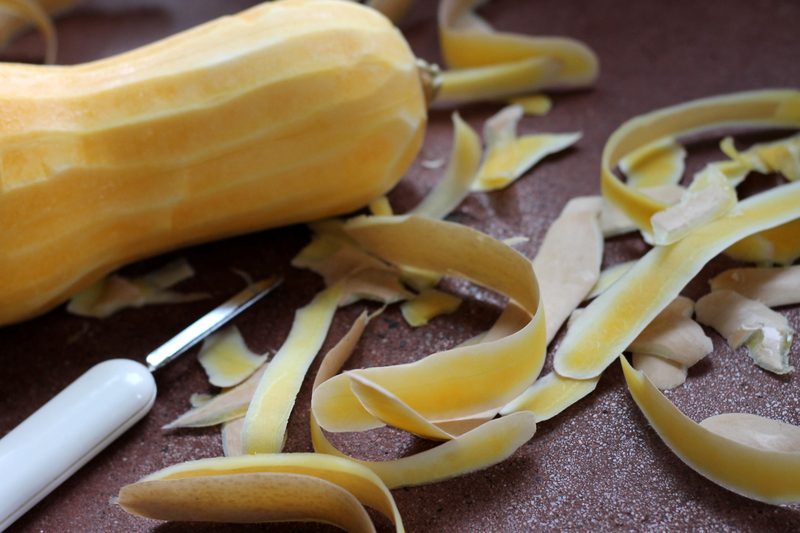
    1 butternut squash, peeled, seeded, and cubed
    2 pounds brussel sprouts, trimmed and quartered
    1-2 red onions, cut into chunks
    Olive oil
    ½ -1 teaspoon chili powder
    Salt and black pepper
    Balsamic vinegar reduction glaze (see below)
    ½ cup pomegranate seeds

    On a large, sided baking sheet, toss the onions, butternut, and brussel sprouts with plenty of olive oil. Sprinkle with chili powder and lots of salt and pepper. Bake at 450 degrees for 25-35 minutes, or until the butternut is fork-tender.

    While the veggies are roasting, make the reduction glaze…

    Balsamic vinegar reduction glaze:
    1 cup balsamic vinegar
    ¼ cup brown sugar

    Bring the vinegar and sugar to a boil over medium high heat and then simmer for 15 – 20 minutes. It’s easy for this glaze to take on a slight burned flavor, so take care not to cook for too long. Also, if you like (and I did), stir in a tablespoon of fresh balsamic at the end to sharpen the flavors.

    Transfer the roasted veggies to a serving platter and drizzle the glaze over top (you probably won’t use all of it). Scatter the pomegranate seeds over top and sprinkle with more freshly ground black pepper.

    This same time, years previous: 2016 book list, sex for all creation, old-fashioned sour cream cake donuts, 2014 book list, cheese ball, hot buttered rolls, bacon-jalapeno cheese ball, for my walls, spaghetti carbonara.
  • ludicrous mashed potatoes

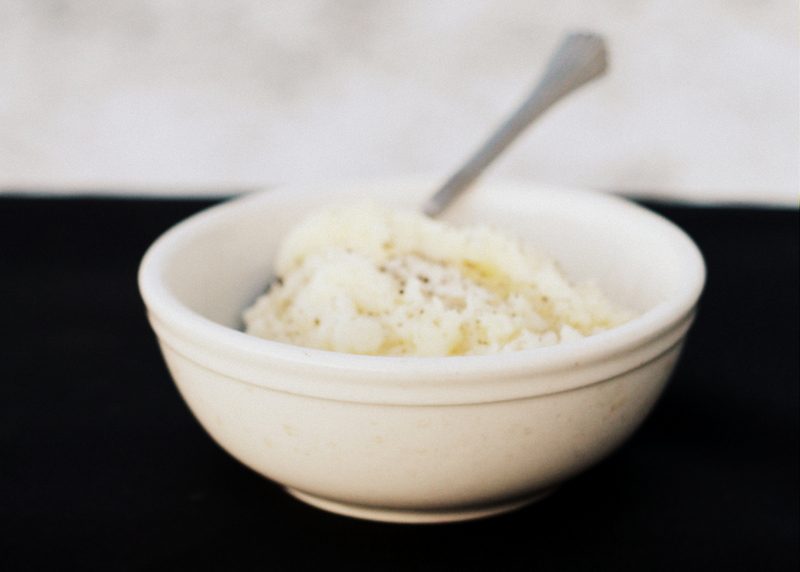
    My method for making mashed potatoes is so basic that I’ve never bothered with a recipe. I make them like my mom taught me: boiled, peeled potatoes whipped into creamy nirvana with a hand-held mixer (though ever since my mixer died I’ve been using either a ricer or a hand-held masher thingy) and then doused with hot milk, a generous blob of melted butter, and plenty of salt.

    But then I read in Bon Appetit (yes, while at my children’s allergy appointment — where do YOU do your Bon Appetit reading?) about the formula for perfect mashed potatoes: four pounds potatoes, two cups milk/cream, and two sticks butter. Which made me shake my head in disbelief: Two sticks of butter? That was insane!

    But then Ree posted a video of her favorite mashed potatoes — four pounds of potatoes, two sticks of butter (plus more for garnish), ½ cup each of heavy cream and half-and-half, and a half pound of cream cheese — and I threw up my hands in surrender. Alright already! I’LL TRY IT.

    I made the ludicrous mashed potatoes — for that is what I’ve taken to calling them — for our Thanksgiving Leftover Remix, bravely plopping the two sticks of butter and the block of cream cheese into the mashed potatoes and then baptizing the whole sinful mess with cream (though I used less than Ree did, self-righteous sniff). Despite all the chilly add-ins, the potatoes were surprisingly warm, but I transferred them into a baking pan and put them in a hot oven for about 15 minutes anyway, just to make sure they were good and hot.

    And the potatoes were utterly delicious. The cream cheese added a rich tang that everyone noticed but couldn’t identify — in other words, while the potatoes were satisfying on their own, they weren’t detractors from the rest of the meal — and everyone raved.

    And you know, in retrospect the whole butter/fat thing doesn’t seem that horrible. We ate less than half of the potatoes for dinner, and then the leftovers lasted another couple meals. When I consider how much butter we go through — at least a stick — when I serve baked potatoes, or all the fat I use to fry up hash browns, the fat-to-potato ratio seems downright reasonable.

    But when I explained my rational for pimping out my mashed potatoes to my mom, she didn’t buy it. “Everything can’t be rich, Jennifer,” she scolded. “You need some plain foods to counterbalance all the other food.”

    Well, sure, Mom. I’m all for ordinary, day-in-and-day-out beans and rice, granola, and green smoothies, but since when did we decide it was acceptable to serve baked potatoes with butter (and cheese and sour cream) but that mashed potatoes — their beaten and abused counterparts — must remain straightlaced and austere? It seems a bit arbitrary to me. Or maybe discriminatory.

    But I don’t know: Maybe Mom is right and we’d all be happier, healthier eaters if we mashed our potatoes with watery, two-percent milk and a moderate blob of butter? Maybe piling on all the dairy products is entirely uncalled for?

    But holding mashed potatoes back from realizing their full-potential hardly seems fair. And they taste so good! Besides, you’ll probably end up eating less in the long-run: with all the butter and cream cheese, they’re more satisfying and filling (each bite is deeply, purely, wholly mashed potato, not the shadow of a mashed potato longed for), so there’s less temptation to pig out.

    So tell me, who do you agree with: the puritanical mother or her mashed potato floozie of a daughter?

    Ludicrous Mashed Potatoes
    Adapted from the November 2017 issue of Bon Appetit and The Pioneer Woman.

    4 pounds russet potatoes, peeled and cut into large chunks
    2 sticks butter, plus extra for garnish, if desired
    8 ounces cream cheese
    ¼ cup each heavy whipping cream and half-and-half
    4 teaspoons salt, plus more to taste
    Black pepper

    Cover the potatoes with water and boil. Reduce the heat slightly and cook until fork tender. Drain well. Return to the cooking kettle and immediately mash with a handheld masher to release the steam.

    Add two sticks of butter, the cream cheese, the heavy cream, the half-and-half, and the salt. Continue mashing until all the ingredients are combined and the potatoes are creamy. Season to taste.

    Pour the potatoes into a greased 9 x 13 pan. If desired, dot with chunks of butter. (At this point the potatoes can be covered and refrigerated until later.) Bake at 350 degrees for 20-30 minutes until the potatoes are heated through and bubbling around the edges.

    This same time, years previous: the quotidian (12.19.16), brightening the dark, mini dramas, supper reading, the quotidian (12.16.13), how to have a dunging out date, toasty oatmeal muffins, the quotidian (12.19.11), chocolate-dipped candied orange rinds.

  • sour candied orange rinds

    This December is shaping up to be, oddly enough, extremely under-scheduled and deliciously relaxed. The calendar is entirely open with no trips and hardly any events, just day after day of ordinary living: hanging out with kids, lots and lots of writing, good books and movies, and, of course, plenty of baking.

    But not too much baking. So far just almond crescents, peppernuts, gingerbread, fig-and-anise pinwheels, and, my most recent sweet experiment, sour candy orange rinds.

    At first I called the candy Adult Sour Patch Orange Rinds, but then my friend was like, Where’s the alcohol? so I had to drop the “adult” from the title, which was probably good because, as my husband pointed out, that title made it sound like candy porn … or something similarly misleading and disturbing. So I’m back to just Sour Candied Orange Rinds. I guess it gets the point across.

    I discovered the recipe while flipping through a Bon Appetit magazine at my children’s allergy appointment. Sour gummy candy from fruit and citric acid? You could eat citric acid straight up and not die?? I was intrigued.

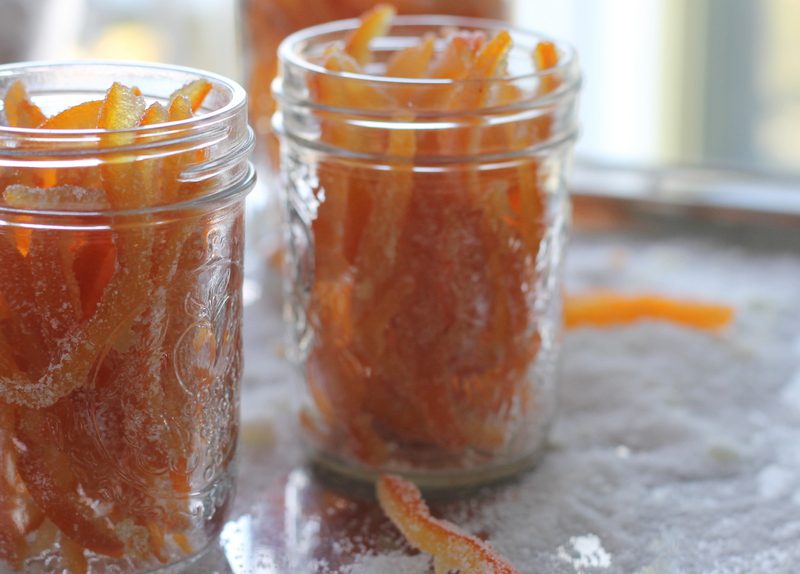
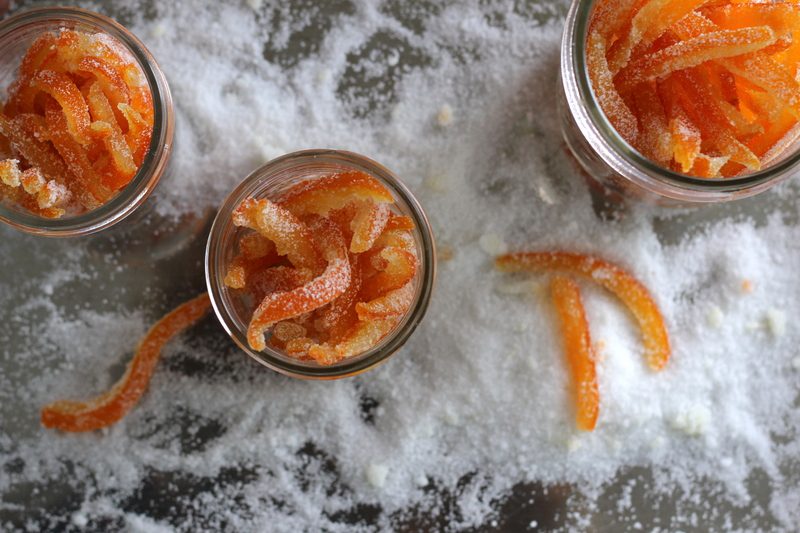
    The method is straightforward enough: triple-boil the rinds to reduce bitterness and then simmer in a sugar syrup before rolling the rinds in sugar that’s been mixed with citric acid. Commenters to the recipe online said that they had trouble with the fruit staying too soft. Me, too. Quick remedy: run the rinds in the dehydrator overnight. Then, because some of the sugar had softened, I tossed them with the leftover sugar-citric acid mix and popped them into jars.

    The candy makes for some serious lip puckering — think sour patch kids but with an edge — but no one has yet to let that stop them from gobbling it up! 

    Sour Candied Orange Rinds
    From the November 2017 issue of Bon Appetit.

    They say that, in place of the oranges, you can also use six limes (or lemons) or three grapefruit.

    Rinds of 4 navel oranges
    3 cups sugar, divided
    2 tablespoons citric acid

    Score the oranges into fourths and peel carefully. Slice the rinds into long, thin slivers.

    Boil four cups of water. Add the orange rinds and boil gently for five minutes. Drain. Repeat two more times, using fresh water each time.

    Return the (thrice-boiled and drained) rinds into the kettle and add two cups of sugar and two cups of water. Bring to a boil and simmer, stirring occasionally, for 30-40 minutes. Drain. Spread the rinds on a cooling rack for 15-30 minutes.

    In a shallow bowl, mix the remaining cup of sugar with the citric acid. Working in batches, toss the rinds in the sugar to coat. Reserve any remaining sugar-citric acid mixture.

    Dehydrate the rinds — either at room temp, or in an oven on the very lowest setting, or in a dehydrator — until no longer wet. Toss with the remaining sugar-citric acid mixture, if desired. Store in airtight glass jars.

    Note: Immediately after dehydrating, my orange rinds were slightly hard, but after a day or two in the glass jars, they had softened a little, turning wonderfully chewy.

    This same time, years previous: science lessons, the quotidian (12.14.15), the quotidian (12.15.14), constant vigilance!, sunrise, sunset, my elephant, crazier than usual, cracked wheat pancakes.