Remember that question I posed back in June about what to do with that useless corner in our room? Well, I have a confession. While it was true that for years we didn’t know what to do with that corner, we’d actually already made a decision and acted on it pre-blog post. I know, I know! So dishonest! But I wanted to hear your insights, and there was still the whole room to consider. Maybe someone would offer a solution we hadn’t yet considered and we could incorporate it? Still: misleading. Forgive me, pretty please?
So let me tell you what we did do: we (er, my husband) tore out the closet.
I suggested this solution when we came back from Puerto Rico, but then it took us the next three years to debate options and then actually do something. Without the closet, the little corner is still useless, but the room feels bigger. Now the window is a part of the room, and the corner is less pinched. And cleaner.
In place of the closet, my husband built a new, much bigger closet directly opposite.
For the first time, we actually have extra hanging space, and he even made shelves for (my) shoes. What extravagance!
I’m particularly fond of the little door knobbies:
The next two projects for the room upgrade are a) some sort of white, free-standing cabinet thingy to replace our dressers (I hate dressers), and b) an under-the-bed frame filled with deep, pull-out drawers for clothes and extra bedding. Once those are in place, then I’ll focus on creating a cozy reading nook with a soft chair and good lighting, and a writing table (though I am rather partial to the current setup…)
Beyond that, I have visions of a dramatically large, unkillable potted plant standing sentry in the empty corner (the aloe plant is temporary), some throw rugs (a sheepskin on the floor by my side of the bed, perhaps?), flowy curtains, a mirror somewhere, and art for the walls. Oh, and viney plants and twinkle lights [insert the Husband Eyeroll] atop the closet. The vibe I’m going for is sparse, spacious, white, calm, airy, but we’ll see. Might take us another decade or so….
My daughter is over at her grandparents, studying, and my younger son is working with my husband, so the house is quiet except for the whirring of the fans doing battle against this rash of hot humid weather. Summer’s last gasp, I hope. I’m so ready for crisp fall days, with cinnamon candles and apple pies and crunchy leaves scattered across the porch and dark nights and piles of library books.
My writing group was here this morning. I baked a blackberry cobbler to go with our coffee and served it with vanilla ice cream.
Yes, you read that correctly: vanilla ice cream at nine in the morning. There are worse ways to start a day, I think.
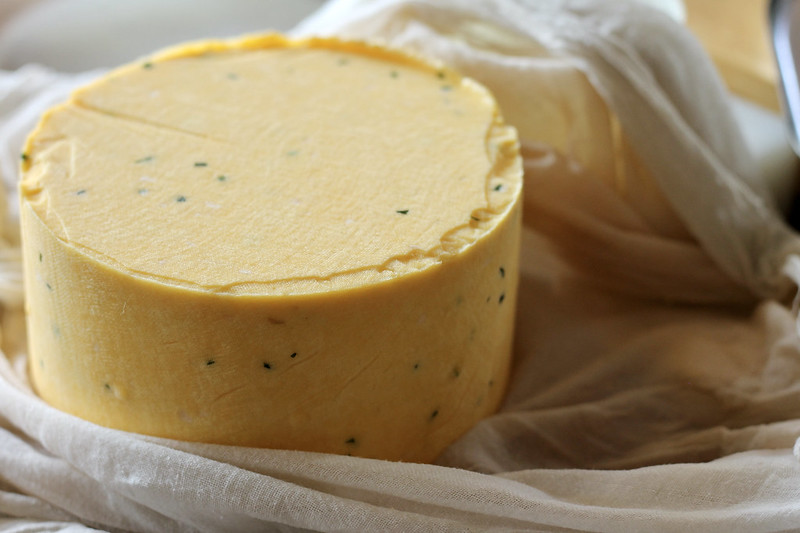
Right now I’m making a big batch of traditional cheddar. For me, a “big batch” equals four gallons of milk because I don’t have any pots large enough to go bigger. I don’t think my press would hold a cheese much bigger than that anyway.
Right now I’m waiting for the curds to settle to the bottom so I can strain off the whey. And then I’ll be cheddaring the cheese — turning the slabs every 15 minutes for two hours. Lots of good writing time, yes?
not me in this exact moment, but close enough
So while I cheddar and whey-t (hehe), let’s talk about cottage cheese! I’ve been wanting to tell you about this recipe for weeks now.
Cottage cheese has, I think, a bad reputation, probably because we always say chunky gross things — like baby vomit or weird mouth rashes — look like “cottage cheese.” Which isn’t really fair to cottage cheese because cottage cheese is actually quite luxuriously delicious. Plus, cottage cheese is just curds, like the curds in any other cheese, just unpressed.
I grew up eating it with sliced peaches, or with applesauce. Along with celery and bananas and Wonder bread with margarine, it was a treat. Oh, and I think my grandmother used to make a cottage cheese cake — like cheese cake but nubbly with bits of cottage cheese. We loved it.
As an adult, whenever I’m at a salad bar, I almost always get a scoop of the cottage cheese to go with my salad, but aside from that, I only purchase it when I want to make lasagna — cottage cheese makes next-level lasagna, trust me — or a breakfast bake. As a result, my family rarely gets to eat it so they don’t fully appreciate its glorious wonders. (This, along with their lack of appreciation for shoofly pie, is one of my griefs.) And now I have learned how to make a cottage cheese that I, at least, think is ridiculously delicious.
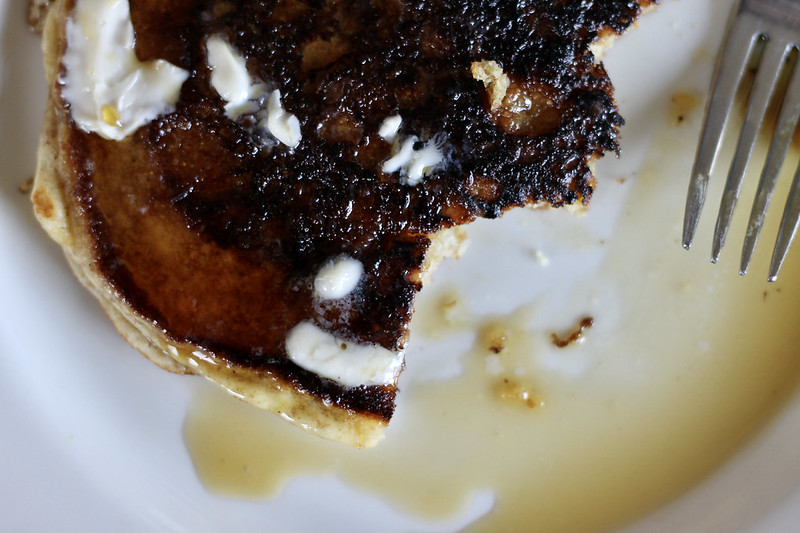
I don’t know what it is — the creamy saltiness, perhaps, or the gentle squeak of the curd, or the toothsome chew — but I can hardly control myself around the stuff. I eat it plain or stirred into pasta or in a potato-sausage-pepper bake or in quiche or on pancakes , in my new favorite way, on baked potatoes: butter and sour cream and cottage cheese.
I’m serious about my dairy.
Cottage cheese holds well in the fridge for at least a couple weeks. When I make a batch, I plan several meals around it so we get to enjoy it. (Stuffed shells are in our future.) Any leftovers get tucked in the freezer; even though it doesn’t freeze well — the curds lose their distinct textural brightness — when it’s baked in a lasagna or quiche, no one can really tell.
Cottage Cheese Adapted from 200 Easy Homemade Cheese Recipes by Debra Amrein-Boyes
For the mesophilic culture, I like flora danica. However, more often than not I use whey leftover from making another cheese (like quark) that uses mesophilic culture — ¼ cup whey per gallon.
This is a high-yield cheese! For 2 gallons of milk, I got 1 pound 10 ounces of curds; with the cream, it was over 2 pounds.
2 gallons milk ½ teaspoon mesophilic culture, like flora danica ½ teaspoon calcium chloride in ½ cup cool water (if using store-bought milk) ½ teaspoon liquid rennet diluted in ½ cup of cool water 1-2 cups heavy whipping cream salt, non-iodized, like Morton Coarse Kosher
Gently warm the milk to 70 degrees. Turn off the heat and sprinkle the mesophilic culture over the top. Wait two minutes for it to rehydrate, and then gently stir in the culture using an up-and-down motion and without breaking the surface. Gently mix in the calcium chloride (if using), and then the rennet. Place a lid on top and let sit at room temperature for 2 hours.
Cut into ½-inch cubes using a long knife. Let stand for 5 minutes for the curds to heal and then stir gently for a couple minutes.
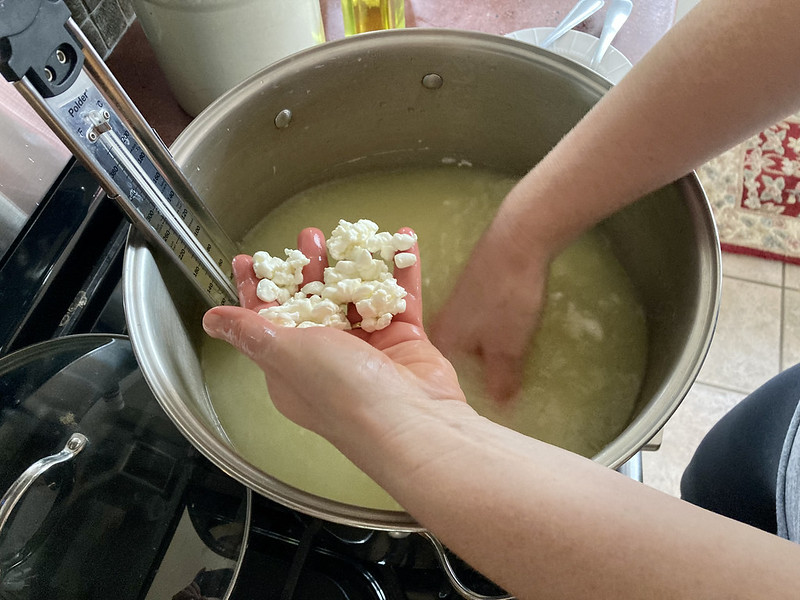
Place the kettle of curds over a smaller kettle half full of water — Voila! A double boiler! Slowly heat to 115 degrees over the course of 1 hour. I set one timer for an hour and use another timer to keep track of the stove-heating: 3 minutes with the heat on, 5 minutes with it off, or whatever works so that the heat raises about a degree every 3 or 4 minutes. (Heating too quickly makes the cheese bitter, or so I’ve read.) Stir continuously! While stirring — I like to use my hands — I search for big curds and slice them with a paring knife. Don’t squeeze the curds!
Once you’ve reached 115 degrees, drain the curd into a cheesecloth-lined strainer and rinse them under cold water to remove all the whey. Transfer the curds to a bowl. Sprinkle with 2 teaspoons of salt and add 1 cup of the cream and mix well. Let the curds sit at room temperature for 15 minutes to allow the curds to absorb the salt and cream. Add more cream (don’t be shy! the cream is what makes it good) and salt as needed. Even in the fridge, the curds will continue to absorb the cream, so after chilling for a day or two, you may want to add even more.