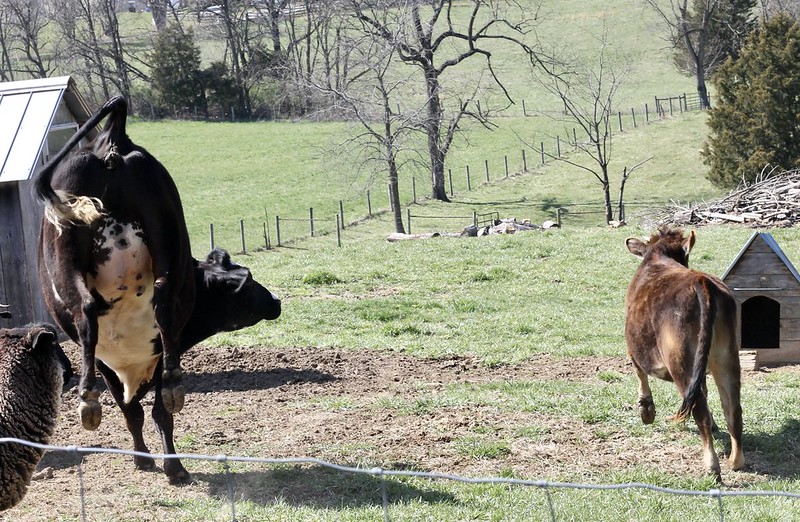
How long can you milk a cow?

Dairy farmers usually dry off cows at ten months to give them a short holiday before they have another calf, but since we’re not rebreeding Daisy, how long can we milk her? A year and a half? Three years? It’s been about a year since we started milking her, and now that it’s getting green outside, her production is only going up. At some points over the winter, she dropped as low as one and a half gallons (we calf share and only milk her in the mornings), but recently she’s been topping out at upwards of three and a half gallons.

The milk is changing color, too. All winter it was white white white, but now it’s creamier, and the flavor’s stronger — not bad, just there’s more of it. (I prefer a cleaner taste.)
Oh, and there’s cream!
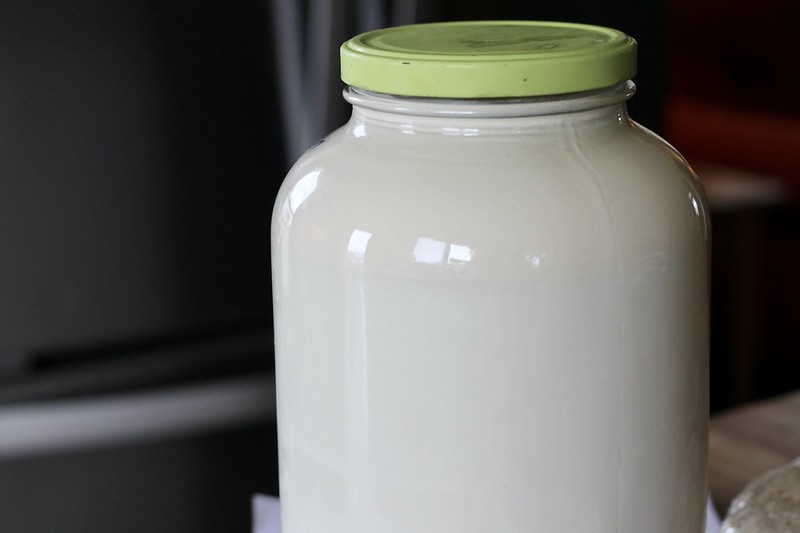
It’ll be interesting to see how the change in seasons impacts the cheeses.
Check out this Baby Jack I just made:
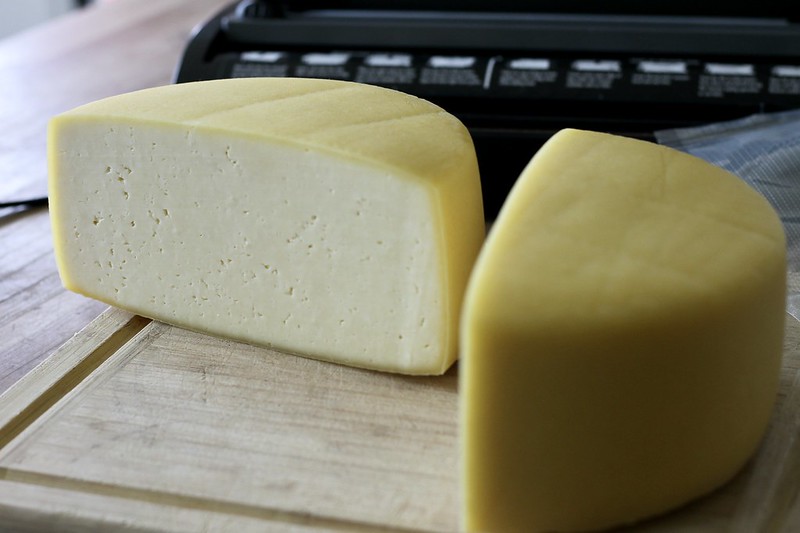
The inside is so pretty white, and the outside is all yellow — it almost looks like it’s been waxed. Pretty cool, huh?
***
I make yogurt once every 4-5 weeks — two gallons at a time and using just a scant quarter teaspoon of freeze-dried culture — and even after a month-plus, it’s perfectly delicious. I never knew I could store yogurt for that long!
Now that Daisy’s diet’s changed, the yogurt’s getting creamier, and there’s a sweet little cap of yellow cream.
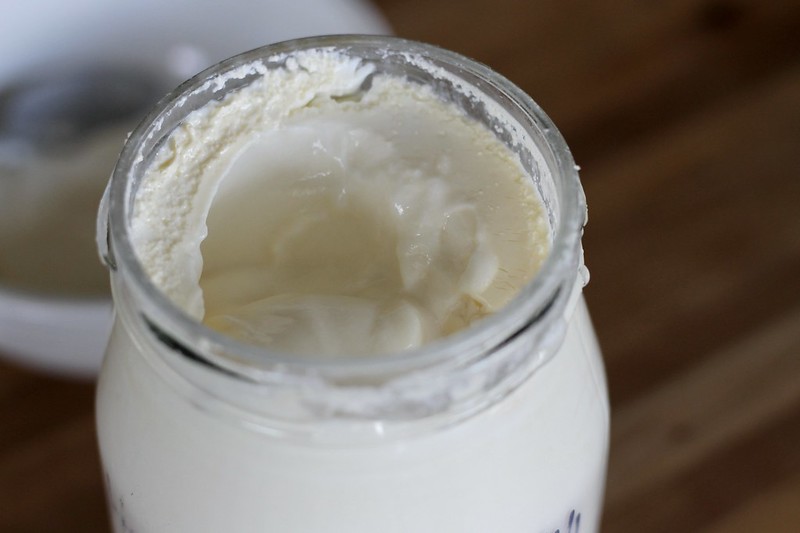
This last time, I made a bunch of honey vanilla yogurt, with an extra heavy pour of honey, and the final yogurt tastes like flowers. I can’t decide if this is a good thing or not, but maybe?
***
Last week we had another cheesemaking gathering. We’ve been taking turns going to each other’s houses, and this time we met at a home way out in the boonies. I had a delightful time touring the farm, meeting the cow, ogling the giant cheese cave, and, of course, eating cheese.

As we get to know each other, we’re becoming a lot more comfortable. In other words, we’re getting freer with our failures, and the wonky stinky cheeses are beginning to make an appearance. This last time there was a blue cheese that never went blue — so maybe like a white Stilton?
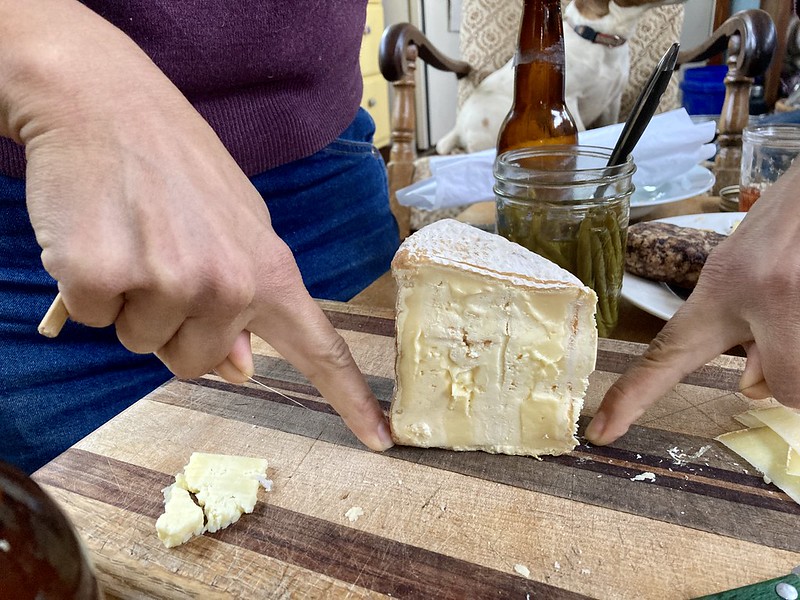
Whatever it was, I don’t think I ever smelled something that knock-your-socks-off strong. The rest of the group was tossing whole gobs of it back with crackers and chutney, but I only managed a microscopic nibble — thus revealing my utter lack of cheese-eating sophistication. There was another cheese that tasted like rotten lemons, but that one went to the dogs. I also got to sample a spiced gouda for the first time and was thrilled to discover that I liked it (since I have a large wheel of it aging in my cheezer): the flavors of Central America, but in a cheese, and now I can’t wait to add it to our taco salads and quesadillas.

We lingered for hours — there is a LOT to talk about when it comes to cheese — and at one point, we happened upon a random conversation about which cheeses melt and which ones don’t, which inspired an impromptu experiment involving various cheeses and a microwave. Back home again, I made a bunch of cheese “crackers” by baking slices of cheese in the oven until they were crispy-melty and golden brown.

Has anyone else experimented with this? More testing is necessary, but I think this could be a good addition to salads — like croutons, but cheese.
***
I finally took the plunge and used cultured buttermilk in place of mesophilic culture for a cheese.

If it works, then I can switch to buttermilk (instead of flora danica) and save a ton of money. (Cultures are expensive and I’ve yet to find a bulk supplier.)
***
In development: pepper jack!

I couldn’t find a recipe, so I drafted my own. I think it could use about 30 percent more red pepper. More salt, too. Nice texture, though!

(Oh, right. I did partially culture this one with buttermilk. First time I tasted the cheese, I thought I detected a slight buttermilk tang, but the second time I didn’t notice it, hmmm…..)
***
Coming soon: some exciting dairy-related developments.

Stay tuned!
This same time, years previous: the quotidian (4.5.21), the different kinds of meals, the quotidian (4.6.20), scatteredness, the quotidian (4.6.15), cup cheese, now.