Written on Saturday when it was 20 degrees outside and our driveway was a sheet of snow-ice. Today it’s supposed to reach 60, and I’m celebrating by grilling hot dogs for supper.
***
Quick question: how many of you have a tube (bottle? jar?) of harissa paste banging around your fridge? This is not a rhetorical question. I am seriously itching to know how many of you have preceded me into the world of harissa.
Because, up until a couple weeks ago, I’d never even tasted the stuff. I’d heard of it, though, since for years now, food writers have been going on and on and on about harissa-this and harissa-that. Finally, after reading one harissa recipe too many (a.k.a this one), I sprang for some harissa of my own, therefore successfully propelling myself into the inner circle of harissa-owning food snobs.

I HAVE ARRIVED.
The harissa was good, I decided — thick and smokey, with a pleasant whammy of heat — but not exactly earth shattering.
And then I made this pasta dish from the NYTimes (twice) and I’ve come to the begrudging conclusion that yes — sigh — harissa does indeed deserve a place in my kitchen, if for nothing else than to get squirted into this dish.

harissa poo
But first. This recipe is a little weird.
One: it calls for eight ounces of pasta to two-and-a-half pounds (!) of meat. The first time, I left the recipe as is, but it was, as I’d expected it’d be, too meaty. I like a higher pasta-to-meat ratio, please and thank you.

Two: it calls for smashed manicotti. Seriously? Couldn’t I just use noodles instead? Yes, perhaps, but I agree that there is something satisfyingly toothsome about the thick bits of fragmented manicotti. I’m sticking with it.
Three: the recipe was written unnecessarily complicatedly. I kept getting confused and doubling back.
Four: the specified large roasting pan isn’t something that’s found in every kitchen (and the only reason I have one is because my aunt gifted one to my mom who is, in turn, loaning it to me). Even though I used the roaster both times, I think the whole thing could be just as easily — and maybe more easily? — baked in a large Dutch oven.
Five: the ingredient list felt fussy. This most recent time, I unthinkingly skipped the onion and used a stalk of celery instead, and I never even knew my mistake until I sat down to write up the recipe. I also got sloppy with measurements — using a cup of tomato sauce in place of paste, a hard sharp cheddar in place of the Parm, a bowlful of canned tomatoes instead of fresh, more chicken broth, etc. Conclusion: the recipe is much more forgiving than one might think. Treat it like a formula.


Since I have a colon thing going on, I might as well continue…
A note about flavors: this dish is Italian soul food but with a North African kiss. It’s comfort food with a touch of exotic. It’s familiar enough to feel homey and safe, but with a little something special. You get the picture.

And regarding the process: With its slow, languid bake-time, this is The Perfect Dish to make on a blustery, painfully cold Saturday (IT’S SO COLD), but take heart, m’friends. Winter’s nearing an end. Soon enough I’ll be yammering on and on about rhubarb and asparagus, Icannotwait.
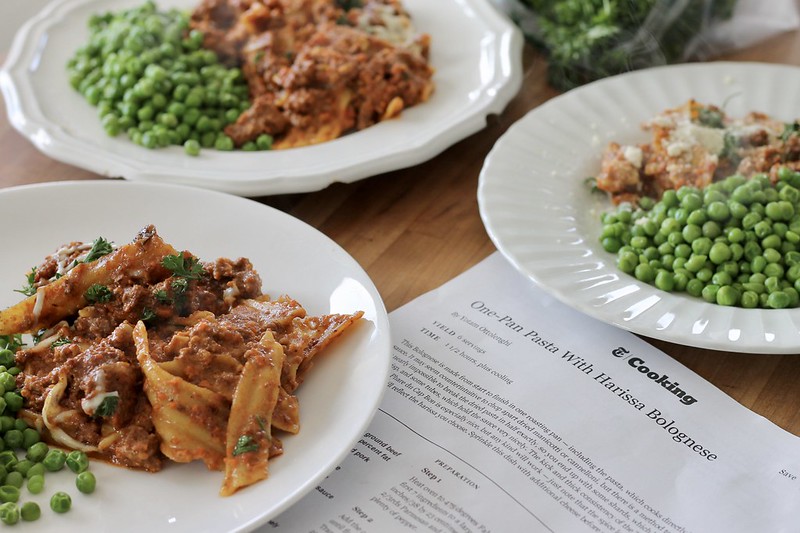
Baked Pasta With Harissa Bolognese
Adapted from the NYT Cooking.
The recipe calls for ¼ cup harissa paste. Three tablespoons was pushing my family’s comfort levels; two tablespoons was perfect.
My younger daughter said this would be good with beans, and I think she’s probably right. Actually, I can see the heart of this recipe (and its method) adapting to a wide range of ingredients: tossing in some lentils and kale and some cubes of sweet potato, or a can of white beans, or cracking in a few eggs a la shakshuka.
1-2 pound ground beef
olive oil
1 cup tomato sauce
2-4 tablespoons harissa paste
2 tablespoons Worcestershire sauce
1 tablespoon ground cumin
1 tablespoon ground coriander
2 cups of a mix of grated hard white cheese (Parmesan, cheddar, Pecorino, etc), divided
1¾ teaspoon salt
black pepper
2 cups chopped tomatoes with juice
1 carrot, peeled and chopped
1 small onion, peeled and chopped
4 cloves garlic, peeled and chopped
1 stalk celery, chopped
3-4 cups chicken broth
½ cup heavy cream
8 ounces manicotti, bashed to bits with a rolling pin
½ cup chopped fresh parsley
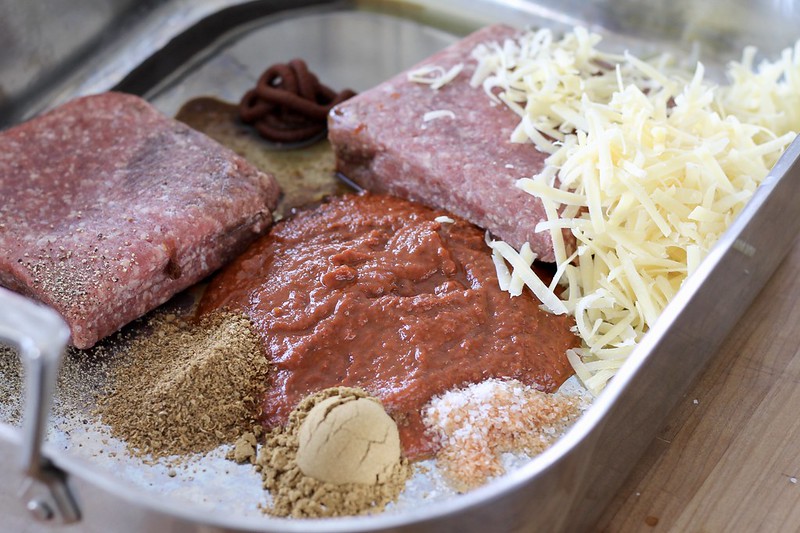
Into a roasting pan (or a large Dutch oven) dump the following: ground beef, a big drizzle of olive oil, the tomato sauce and harissa paste, the Worcestershire sauce, the cumin and coriander, the chopped tomatoes, a few grinds of black pepper, and one cup of the grated cheese.
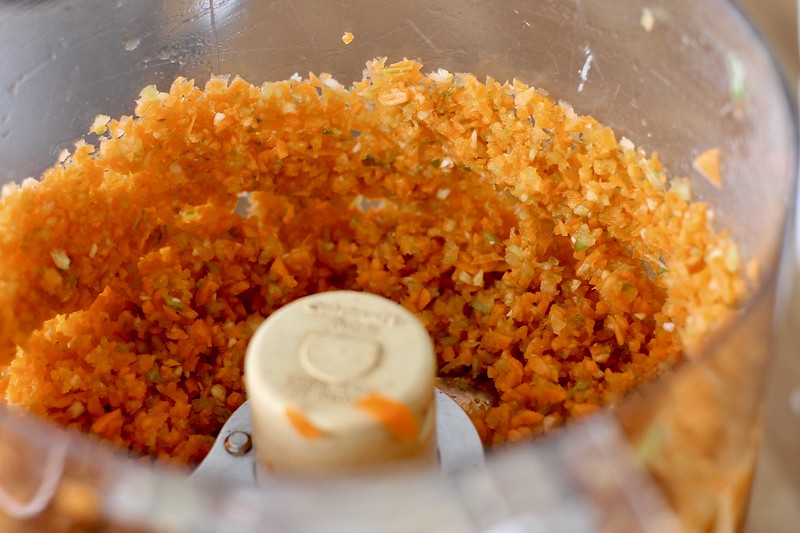
In a food processor, pulse the veggies — the carrot, onion, garlic, and celery (and I bet fresh fennel would go nicely here) — until finely ground. Add to the roasting pan.
Mix everything together roughly and pop into a 375 oven for 30 minutes, giving it a good stir every ten minutes or so, and breaking up the meat as you go.
Stir in the broth and heavy cream, and then add the pasta, pressing it down into the sauce to submerge it as much as possible. Bake another 30 minutes, stirring every ten minutes.
Sprinkle with most of the parsley and the remaining cheese, and drizzle a bit of olive oil on top. Return to the oven for another 5-10 minutes. Prior to serving, let rest at room temp for ten minutes or so to soak up the last of the liquid.
To finish, top with the last of the parsley and a grind of black pepper. Serve with more fresh Parm, if desired.
This same time, years previous: homemade pasta, steer sitting, the quotidian (2.23.15), Molly’s Marmalade cake, Grandma Baer’s caramel popcorn.


