• physical therapy

    A couple months after I pulled my hamstring, I’d done everything I knew to help myself heal — complete rest mixed with stretches mixed with incremental moderate exercise — but it still wasn’t getting better. Or it wasn’t getting better fast enough to suit me. 

    And then my knee flared up. At times, it was so painful that I had trouble sleeping, and for about a week I had to take the stairs like a toddler: one step at a time. I bought a knee brace and started wearing it during the day, both to provide support and slow me down.

    It was miserable.

    When I began worrying about irreparable damage — ground-down cartilage, shattered knee caps, crutches — I knew it was time for an expert to weigh in. I googled physical therapists, picked one, and went.

    Right away, they put my fears about my knee to rest. My injury was the hamstring, that was it. They barely even looked at my knee. Fix the hamstring, they said, and everything else would be fine. The peace of mind I got from that, right there, was absolutely worth the 150-dollar initial consult fee.

    To start, they did all the normal stuff like watching me walk and then testing my range of motion, and then they pressed on certain points on my legs — but not directly on the sore spots — to find the places where the fascia, sandwiched between muscle, had locked into, or fused with, the damaged muscle.

    Or something like that

    Here’s how I understand it. Think of a piece of raw chicken and how the skin slips back and forth over the meat. That’s how the fascia is supposed to move, but when there’s been an injury, the fascia sticks to the muscle and then the muscles don’t slide properly. 

    So what this particular physical therapy practice does (and it’s their specialty, apparently) is fascia work. At each session, they zeroed in on a couple stuck spots and then did deep tissue massage — five minutes or so per spot — which inflames the area, causing the blood to rush in, along with all sorts of other good, fight-the-stuck-fascia “things” which then loosens everything up and promotes healing. (Since the inflammation is good, anti-inflammatory meds during treatment are a no-no.) 

    The spots they chose to work on depended on where I was feeling pain, but often were in some other part of my body altogether. Like, when my hip started bothering me, they worked on my inner calf muscle and my lower back. When my foot acted up, they worked on the top of my foot between my toes. The therapist would first use a percussion tool to numb the area and then dig in with her elbow or knuckles. At first it would feel painful — or “nervy,” rather — but by the end it would feel about fifty percent less bad, or at least that was the goal. After that, they’d wrap the worked-on area in towels and a heating pad and leave me to bake for about 10 minutes. Once the timer dinged, we’d review the stretching exercises from the previous therapy session and learn new ones, and off I’d go.

    Gradually, I began running again. First, only a mile every other day, then two miles, and then finally back up to 3-4 miles four times a week. And I was religious about my twice-daily stretches. The whole routine took a ton of time — mornings I did the complete running and stretching work-up, it took almost a full two hours! — but I was determined to wring as much healing out of the appointments as I could. My leg never stopped hurting — it continued to feel heavy and clunky when running — but I could tell it was much improved, and I wasn’t having any knee problems at all. 

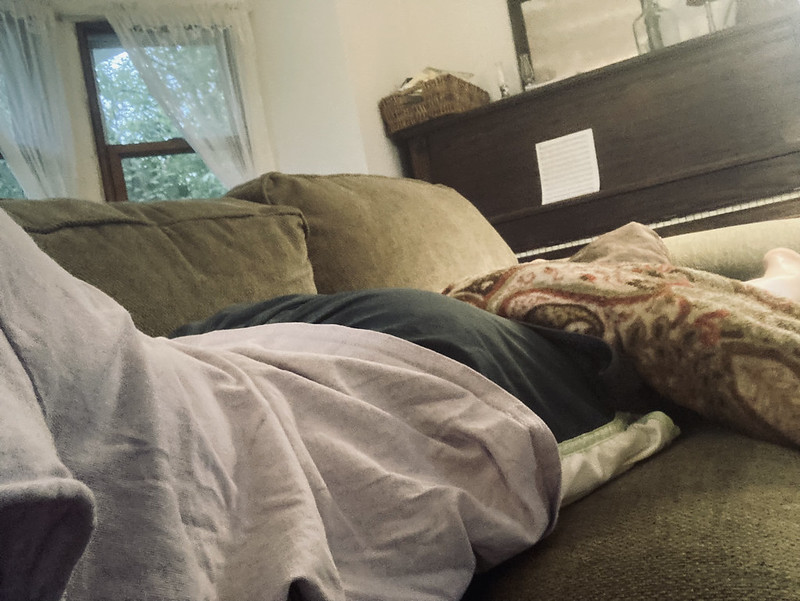
    And then, because I felt so much better, I canceled this week’s appointment and played Ultimate, the first time since the injury. For two hours I played — gingerly, slowly, carefully — and it felt wonderful, but even so, it aggravated my hamstring enough that I’ve had to lay off the running. [hangs head] I’ve doubled down on the stretching exercises, and now — because at a hundred dollars a pop, I feel like we should be able to do much of the therapy at home — each evening my husband works on my leg: I locate trigger points and set a timer, and he reads a book while mindlessly elbowing me in the leg. He even gives me a heat treatment afterward! (Maybe we should open our own PT business?) 
    Seriously, though. How long does it take for a hamstring injury to heal? And do they ever completely heal? This whole process has been so long and drawn out, it’s beginning to make me wonder….

    This same time, years previous: the quotidian (8.17.20), a bloody tale, passion fruit juice, the Peru post, a new room, in progress, kale tabbouleh with cucumbers and tomatoes, starfruit smoothie, garlicky spaghetti sauce.
  • chocolate milk

    To me, chocolate milk has always felt excessive. Or at least redundant. Cold, plain milk, sweet and filling, was treat enough. (To be clear: I wasn’t opposed to adding chocolate. Just, then it became a dessert food, one that was best sipped hot and right before retiring to one’s bed chambers for the night.)

    But then we got a cow and suddenly I needed ways to encourage milk consumption.

    And then I noticed that all the dairy-minded folk I’d started following talked about making chocolate milk like it was an ordinary thing, and I was like, Wait. Why not? We dress up all our other regular food — jelly on toast, brown sugar on oatmeal, coconut cream in smoothies — so why not milk? A daily glass or two of (not-overly) chocolatey milk isn’t that terrible. Besides, raw milk is packed with nutrition, so if we’re drinking more of it, yay! 

    The way these people made their chocolate milk, though, I had my doubts. They all whizzed the dry cocoa-sugar mix straight into the milk. Without first cooking the raw cocoa, wouldn’t it be grainy? So I tried it and well, yes, my instincts had been correct. The drink was good, but I wasn’t much rocking the powdery vibes. So then I tried it with confectioner’s sugar instead of granulated sugar, like other recipes called for — maybe the sugar was the problem, not the cocoa — but no. Of course not. Sugar dissolves.

    And then I happened upon a New York Times recipe that called for boiling the dark cocoa, sugar, and water slurry after which more chocolate — this time unsweetened chunks — and vanilla and salt were added. 

    Now this, I knew, would work.

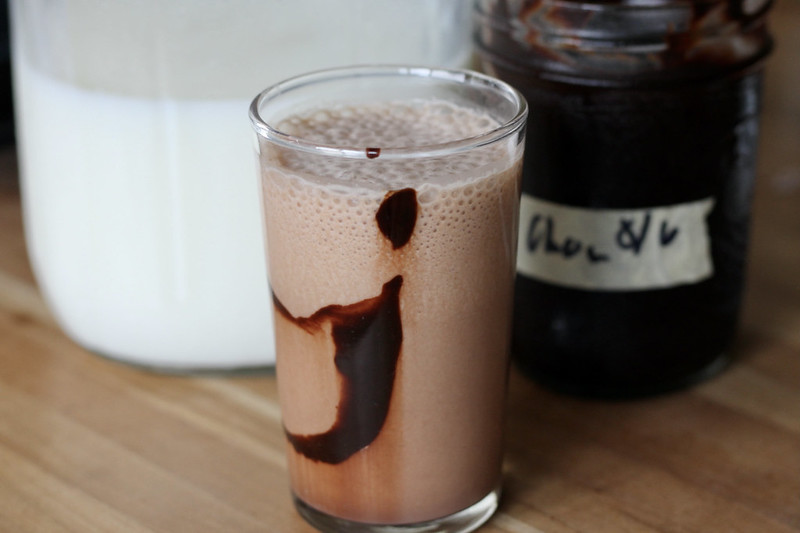
    The resulting sauce was so dark it was nearly black and so strong it almost tasted alcoholic. In the fridge, it sets up into a thick fudge. Prior to stirring it into the milk, I had to melt it a little. 

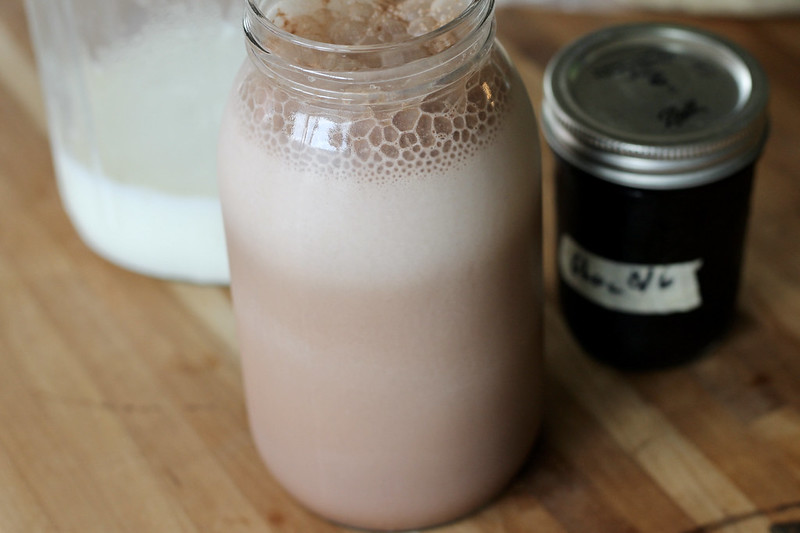
    These days, I’m mixing up a half gallon of lightly chocolate-ed milk at a time for daily consumption. I first make a concentrate — a couple cups of milk in the blender with a scoop or two of chocolate sauce. Once whizzed, I pour the chocolate milk concentrate back to the big jar of milk. 

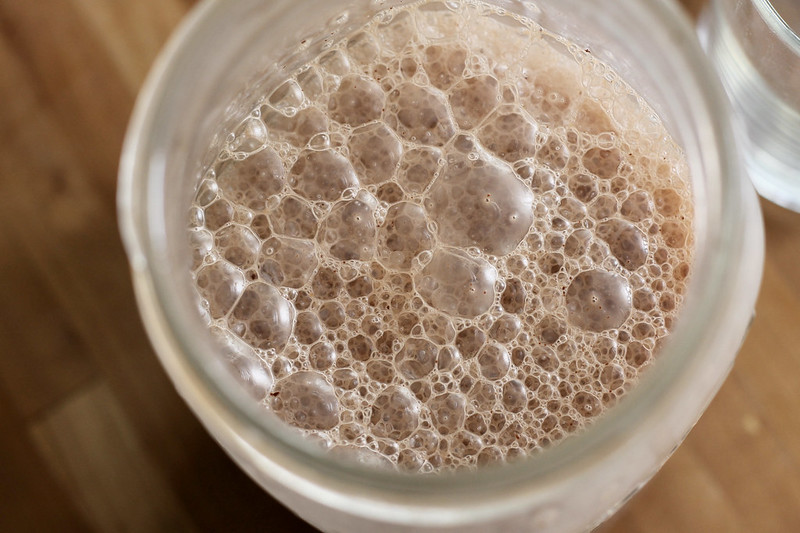
    Immediately after blending, it’s pale in color and big in volume.

    After it sits for a bit, it settles and darkens.

    For treats, or for company, I make it extra strong, and for my husband and me, I’ve been known to whirl it up with vanilla ice cream and Bailey’s. For sipping, right before bed, mm-mm-mmm.

    Chocolate Milk
    Adapted from NYTimes Cooking.

    I just realized the recipe says this is to be mixed with 8 cups of milk. Eight cups!! That’s some seriously rich chocolate milk! I still have some sauce left in the fridge and I bet we’ve already made close to a gallon of chocolate milk. 

    ¾ cups sugar
    ¼ teaspoon salt
    ½ cup unsweetened dark cocoa powder
    ½ cup water
    1 ounce unsweetened chocolate, chopped
    1 teaspoon vanilla

    In a saucepan, whisk together the cocoa powder, sugar, and salt. Add the water and bring to a rolling boil over medium high heat, whisking steadily. Remove from heat and whisk in the chopped chocolate and vanilla. Once it’s completely smooth, pour the sauce into a jar, cool to room temp, and store in the fridge.

    To make chocolate milk: using a blender (stand or hand-held) or whisk, blend the chocolate syrup into the milk, using as much, or as little, as you like.

    This same time, years previous: a few good things, the quotidian (8.12.19), riding paso fino, fresh peach pie, tomato bread pudding with caramelized onions and sausage, the Murch collision of 2015, spaghetti with vodka cream tomato sauce, the quotidian (8.12.13), there’s that.

  • the quotidian (8.9.21)

    Quotidian: daily, usual or customary;
    everyday; ordinary; commonplace

    Mozzarella: Ta-da!

    Note to self: add mozzarella at the last minute; too long in the vinegar and it develops the texture of car tire.

    Fried farmers.

    Self serve: the kid dished himself some vegetables.

    Homemade layers: all the way, baby!

    Artificial: because I’m no purist.

    In the bakery this week: nectarine blueberry crumble.

    Mystery photo: you title it.

    Nice idea but no fans here.

    Polished.

    Big Little Bro.

    Growing is so exhausting: poor guy struggles to stay vertical.

    Word play. (Related: our latest read-aloud.)

    Action.

    Production line.

    Dishing up.

    Company: the afterglow.

    This same time, years previous: black pepper tofu and eggplant, gazpacho, a week of outfits, Mondays, Murch mania 2017, the quotidian (8.8.16), best banana bread, crunchy dill pickles.