• chocolate milk

    To me, chocolate milk has always felt excessive. Or at least redundant. Cold, plain milk, sweet and filling, was treat enough. (To be clear: I wasn’t opposed to adding chocolate. Just, then it became a dessert food, one that was best sipped hot and right before retiring to one’s bed chambers for the night.)

    But then we got a cow and suddenly I needed ways to encourage milk consumption.
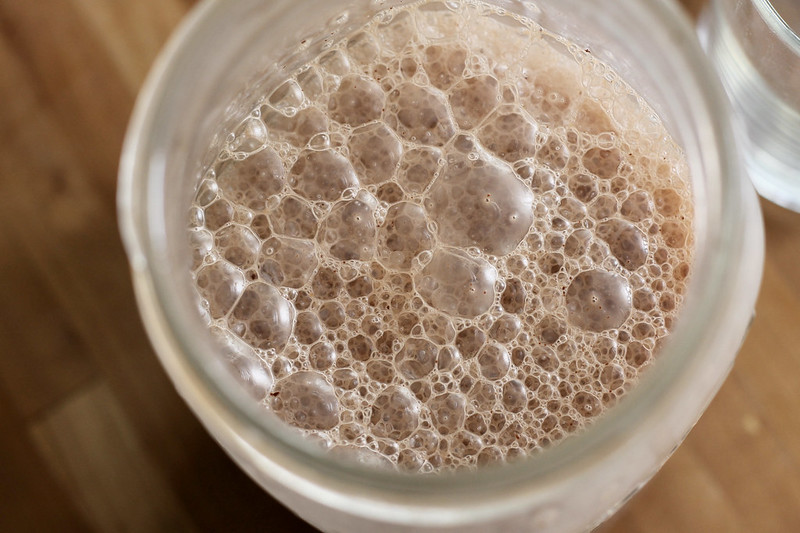
    And then I noticed that all the dairy-minded folk I’d started following talked about making chocolate milk like it was an ordinary thing, and I was like, Wait. Why not? We dress up all our other regular food — jelly on toast, brown sugar on oatmeal, coconut cream in smoothies — so why not milk? A daily glass or two of (not-overly) chocolatey milk isn’t that terrible. Besides, raw milk is packed with nutrition, so if we’re drinking more of it, yay! 

    The way these people made their chocolate milk, though, I had my doubts. They all whizzed the dry cocoa-sugar mix straight into the milk. Without first cooking the raw cocoa, wouldn’t it be grainy? So I tried it and well, yes, my instincts had been correct. The drink was good, but I wasn’t much rocking the powdery vibes. So then I tried it with confectioner’s sugar instead of granulated sugar, like other recipes called for — maybe the sugar was the problem, not the cocoa — but no. Of course not. Sugar dissolves.
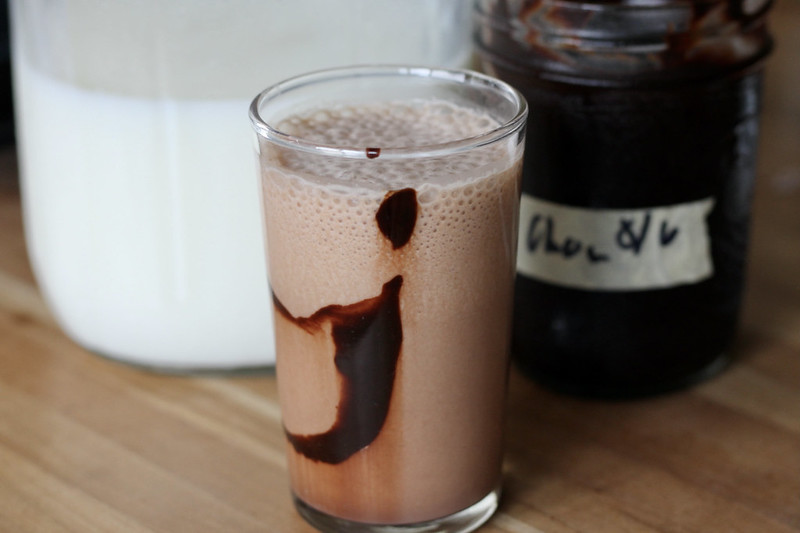
    And then I happened upon a New York Times recipe that called for boiling the dark cocoa, sugar, and water slurry after which more chocolate — this time unsweetened chunks — and vanilla and salt were added. 

    Now this, I knew, would work.

    The resulting sauce was so dark it was nearly black and so strong it almost tasted alcoholic. In the fridge, it sets up into a thick fudge. Prior to stirring it into the milk, I had to melt it a little. 

    These days, I’m mixing up a half gallon of lightly chocolate-ed milk at a time for daily consumption. I first make a concentrate — a couple cups of milk in the blender with a scoop or two of chocolate sauce. Once whizzed, I pour the chocolate milk concentrate back to the big jar of milk. 
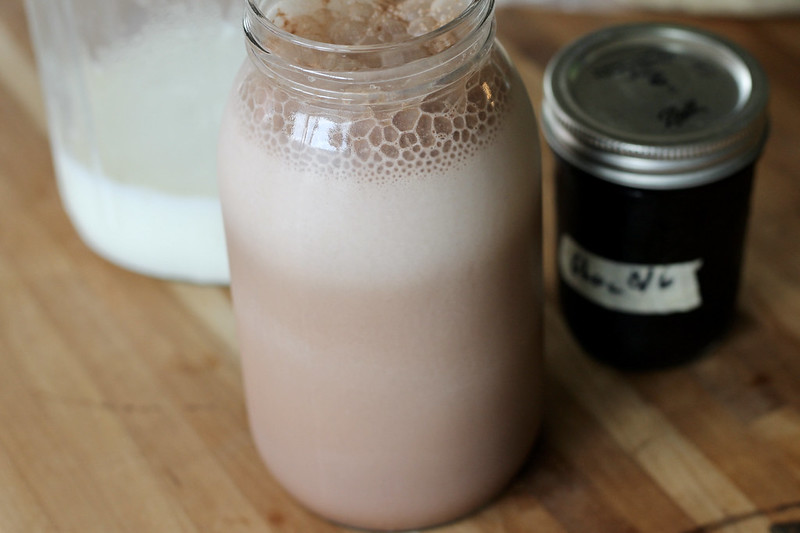
    Immediately after blending, it’s pale in color and big in volume.

    After it sits for a bit, it settles and darkens.

    For treats, or for company, I make it extra strong, and for my husband and me, I’ve been known to whirl it up with vanilla ice cream and Bailey’s. For sipping, right before bed, mm-mm-mmm.

    Chocolate Milk
    Adapted from NYTimes Cooking.

    I just realized the recipe says this is to be mixed with 8 cups of milk. Eight cups!! That’s some seriously rich chocolate milk! I still have some sauce left in the fridge and I bet we’ve already made close to a gallon of chocolate milk. 

    ¾ cups sugar
    ¼ teaspoon salt
    ½ cup unsweetened dark cocoa powder
    ½ cup water
    1 ounce unsweetened chocolate, chopped
    1 teaspoon vanilla

    In a saucepan, whisk together the cocoa powder, sugar, and salt. Add the water and bring to a rolling boil over medium high heat, whisking steadily. Remove from heat and whisk in the chopped chocolate and vanilla. Once it’s completely smooth, pour the sauce into a jar, cool to room temp, and store in the fridge.

    To make chocolate milk: using a blender (stand or hand-held) or whisk, blend the chocolate syrup into the milk, using as much, or as little, as you like.

    This same time, years previous: a few good things, the quotidian (8.12.19), riding paso fino, fresh peach pie, tomato bread pudding with caramelized onions and sausage, the Murch collision of 2015, spaghetti with vodka cream tomato sauce, the quotidian (8.12.13), there’s that.

  • the quotidian (8.9.21)

    Quotidian: daily, usual or customary;
    everyday; ordinary; commonplace

    Mozzarella: Ta-da!

    Note to self: add mozzarella at the last minute; too long in the vinegar and it develops the texture of car tire.

    Fried farmers.

    Self serve: the kid dished himself some vegetables.

    Homemade layers: all the way, baby!

    Artificial: because I’m no purist.

    In the bakery this week: nectarine blueberry crumble.

    Mystery photo: you title it.

    Nice idea but no fans here.

    Polished.

    Big Little Bro.

    Growing is so exhausting: poor guy struggles to stay vertical.

    Word play. (Related: our latest read-aloud.)

    Action.

    Production line.

    Dishing up.

    Company: the afterglow.

    This same time, years previous: black pepper tofu and eggplant, gazpacho, a week of outfits, Mondays, Murch mania 2017, the quotidian (8.8.16), best banana bread, crunchy dill pickles.

  • cuajada

    Whenever I’ve gone through a cheesemaking phase, I always think longingly of cuajada, the salty, fresh cheese made from raw, unheated milk that we learned to love when we lived in Nicaragua (back at the end of the last century).

    Don Kilo andDoña Paula, circa 2013 when we visited.

    Doña Paula, our neighbor, had a cow and made the best cuajada. The process was equal parts fascinating and horrifying. The container of rennet hung from a hook on the adobe wall — a piece of calf stomach soaking in some whey (or milk or whatever) — or sometimes she used a cuajo pill from the little venta down the road. (Cuajar means “to set” or “to coagulate;” cuajada means “curd.”) Expats often called the cheese “amoeba cheese” because, well … let’s just say that our internal workings sometimes struggled a bit.

    Elias and my older daughter.

    Many times, I sat on a wooden stool in her kitchen watching asDoña Paula scooped out some rennet and stirred it into a big bowl of milk. Then she’d let it rest on the counter while she lumbered about, patting out tortillas or prepping a twiggy bouquet of chicken feet for a stew. 

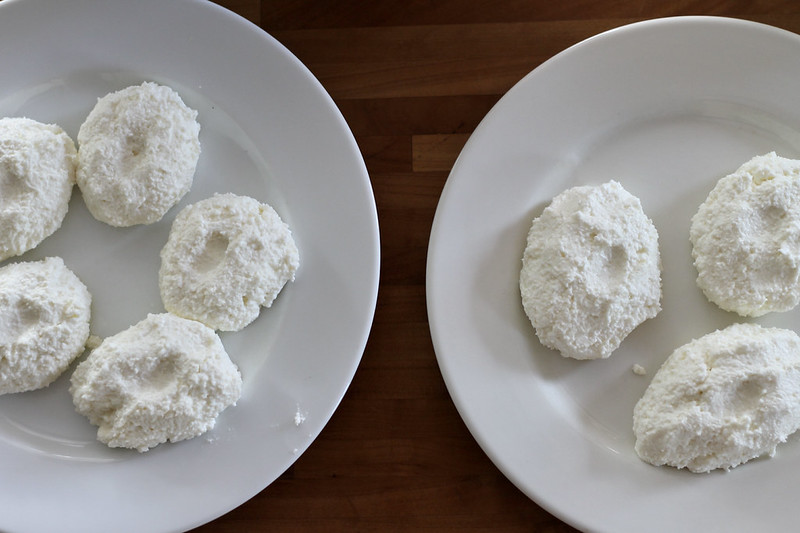
    When the milk had sufficiently solidified, she’d shoo away the flies that had gathered about the bowl and, gently and slowly, oh so slowly, press the curds with her hands, coaxing out the whey. The solids she’d place on the molino — a stone, similar to this one (though I know for sure it didn’t cost 189 dollars!), for grinding corn into masa — and begin mashing and pressing on the curds until all the whey had been pushed out: a bit of the whey went back into the container on the wall to replenish the rennet, if I remember correctly, and the rest she’d divide between the chickens and dogs. Once she’d kneaded the cheese into a smooth mass, she mixed in an ungodly amount of salt, form the cheese into large, palm-sized ovals, and press her thumb into the very top to leave her mark. 

    In our community, the cuajada was stored at room temperature in a plastic container and mostly served alongside a plate of boiled red beans. Simple food, yes, but there’s nothing quite like a freshly toasted corn tortilla, smokey from the cooking fire, with a thick slice of cuajada on top. I’d palm the plate-sized tortilla in my left hand and, with my right, tear off bits of warm tortilla to scoop up bits of the creamy, almost unbearably salty, cheese. Add a sugary cup of black coffee and that, my friends, is what Nicaragua tastes like. 

    So anyway. Back to my kitchen.

    My double-boiler method for heating milk, though I often just heat it directly over the flame, too.

    I’ve always wanted to learn to make cuajada but I couldn’t, for the life of me, find a recipe. Considering the lack of refrigeration, running water, sanitation, money, and materialDoña Paula was working with (or not), I figured it shouldn’t be that complicated, so I started messing around: Rennet. Room temp milk. Mashed curd. Salt. 

    Checking for a clean break, which shows that the milk has set.

    It kinda worked, but not really. The cheese didn’t have the right texture, the same depth of flavor. And then I found the blog of a woman living in Nicaragua and she, bless her heart, did a post about learning to make cuajada. Her instructions said to break up the curd with my fingers (did Doña Paula do that? I don’t remember) and then add water and let it sit.

    l-r: yogurt cheese, cuajada, gloves from making mozzarella

    I’m still not a hundred percent solid on my methods — I know they didn’t hang the curd, and maybe I really shouldn’t heat the milk? and Wah! I missDoña Paula! — but it’s getting close. Each time, I improve a little. I’ve changed things, like slightly heating the milk to get it to set, and, in lieu of a molino, I use a food processor to mash the curd.

    Baby cuajadas: normally I shape them bigger, about the size of oval softballs.

    For now I’m confident enough in the recipe to share it here, though I’ll probably pop back in to to tweak and adjust, so stay tuned!

    Cuajada
    Adapted from the method that Emily shared on her blog Camoapa Oneota, and for more cuajada-making inspiration, see also this post by Suze Cohan.

    When I leave the milk at room temperature, as per the traditional method, it doesn’t set. Heating it just a little seems to give it the necessary kick in the pants. Also, my use of the food processor is not authentic (obviously), but it’s what gets the most authentic final product.  

    UPDATED: the recipe on my YouTube channel is much improved over this one…

    1 gallon milk
    ¼ teaspoon rennet in ¼ cup cool water
    3 cups cool water
    salt, non-iodized

    Heat the milk to about 90 degrees. Remove from heat and gently stir in the rennet. Let sit, undisturbed for 45 minutes, at which point the milk should be set. To test, stick your finger or a knife into the curd at an angle and lift up; the curd above your finger should split cleanly apart. If it’s still mushy soft, let it sit another 15 minutes or so. 

    Using your hands, gently stir the curd to break it into pieces. Add three cups of cool water, stir, and then let the curds sit, undisturbed, for 10 minutes, during which time the curds will sink below the surface of the whey.

    Pour the curds and whey into a cheesecloth lined colander. Discard the whey. Hang the cheese cloth for 30 minutes or so, or if you’re impatient, you can twist and squeeze the bag to remove the whey. Or squeeze the curds gently with your hands. Whatever! Just get the whey out.

    Dump the curds into a food processor and pulse until creamy. Or, if you have a molino, knead and mash them by hand. Add salt to taste, making it saltier than you think it should be. The salt will dissipate a bit, but remember: this cheese is meant to go with bland food so it’s supposed to pack a punch.

    Form the cheese into plump ovals, pressing your thumb into the top to leave your mark. Place the cheese, uncovered, on a plate in the fridge. More whey may come out, or not… After a few hours, wrap the cheese in plastic and store in a plastic container in the fridge where it should last for about two weeks. 

    To serve: place thick slices of cheese atop boiled red beans, bowls of chili, steaming corn tortillas, scrambled eggs, etc. 

    This same time, years previous: the quotidian (8.3.20), in the kitchen, the quotidian (8.6.18), glazed lemon zucchini cake, cheesy herb pizza, horses, hair, and everything else under the sun, the quotidian (8.6.12), why I am recuperating, dishes at midnight.