• cottage cheese

    Written Tuesday: today, Colby’s on the docket.

    My daughter is over at her grandparents, studying, and my younger son is working with my husband, so the house is quiet except for the whirring of the fans doing battle against this rash of hot humid weather. Summer’s last gasp, I hope. I’m so ready for crisp fall days, with cinnamon candles and apple pies and crunchy leaves scattered across the porch and dark nights and piles of library books. 

    My writing group was here this morning. I baked a blackberry cobbler to go with our coffee and served it with vanilla ice cream.

    Yes, you read that correctly: vanilla ice cream at nine in the morning. There are worse ways to start a day, I think.

    Right now I’m making a big batch of traditional cheddar. For me, a “big batch” equals four gallons of milk because I don’t have any pots large enough to go bigger. I don’t think my press would hold a cheese much bigger than that anyway.

    Right now I’m waiting for the curds to settle to the bottom so I can strain off the whey. And then I’ll be cheddaring the cheese — turning the slabs every 15 minutes for two hours. Lots of good writing time, yes?

    not me in this exact moment, but close enough

    So while I cheddar and whey-t (hehe), let’s talk about cottage cheese! I’ve been wanting to tell you about this recipe for weeks now. 
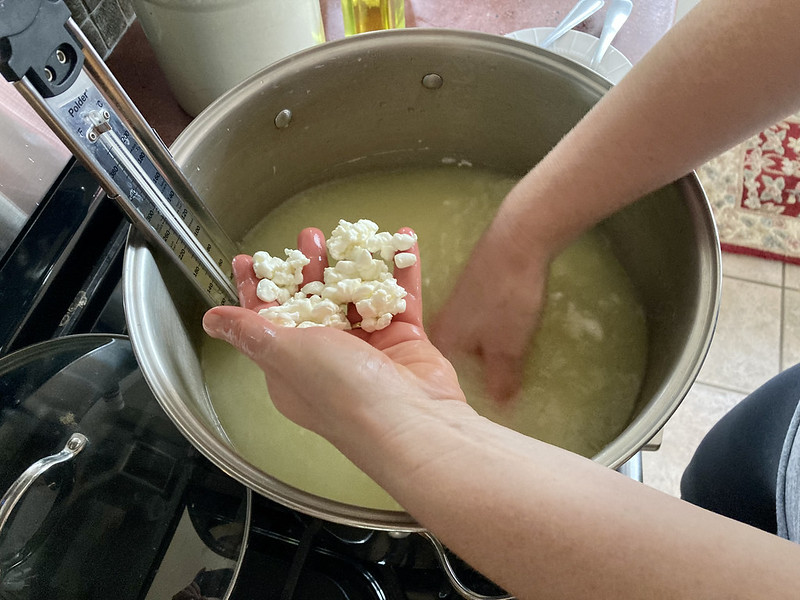
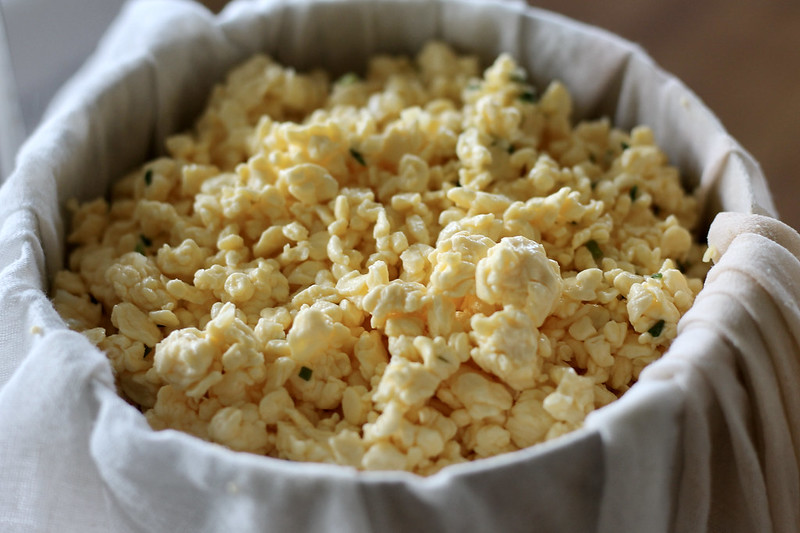
    Cottage cheese has, I think, a bad reputation, probably because we always say chunky gross things — like baby vomit or weird mouth rashes — look like “cottage cheese.” Which isn’t really fair to cottage cheese because cottage cheese is actually quite luxuriously delicious. Plus, cottage cheese is just curds, like the curds in any other cheese, just unpressed.

    I grew up eating it with sliced peaches, or with applesauce. Along with celery and bananas and Wonder bread with margarine, it was a treat. Oh, and I think my grandmother used to make a cottage cheese cake — like cheese cake but nubbly with bits of cottage cheese. We loved it.

    As an adult, whenever I’m at a salad bar, I almost always get a scoop of the cottage cheese to go with my salad, but aside from that, I only purchase it when I want to make lasagna — cottage cheese makes next-level lasagna, trust me — or a breakfast bake. As a result, my family rarely gets to eat it so they don’t fully appreciate its glorious wonders. (This, along with their lack of appreciation for shoofly pie, is one of my griefs.) And now I have learned how to make a cottage cheese that I, at least, think is ridiculously delicious. 

    I don’t know what it is — the creamy saltiness, perhaps, or the gentle squeak of the curd, or the toothsome chew — but I can hardly control myself around the stuff. I eat it plain or stirred into pasta or in a potato-sausage-pepper bake or in quiche or on pancakes , in my new favorite way, on baked potatoes: butter and sour cream and cottage cheese.

    I’m serious about my dairy.

    Cottage cheese holds well in the fridge for at least a couple weeks. When I make a batch, I plan several meals around it so we get to enjoy it. (Stuffed shells are in our future.) Any leftovers get tucked in the freezer; even though it doesn’t freeze well — the curds lose their distinct textural brightness — when it’s baked in a lasagna or quiche, no one can really tell. 

    Cottage Cheese
    Adapted from 200 Easy Homemade Cheese Recipes by Debra Amrein-Boyes

    For the mesophilic culture, I like flora danica. However, more often than not I use whey leftover from making another cheese (like quark) that uses mesophilic culture — ¼ cup whey per gallon.

    This is a high-yield cheese! For 2 gallons of milk, I got 1 pound 10 ounces of curds; with the cream, it was over 2 pounds.

    2 gallons milk
    ½ teaspoon mesophilic culture, like flora danica
    ½ teaspoon calcium chloride in ½ cup cool water (if using store-bought milk)
    ½ teaspoon liquid rennet diluted in ½ cup of cool water
    1-2 cups heavy whipping cream
    salt, non-iodized, like Morton Coarse Kosher

    Gently warm the milk to 70 degrees. Turn off the heat and sprinkle the mesophilic culture over the top. Wait two minutes for it to rehydrate, and then gently stir in the culture using an up-and-down motion and without breaking the surface. Gently mix in the calcium chloride (if using), and then the rennet. Place a lid on top and let sit at room temperature for 2 hours. 

    Cut into ½-inch cubes using a long knife. Let stand for 5 minutes for the curds to heal and then stir gently for a couple minutes. 

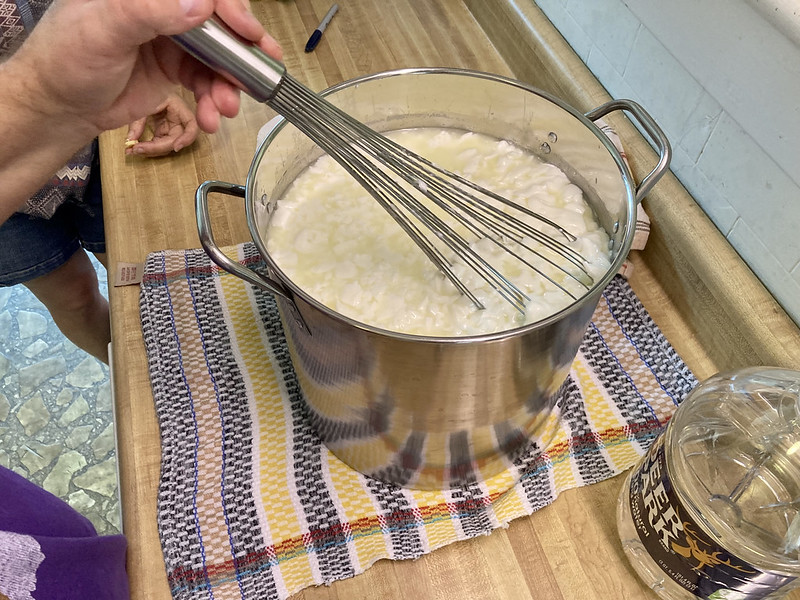
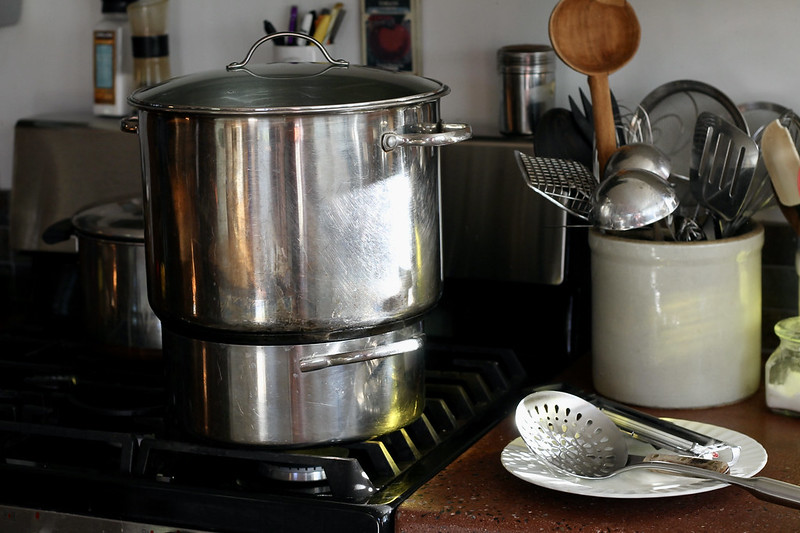
    Place the kettle of curds over a smaller kettle half full of water — Voila! A double boiler! Slowly heat to 115 degrees over the course of 1 hour. I set one timer for an hour and use another timer to keep track of the stove-heating: 3 minutes with the heat on, 5 minutes with it off, or whatever works so that the heat raises about a degree every 3 or 4 minutes. (Heating too quickly makes the cheese bitter, or so I’ve read.) Stir continuously! While stirring — I like to use my hands — I search for big curds and slice them with a paring knife. Don’t squeeze the curds!

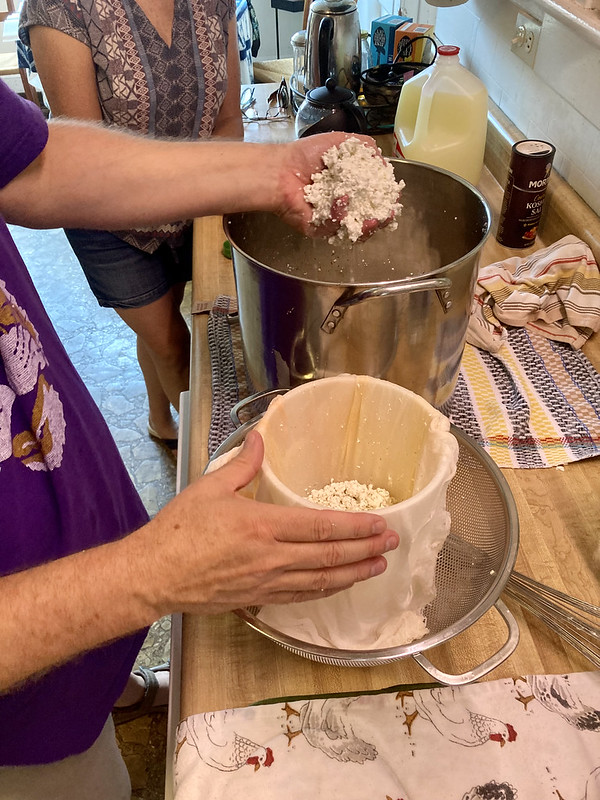
    Once you’ve reached 115 degrees, drain the curd into a cheesecloth-lined strainer and rinse them under cold water to remove all the whey. Transfer the curds to a bowl. Sprinkle with 2 teaspoons of salt and add 1 cup of the cream and mix well. Let the curds sit at room temperature for 15 minutes to allow the curds to absorb the salt and cream. Add more cream (don’t be shy! the cream is what makes it good) and salt as needed. Even in the fridge, the curds will continue to absorb the cream, so after chilling for a day or two, you may want to add even more. 

    This same time, years previous: saag (sort of) paneer, bottle calves, cast iron skillet steak, what they talked about, nectarine bourbon pie, 2014 garden stats and notes, chile cobanero, cookies on his brain.
  • the quotidian (9.13.21)

    Quotidian: daily, usual or customary;
    everyday; ordinary; commonplace

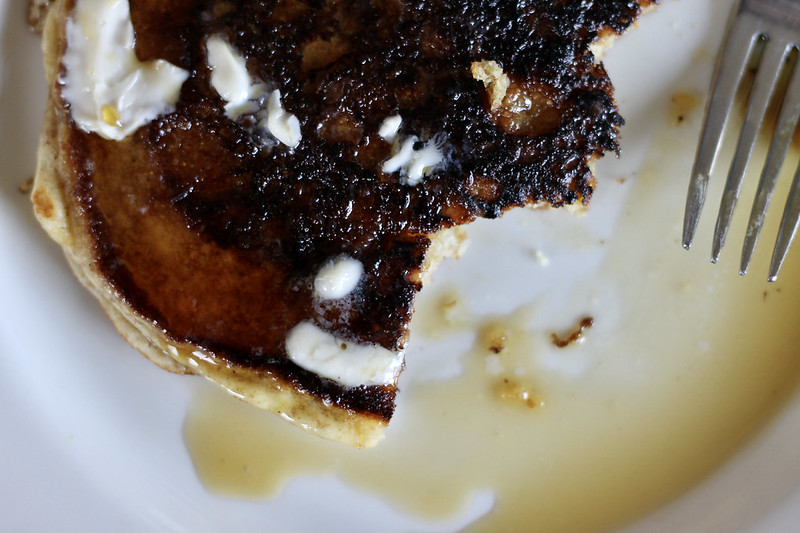
    With yogurt instead of buttermilk, and whole wheat and barley.

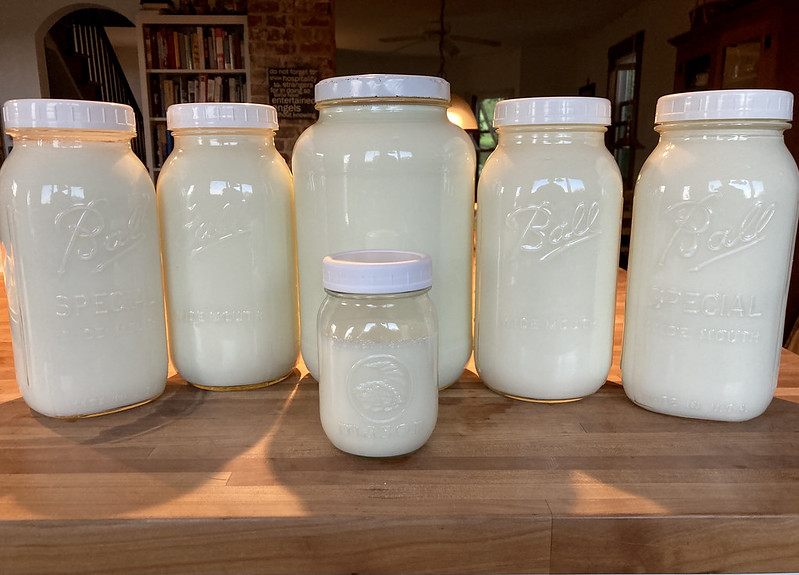
    The daily haul: between two and three gallons.

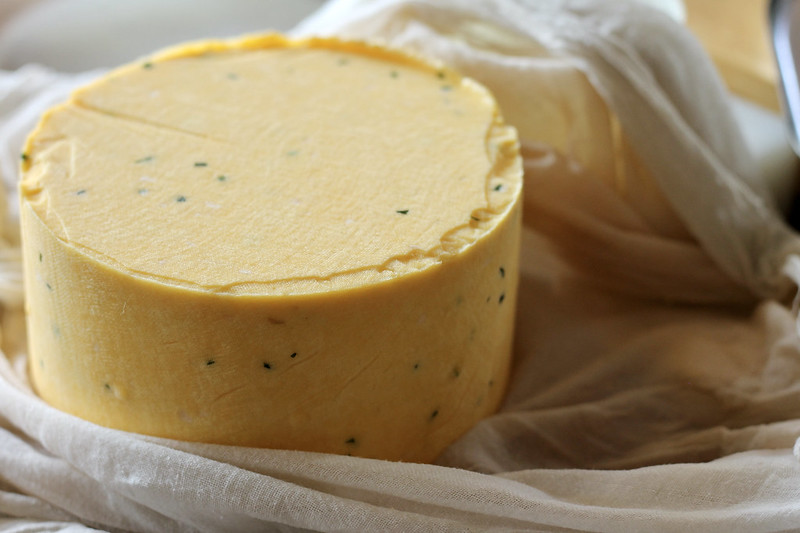
    Cotswold: with heavy cream, dried onion flakes, granulated garlic, and dried chives.

    And 24 hours later: fresh out of the press.

    Our water softener is out of commission: it’s hard.

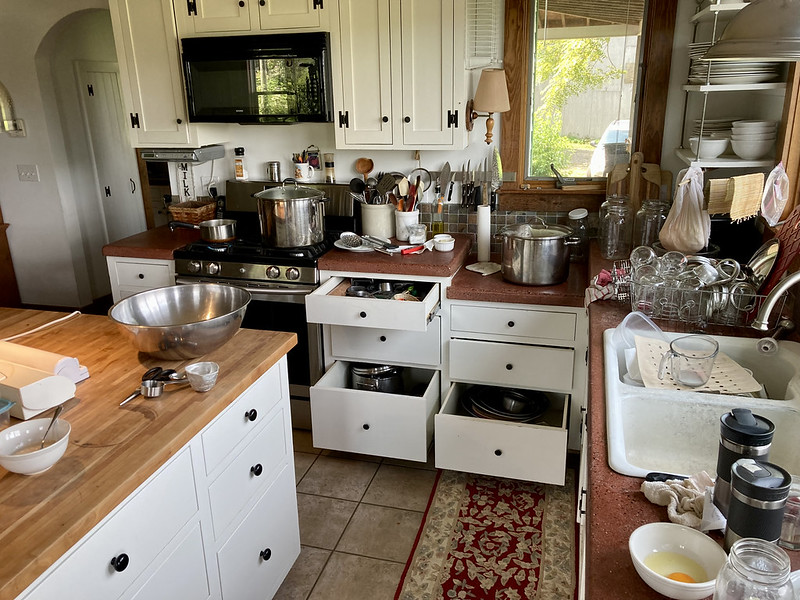
    Efficiency trick: leave the drawers open while cooking.
    (It drives my husband bonkers.)

    I love my washing machine.

    Sun stripes.

    Listening to Lord of the Flies while swinging on a swing he built.

    Science lesson: if you focus real hard, chairs levitate.

    Family hike.

    This same time, years previous: Coco, the brothers buzz, lemony mashed potato salad, the quotidian (9.12.16), playing catch-up, the good things that happen, cinnamon sugar breadsticks.

  • the cheesemaking saga continues

    Remember how I said I wished I had a grandma to teach me how to make cheese?

    Well, a few weeks back I got an email from some professor guy. Apparently one of my girlfriends works with him, and when he told her he was into cheesemaking, she mentioned that I was also making cheese: Would I be to talk about and/or trade cheeses with him? he wondered.

    I wrote back (paraphrased), Whoop! Can I come watch you make cheese? 

    But I was hoping to shadow you! he responded, which cracked me up because, judging by the cheeses he was making — Cotswold, Cheshire, butterkase, Colby, peppery Italian-style, etc — he was leagues ahead of me. 

    So anyway. That’s how, a couple Saturday’s back, I ended up in some stranger’s kitchen watching him make dill Havarti. 

    his son (or son-in-law?) built the press

    He’d cut into a Lancashire he’d made months before so we could nibble (or, as in my case, feast, ha!), as well as a Belper Knolle. Both cheese were insanely good. Like, mind-blown, bar-raised, and “take some home and don’t tell my parents when they stop by because I don’t want to share” good. This guy’s cheese was as good as — no, better than — good quality store-bought cheeses.

    Belper Knolle on the left, Lancashire on the right

    While there, I got to go down to the basement to see where he ripened and aged his cheeses. I couldn’t get over the variety of cheeses stashed away in his fridge-turned-cheese cave— they looked so professional, so delicious— and I asked about everything, from the plastic mats in the bottom of the ripening boxes to brine solution to cultures.

    LOOK AT THOSE CHEESES

    Turns out, I was right on both accounts: 1) he did know much, much more than me, and 2) seeing someone make cheese — discussing and watching his process and asking questions — did wonders for my cheesemaking education. I came home from his place PUMPED.

    Right away, I made a batch of dill Havarti while the process was still fresh. I ordered supplies — ripening boxes, a better spoon, more cultures, annatto, a curd knife, more bamboo mats — as well as a new cheesemaking book that I am loving. I dug out a spray bottle of vinegar-water solution (1:1 ratio) and a roll of paper towels — I needed to be more finicky about sanitation — and made a batch of Belper Knolle (more on this later). I spent hours watching youtubers he’d recommended: the Biegel family makes their cheese from goat’s milk (check out this cheese feast), and Gavin Webber, aka The Curd Nerd, knows everything.

    makeshift double boiler for three gallons of milk

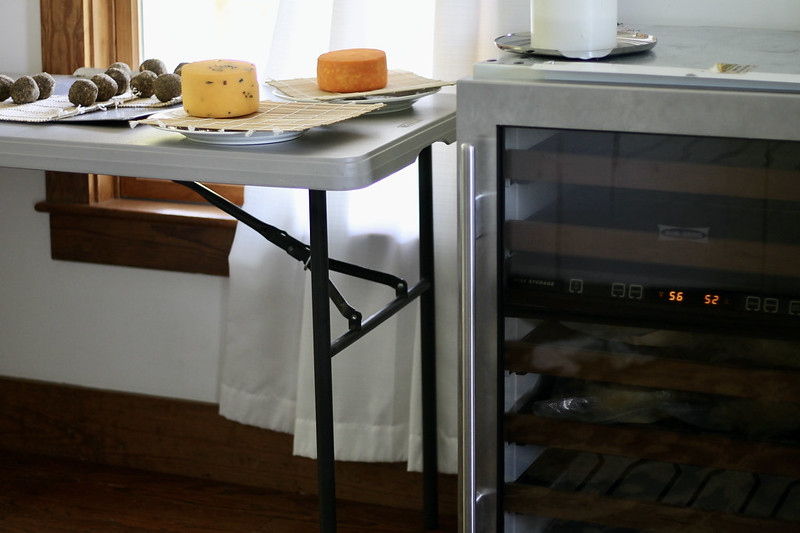
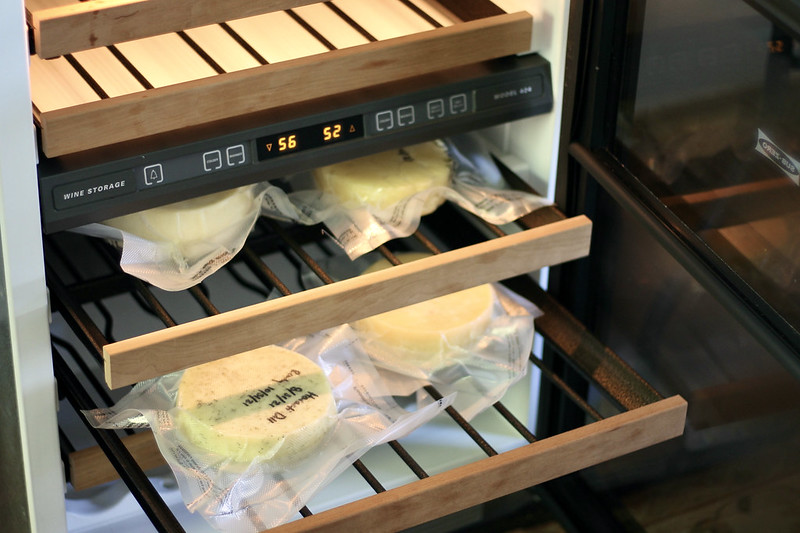
    My biggest problem, though, was figuring out how to dry cheeses at room temp — it was so crazy humid-hot in our house — and then where to keep them for long-term aging. Ideally, cheeses are aged at 56 degrees, in either a root cellar or a refrigerator that’s been cranked up high (which is what the Cheese Professor did) or in a wine fridge, but I had nothing.

    Leicester

    So we started testing things. Our little dorm fridge stayed too cold, as did the full-sized fridge we had in the barn. My husband began researching what it’d take to transform an old upright freezer into a cheese cave. I put out feelers on social. We scoured craigslist. Nothing. In the meantime, we stuck the air conditioner in the downstairs bedroom, turned it down way low to a chilly 63 degrees and used the whole room as my temporary cheese cave. Not very practical, but oh well.

    stirred-curd jalapeño

    And then my older son’s (then) girlfriend said her dad had an unused wine fridge we could borrow; when the two of them visited her family to announce their engagement, they brought it back with them. At first it didn’t cool properly (or at all, actually), but then my husband waved his hands over it and brought it back to life AND NOW I HAVE A FANCY-ASS CHEESE CAVE.

    Currently, I’m air drying Leicester, stirred-curd jalapeño, and Belper Knolle. And in the cave, I have stirred-curd cheddar, traditional cheddar, Monterey Jack (which I’m pretty sure is punk), and the dill Havarti. 

    The bad thing about cheesemaking is that it takes months until I know if the cheese is any good. What if we hate it? But the product seems consistent— things look as they should, I think, and the curds taste good— so I’m deciding to trust the method, the instructions, and the cheesemaking instagrammers and bloggers and just run with it. It’s not like I have any other option, right?

    This weekend I cut into one of the week-old Belper Knolles — I couldn’t take it anymore — and it was fabulous. Not as fiery and intense as it’ll be in several more weeks but good enough for me to eat a solid half of a cheese and then make plans to get going on a few more batches.

    Those little nuggets are gold

    I’m learning that cheesemaking takes time and focus. I can’t be zipping around doing a million other things (since sanitation is huge, I have to take care not to be simultaneously working with sourdough — cross-contamination with yeast is a sure-fire way to ruin a cheese) so the only other thing I can do while making cheese is read. As a result, I’ve taken to calling cheesemaking days my “Cheese and Read” time. In between monitoring temps, stirring curd, finagling double boilers, setting timers, and meticulously sterilizing equipment, I read.

    It’s a lovely way to pass an afternoon. 

    This same time, years previous: the quotidian (9.10.18), what writing a book is like, retreating, 2012 garden stats and notes, whoosh!, Indian chicken.