• proceed with abandon

    For the first time ever (I think), I pre-ordered a book. It’s called Home Grown, and it’s about an unconventional childhood, a family farm, and lots of shit. (Because it’s about life on a farm and that’s how he talks.) (‘Course, this is purely supposition since I have yet to read the book…)

    I learned about the author, Ben Hewitt, on Tuesday night at our church potluck when a friend told me about an unschooling article she had read in Outside Magazine. She had saved the article for me, and the next morning after the sourdough bread had been started and the breakfast dishes washed up, I settled down at the kitchen table for a look-see.

    Straight off, I pretty much fell in love with the guy. I resonated with everything he said down to his little disclaimer about how he prefers the term “self-directed learning” to “unschooling.” I sent him a brief love—I mean, thank-you—note and then dived into his blog posts. The guy is a prolific and thoughtful (prolifically thoughtful, perhaps?) writer, so I’ve got my work cut out for me. It’s pure fun, though.

    Anyway, if you’re at all interested in matters regarding education, nature, parenting, and food, you might want to give this blog a once over. Warning: within a couple hours of linking to the blog on Facebook, I was getting feedback that included words such as “addicted.” Proceed with caution. Or abandon.

    Actually, when something is this good, abandon is better, I think.

    This same time, years previous: summer’s end, Valerie’s salsa, and sweet freedom.

  • bruschetta

    All week long I’ve been sitting on a best-ever recipe, itching to share it with you but hesitating because it’s so good that I’m afraid I won’t be able to do it justice with the written word. It’d be better, more persuasive, if I could give you a sample straight up—just stick my arm through the computer screen and into your house and hand you a little piece of edible heaven. But I’m no Willy Wonka, so words it is.

    Remember that scene in Julie and Julia where Julie fries thick slices of bread in lots of oil and then mounds the pieces with cubes of juicy tomato? While she stews over what sort of project she can take on in order to have something to write about, her husband takes bite after enormous bite of the bruschetta (CHOMP, chew, CHOMPchew, CHOMPCHOMPCHOMP) interspersed with moans of deliciousness while juice dribbles down his chin. It’s a glorious scene.

    That’s what I made. Except, I made it better.

    That’s right: I’m one-upping the Julias and blogging about it. Aren’t I classic.

    A couple years ago, a friend told me about a fresh tomato salad she makes. Basically, it’s tomatoes in a brine of olive oil and balsamic vinegar with garlic and fresh basil. I made it and liked it, but I didn’t swoon.

    But then the next year when the tomatoes were ripe, I called her up for the recipe because, well, it was kinda good. Fast forward to this year: I called her up (yet again) for the recipe and served it to my mom. Then my mom called me for the recipe and I had to call my friend back because I had already misplaced it. Since the recipe was fresh in my mind, I was all like, Oh heck, why not?, and made the salad again. And then, with the Julie and Julia scene playing in my head, I served it up as bruschetta and—CHOMP chew CHOMP chew—the rest is history.

    The Actual History

    Chapter One: I serve the bruschetta on Saturday noon and act like I’ve struck gold. My husband says it is good.

    Chapter Two: I make bruschetta, just for myself, that night for supper.

    Chapter Three: We eat more bruschetta for Sunday lunch. I use the leftover tomatoes that have been marinating in brine since the day before. My husband comes close to raving.

    Chapter Four: On Monday I make a skillet of bruscetta for lunch and share it with my older son. Upon discovering there are no seconds, he is crushed.

    Bruschetta

    For the tomatoes:
    4 cups of juicy ripe, multicolored (if you have them) tomatoes
    ½ cup minced fresh basil
    ½ cup olive oil
    1/4 cup balsamic vinegar
    3 cloves garlic, minced
    1 tablespoon salt
    1 tablespoon sugar
    1/4 teaspoon black pepper

    Put the tomatoes and basil in a bowl. In a small bowl, whisk together the remaining ingredients. Pour the dressing over the tomatoes and stir. Let sit at room temperature for one hour before serving. Leftovers keep for a couple days in the fridge. (As the tomatoes get eaten up, freshen up the salad with a new tomato. You can only do this once or twice, though, before the brine’s strength diminishes.)

    For the bread:
    a bunch of slices of thick, chewy bread
    olive oil
    1 garlic clove, cut in half, optional

    Heat a skillet on medium-high. Drizzle olive oil on the pan to cover the same area as one piece of bread. Quickly slap the bread over the oil. Repeat the drizzle-and-slap method until the pan is full of bread slices. Reduce the heat to medium.

    Once the bread is golden brown and crunchy, flip and fry on the other side. Except you need to add more olive oil at this point, so it’s a bit of a juggling act. Sometimes it’s easier to remove several pieces of bread and then drizzle and flip-slap. When both sides are golden brown, remove the pieces to a plate. Important tips: be quite generous with the olive oil and get the bread as crunchy toasty as possible.

    Brush each piece of grilled bread with a garlic clove, if desired. (Since there is garlic in the tomato salad, this isn’t a crucial step.)

    To assemble:
    toasted bread slices
    tomato salad
    fresh mozzarella, chopped or torn into small pieces

    Put two or three pieces of mozzarella on each piece of toast. Spoon some briny tomatoes onto each piece. Top with two or three more pieces of cheese. Serve immediately. CHOMP chew.

    This same time, years previous: photo shoot, two minute peanut butter chocolate cake (I don’t recommend it), red raspberry ice cream, whole wheat buttermilk waffles, earthy ponderations, part two, oven-roasted Roma tomatoes, grape jelly, and cold curried corn soup.

  • on unschooling and parental comfort level

    This summer (and despite the back-to-school pictures on your Facebook page, it is still summer … for another whole month), I read a book called Natural Born Learners. It’s a collection of radio interviews with all sorts of homeschooling experts, such as John Taylor Gatto, Kate Fridkis, David Albert, and Sandra Dodd.

    *
    Mini Book Review
    One of my pet peeves is that books about homeschooling are so often poorly edited. Writers make lots of mistakes (I’m a classic example) but there’s no excuse for the published books and magazines. This book was yet another not-well-edited example. The transcripts were clunky, the layout dull, and transitions nearly nonexistent. But, and this is a BIG but: the heart of the book—the ideas and issues—were good as gold. So yes, I recommend this book. Just squint your eyes and rush over the typos and awkward wording. And be sure to keep a pencil close at hand for lots of oh-my-word-this-is-awesome underlining.
    End of Mini Book Review
    *

    While reading this book, oodles of ideas caught my attention (such as the aforeblogged-about notion of homes as museums), but there was one idea in particular that gave me pause. Brenna McBroom, a long-time unschooler, gave voice to one of my biggest hang-ups about unschooling. She criticizes unschooling parents for hesitating to do anything that might be interpreted as “controlling” their children. She says that many unschooling parents are so committed to letting their children learn about the world on their own terms that the parents won’t interfere, even when their children are damaging property or hurting other people (Ekoko, 349).

    Not until I read the critique did I realize that this issue—the equating of unschooling with a relinquishing of parental control—is at the heart of why I hesitate to embrace unschooling. I’ve been witness to this extreme view of unschooling, and it is disconcerting, to say the least. So it’s a relief to see someone from the inner circle criticizing the same thing that bothers me. I don’t have to be just like those people in order to count myself an unschooler. Plus, internal critique gives the movement more credibility (at least in my eyes). (For the record, this is how I work with people, too: show me your weakness and I’ll trust and respect you.)

    The belief that unschooling parents aren’t allowed to be in control of their children is not, in fact, a true definition of unschooling. As I read more and more about different unschoolers and their diverse lifestyles, it’s becoming clear that many unschooling parents are not hands-off. They direct, boss, and encourage, as needed. They enforce hard work and chores. Some of them even require their children to do an occasional math workbook, gasp. And yet they are all still counted as unschoolers.

    A Google search of unschooling brought up John Holt’s definition: “When pressed, I define unschooling as allowing children as much freedom to learn in the world, as their parents can comfortably bear.”

    Ha, comfortably bear. I love that.

    Actually, I really, really love that. Because Parental Comfort Level is so subjective. For example, some parents might enjoy being at their kids’ beck and call, participating in their children’s project ideas, and doing most of the household chores so that their kids are free to roam. Other parents (me!) might require more personal space, structure, and evenly divided responsibility over household tasks. It just depends on the parent.

    And on the child. Some children are natural givers, chipper-in-ers, go-getters, and responsibility taker-on-ers while others are … not. Some children, bless their sweet little hearts, are sloth-like, overly introspective, needy, and prone to taking the easy way out.

    Sometimes (heaven help us) multiple parenting styles and personality extremes exist under the same roof, so for unschooling to flourish, flexibility and common sense must take precedence (two personality traits I find in short supply).

    “What a parent can comfortably bear” provides plenty of wiggle room. I like that.

    I don’t know if what we’re doing counts as unschooling or not. Again, in John Holt’s words, “unschoolers … learn … when it makes sense to them to do so, not because they have reached a certain age or are compelled to do so by arbitrary authority.”

    I guess this means that when I pay less attention to the ever-present Arbitrary Authority known as Institutionalized Education and more attention to my own children’s developmental abilities and interests, even when—and maybe especially when—their methods and time tables for learning are other than What’s Expected, then that’s unschooling.

    So yeah, I guess this means we’re unschoolers, more or less.

    ***

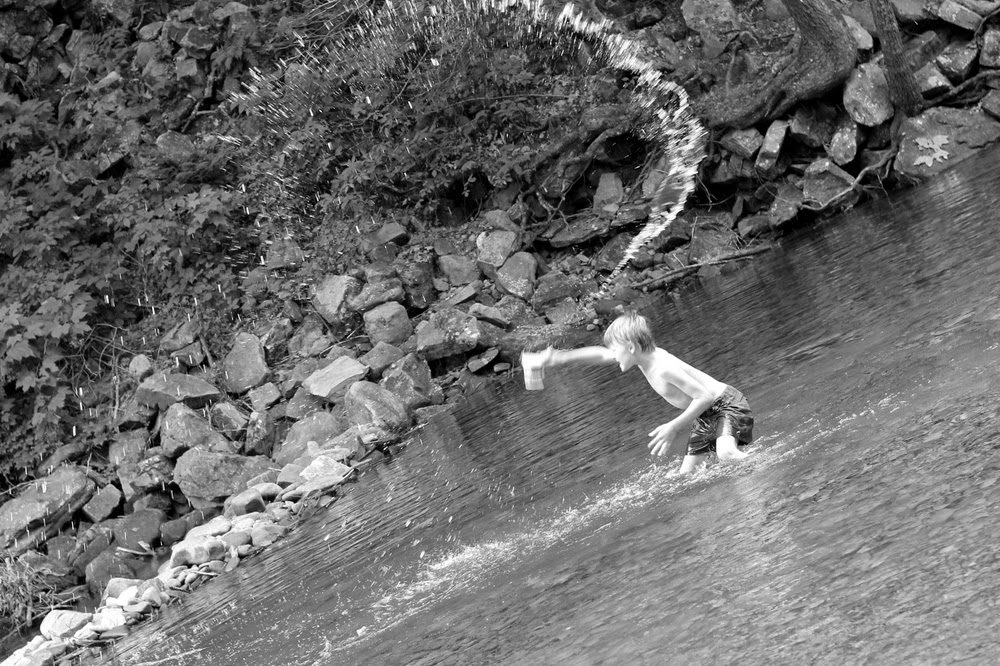
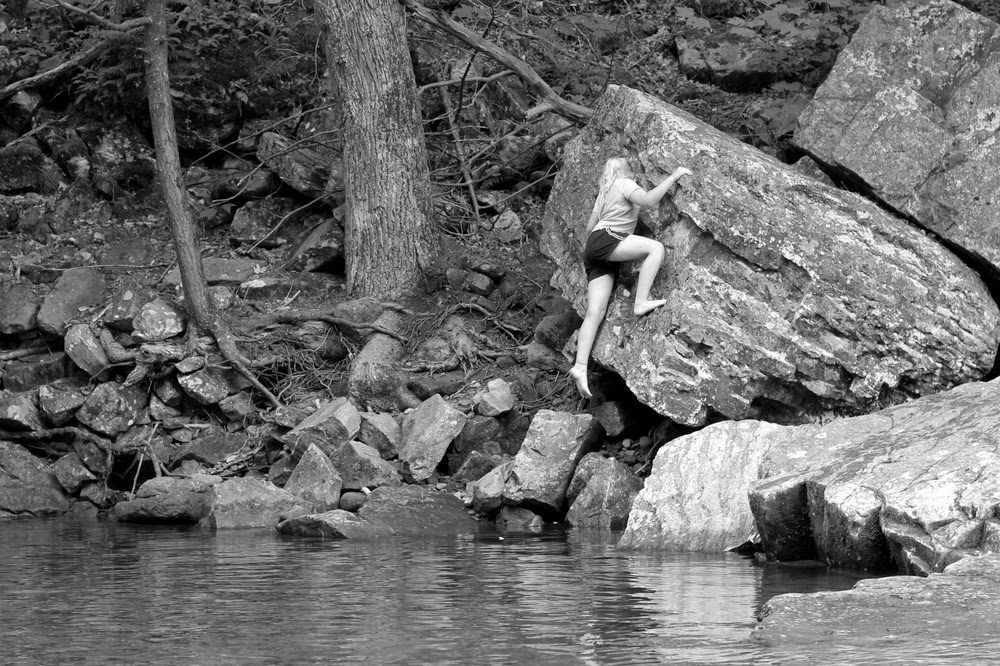
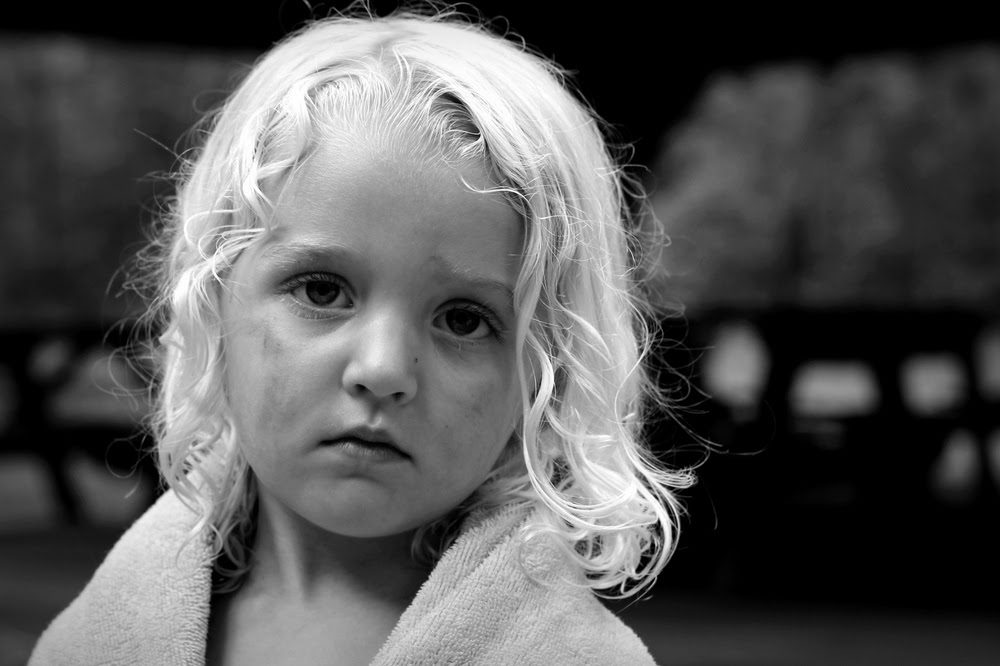
    Random pictures courtesy of an afternoon at the river with friends and cousins.

    This same time, years previous: stewed greens with tomato and chili, the quotidian (8.20.12), this is what crazy looks like, how to get your refrigerator clean in two hours, and earthy ponderations, part one.