• The boring blues

    Confession: I am often bored.

    I realize that this statement is tantamount to blasphemy, considering that I have four kids, a husband, a large garden, a blog, and that I homeschool, read, watch movies, cook much of my food from scratch, go for walks, talk on the phone, chair a church commission, clean house, etc. With all that responsibility you would think The Boredom Feeling wouldn’t even be on my radar.

    But alas, I am not only sometimes bored, I am often bored.

    I know, I know! Something is seriously wrong with me.

    I’ve always been this way, ever since I was a little kid lollygagging on the living room floor, the oppressive cloud of Nothing To Do pressing me down into the ratty brown carpeting. My mother didn’t cater to my whines, not one little bit. I got oodles of lectures on the value of productivity, so many, in fact, that the P-word became my most hated word in the whole entire English language. (Now that I’ve grown, the P-word and I are on very friendly terms, though it hasn’t done much to solve my boring blues.) And more often than not, if I fussed to her that there was nothing to do, I found myself with a damp rag in my hands, listlessly dusting the kitchen chair rungs while resolving to never, ever confide in my mother again.

    Now I have my own house, my own ratty brown carpet, my own chair rungs and I still get shadowed by the Nothing To Do cloud. Now, however, the cloud is more like a mist, damp and creepy, seeping into the corners of my being, pushing on me from all angles, slowing me down.

    This is not depression, mind you. In fact, for the most part I’m an optimistic, up-beat, cheerie person (except for when I’m not). I manage and accomplish just fine. But I perpetually struggle to keep myself motivated.

    I think that I might be a fruitcake to have this problem. I know no one else who battles boredom like I do. I am surrounded by people who never seem to have enough time in the day, who have projects going from morning to night and who are able to keep themselves motivated, moving briskly from project A to project B to project F and so on.

    Me, on the other hand, I piddle and fritter and sigh. I force myself do things. I maintain.

    There is certainly plenty to do, but for me boredom is not an absence of things to do but a lack of pressure. And this is the crux of the matter because I don’t like to be pressured. (Oh the ironies!) I limit my social engagements, stridently protecting our quiet country life, keeping our evenings free for reading, movies, popcorn, and lots of chit-chat. I am careful not to tax myself with too many commitments. But then, with too much freedom and not enough pressure, I lose steam. I get bored. With the reverse, too much pressure and not enough freedom, I get irritable and tense. It’s a balancing act of the most intricate sort, one I have yet to master.

    After suffering under the boredom curse for my whole life, I have come to believe that my inclination towards boredom is not a character flaw, but rather a personality trait. Certain people are never bored; other people are. It has something to do with wiring. (Yo-Yo and Sweetsie get bored a lot [and it irritates me to no end]; Miss Beccaboo and The Baby Nickel do not.)

    I don’t have an answer for why or how I’m bored, but I do know that I’m a high-needs person (just ask my husband, or my mom). I need to be fed, intellectually and emotionally, on a pretty extravagant scale. No matter how many inspiring books I read or radio shows I listen to, the country life is sometimes deficient in intellectual stimulation for little ol’ extroverted me. (Living in an isolated Nicaraguan village for two years was pure agony for my needy self, physically painful, exhausting me in ways I had never before experienced.)

    (“Absorption.” This might be another way of looking at the issue. I have trouble staying absorbed. There are a few specific times that I am fully absorbed: working on photo albums or something artsy, writing, meaningful conversations.)

    Some days my life is frenetic. Days when I have errands to run or appointments to keep. Days when the garden is in full riot and I’m up to my elbows in canning jars and sauces and salsas and peaches. But still, even when life is intense, I find myself fighting the draggy boredom blues.

    I just thought you might like to know that about me.


    Oh yes, and that I spice up my boring life with a set of fat, waxy lips.


    I think everybody ought to have a pair for when the going gets dull.


    About one year ago: Cinnamon Tea Biscuits

  • In which good literature leads to a cake

    Have I ever told you that I’m in a book club? Well, I am. It all started a couple years ago when a friend asked me if I’d like to join her club. (I feel so elementary schoolish, talking about a club like-so, as though we tote around ratty albums stuffed with our scratch-n-sniff sticker collections and snicker about boys.) At that point the group consisted of mostly older women; they wanted a young person in the group to provide a different perspective. Or something. (I’m not sure they knew what perspective they’d be getting with me aboard, but now they have it!) While there is another woman that is only a half dozen years older than me, the majority of the woman are my mother’s peers.

    I love my book club. I love that the woman are older than me, in a totally different stage of life with a totally different set of issues. I love it that the house where we meet is tidy, no men or children on the premises, and we drink tea out of matching cups and saucers. And I love it that we never all like the same book (and more often than not, we are polarized). The club is the modern day equivalent of a quilting circle, minus the quilt and the productivity factor, and since I hate sewing in any form, it’s a perfect fit for me. I much prefer to shred books than to rip seams.

    Book taste, like food, is so subjective. What one person enjoys, another despises. This past Monday we discussed Olive Kitteridge, a book recommended by yours truly. Some of the women outright disliked it, others found it humorous, and a couple even enjoyed it. Next month’s book is The Lacuna. I am halfway through it and thus far I don’t have anything good to say about it (besides noting that I enjoy, as always, Kingsolver’s writing style). Once thing is certain: because of this book club, I am covering a wider range, plus a greater quantity, of reading material.

    We only read one book a month, but many more titles get tossed around. Someone keeps a list of all the suggestions, a list I draw on if I find myself in need of more ideas. One of the recent titles was The Help by Kathryn Stockett. After hearing some of the women rave about it (too many had already read it to make it worth a group read), I put the book on hold at the library. And then when it finally made its way into my home, I devoured it, hook, line, and sinker.

    The book is about the black help in the South, written by a white woman from the perspective of the black women, and what a fascinating tale it is. There were three (main) things that intrigued me. First, I can not, for the life of me, imagine having another person wait on me hand and foot, fetching me ice-cold drinks, watching my kids, cleaning my house, cooking my food, and doing my shopping, thus freeing me up to gossip on the phone, obsess over my cuticles, and play cards. The thought both charms and disgusts me.

    Second, I do not understand the logic of the white Southerners. Black people couldn’t use the whites’ bathrooms or shop in their grocery stores but they could wipe white babies’ butts and cook white people’s food. It makes no sense at all.


    Third, Minny’s caramel cake. Minny was the mouthiest of the black help (I adore her), and her famous cake kept popping up throughout the book.


    Minny’d say things like, I a on make you a caramel cake, mister, jus’ you wait, and my heart would start beating faster just at the thought of that cake. By the time I was halfway through the book, I knew I had to make one if it was the last thing I did. As soon as I slapped the book shut for the last time, I hustled my little rear straight out to the kitchen where I whipped up three different caramel cakes in as many days. I was obsessed.

    I’m neither Southern or black, so I really have no caramel cake-making credentials, but I can read and I can cook, so I sniffed my way around the web, comparing recipes and taking notes. I learned that most caramel cakes consist of a simple yellow cake and that the cake gets its name from the icing which is, obviously, caramel.

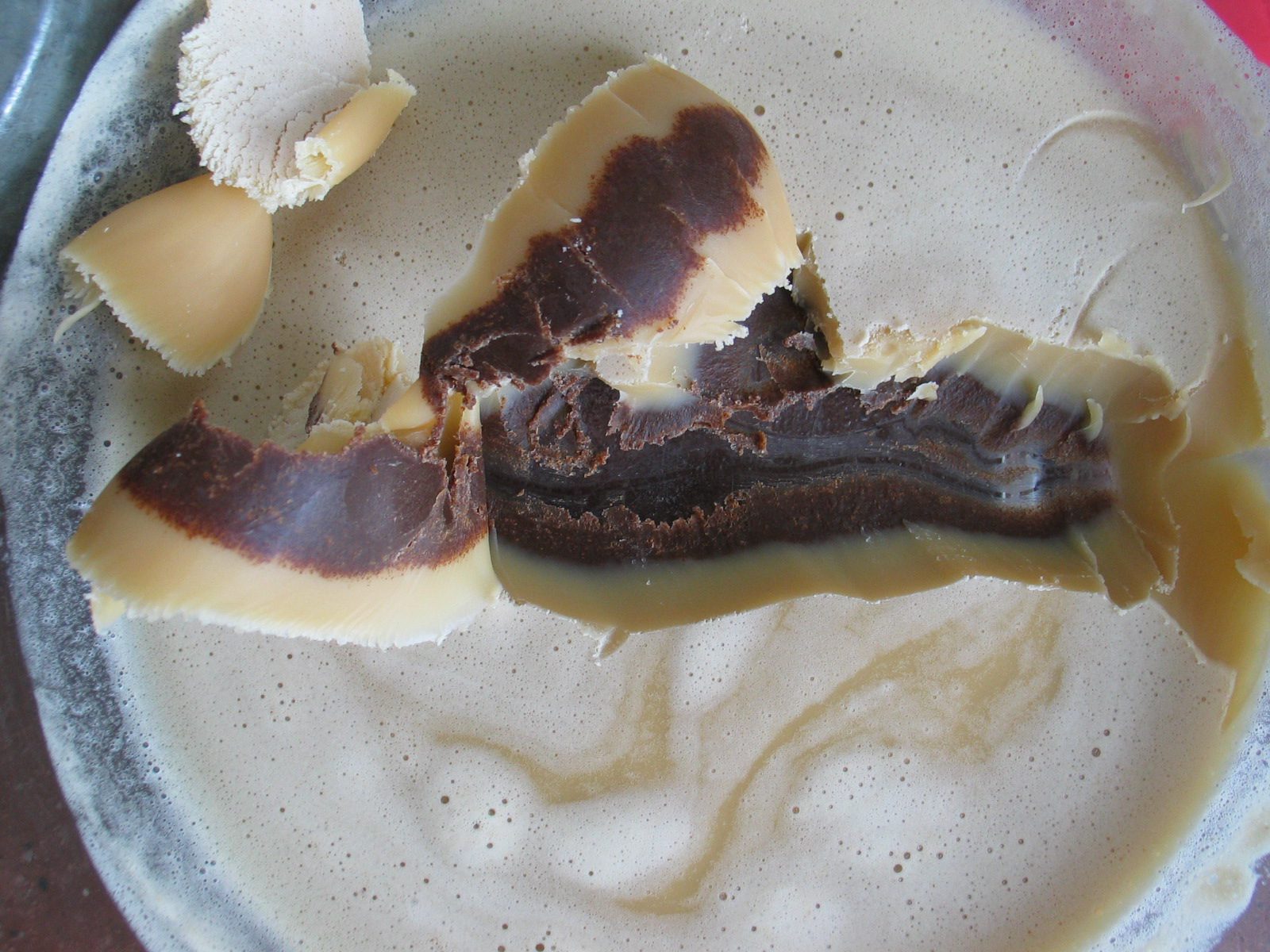
    chilled brown butter

    Cake number one came with high reviews, but I found it to be depressingly bland. If I first browned the butter, I mused, it might ratchet the flavor up a notch. The resulting cake number two was more flavorful but dreadfully dry. Cake number three, with more eggs and regular flour and lots of browned butter, hit the nail smack on the head. Which was a good thing for I was growing weary of all the browning and baking.


    The icing was another adventure. The first one was pallid and syrupy. The second attempt was crunchy and gross.


    But then I got smart. I checked Stockett’s website, and there, lo and behold, I discovered she had kindly posted the icing recipe for all her salivating readers, of which there are many.


    Her icing was simple, classy, and delicious.


    Please, do not be dismayed by my cumbersome caramel cake history. I’m a slow learner.


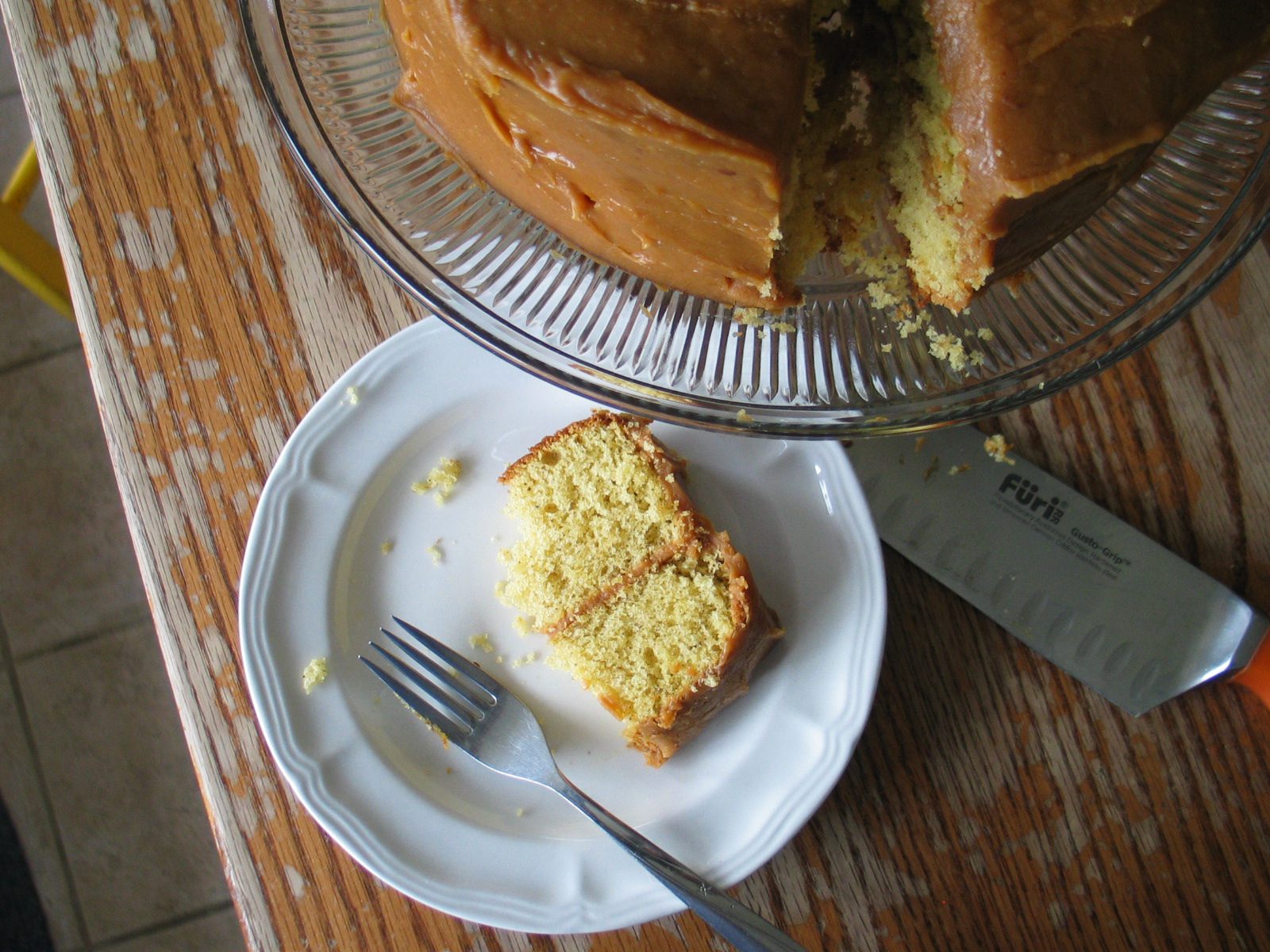
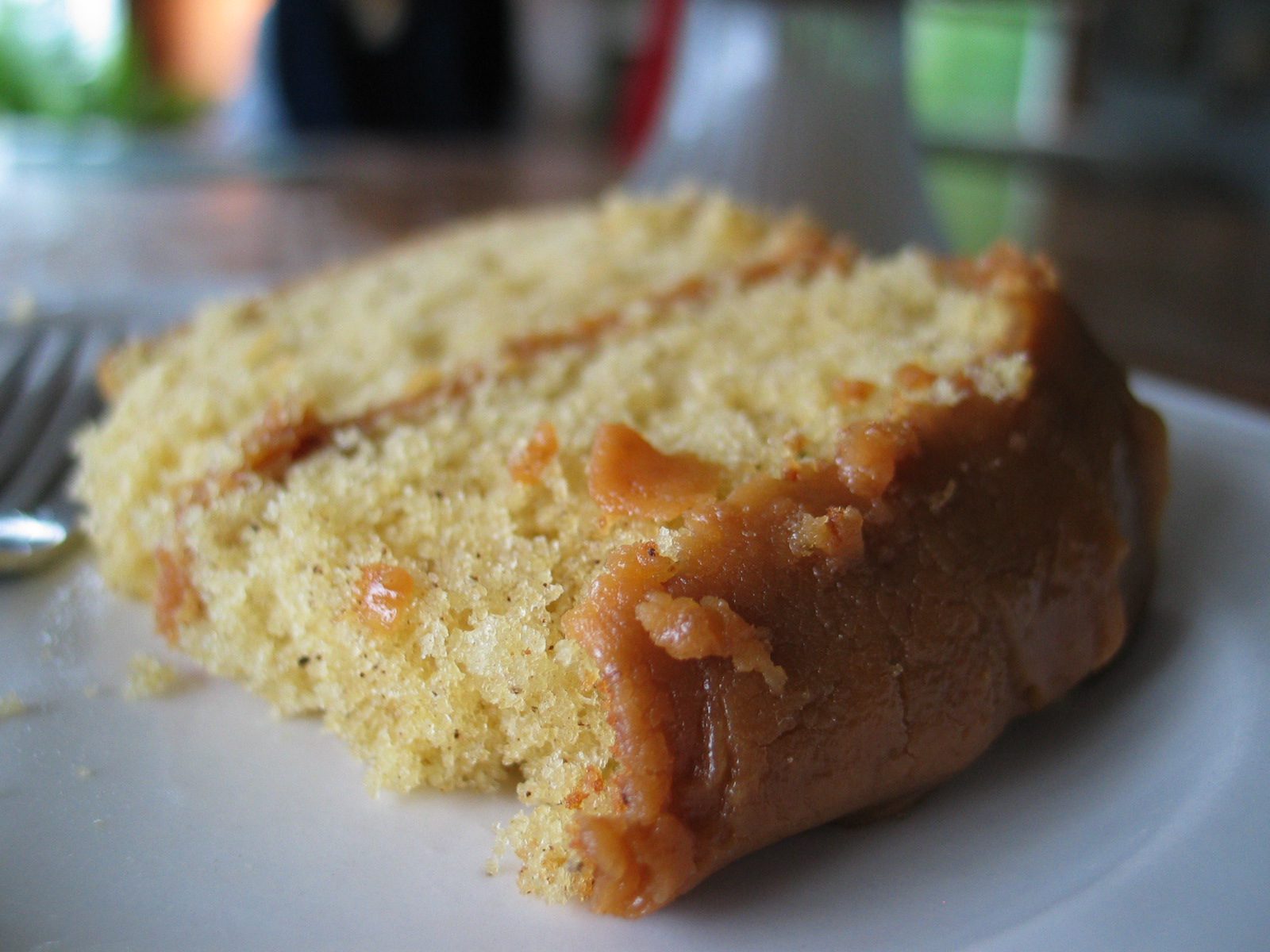
    Of course, I don’t know if my final result is an authentic authentic Southern caramel cake. But I do know that the cake is tender and yellow, flecked with lots of brown speckles from the browned butter, and that the icing is richly caramelesque.

    It is for Minny (and myself and you) that I make this cake.


    Caramel Cake
    The cake recipe is adapted from the blog Dessert First, and the icing comes from Kathryn Stockett’s website.

    The cake dries out more quickly than some, so eat it within the first day or two. It is best, though, eaten just a couple hours after pulling it out of the oven. Then it is buttery, light, and soulfully sweet, the perfect thing to go with a cup of strong, hot coffee.

    3/4 cup (1 ½ sticks) butter
    1 2/3 cups sugar
    2 eggs, plus 4 egg yolks
    1 teaspoon vanilla
    2 ½ cups, plus 2 tablespoons, flour
    3 teaspoons baking powder
    1 teaspoon salt
    1 1/4 cups milk
    1 recipe caramel icing (recipe follows)

    Brown the butter by melting it in a heavy-bottomed saucepan and then cooking it over medium-high heat till the butter solids turn chocolate-y brown, about ten minutes. Swirl the pan occasionally to keep the butter from burning. Pour the browned butter into your mixing bowl and set it in the fridge for an hour to solidify. (Fifteen minutes in the freezer works, too.)

    Butter two 9-inch cake pans and line them with wax paper.

    Mix the flour, baking powder, and salt together and set aside.

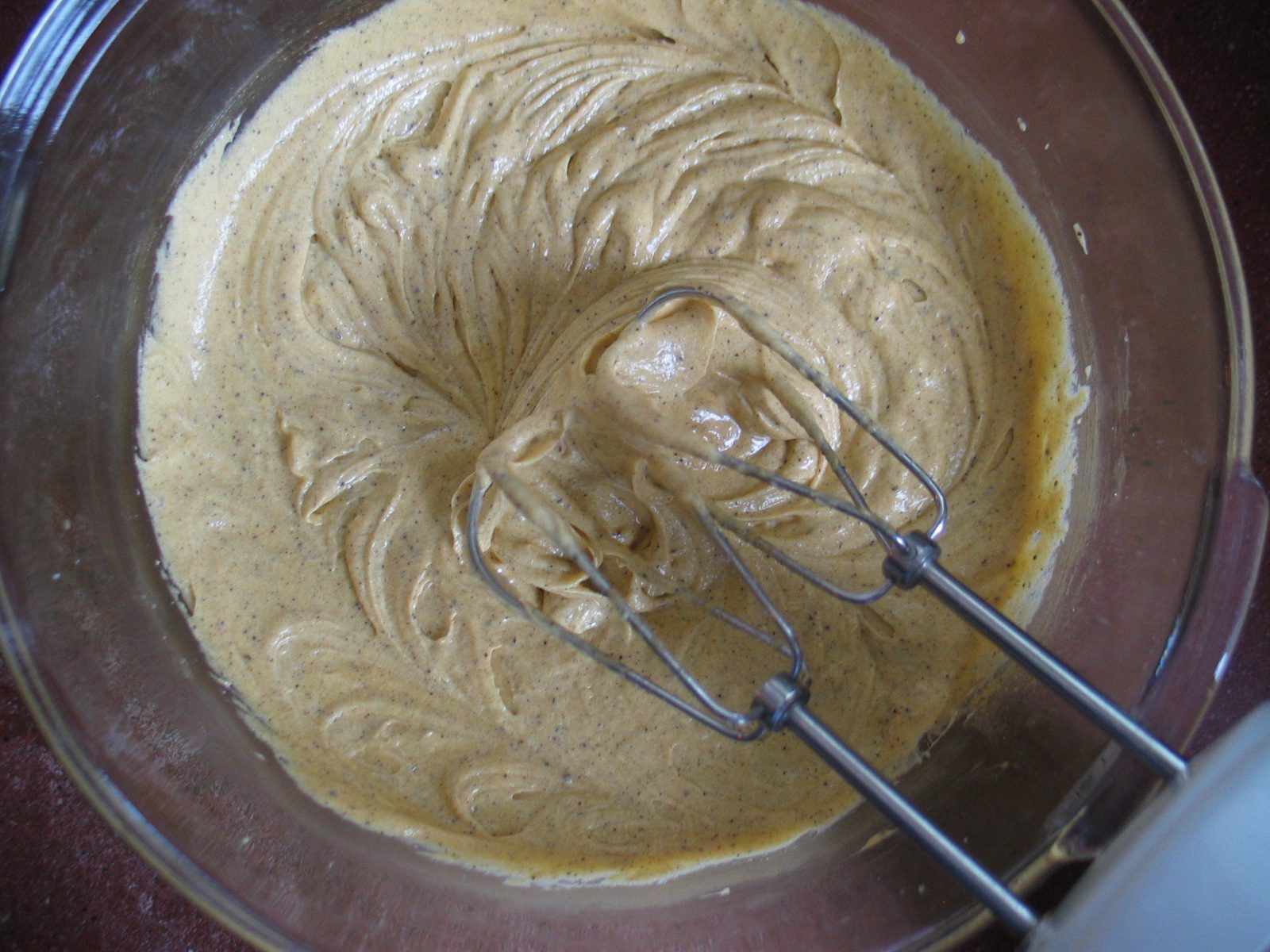
    Take the browned and slightly hardened butter from the fridge and use a hand-held mixer to beat it till it becomes light and creamy. Add the sugar and beat some more. Add the eggs, one at a time, beating thoroughly after each addition. Beat in the vanilla.

    Add the dry ingredients alternately with the milk. Divide the batter between the two cake pans and bake the cakes at 350 degrees for 30-40 minutes, or until an inserted toothpick comes out clean. Let the cakes cool for ten minutes before cutting around the edges and inverting them onto a cooling rack.

    While the cakes are cooling, make the caramel frosting.

    Caramel Frosting

    2 ½ cups sugar, divided
    1 egg, beaten
    ½ cup (1 stick) butter
    3/4 cup milk
    1 teaspoon vanilla

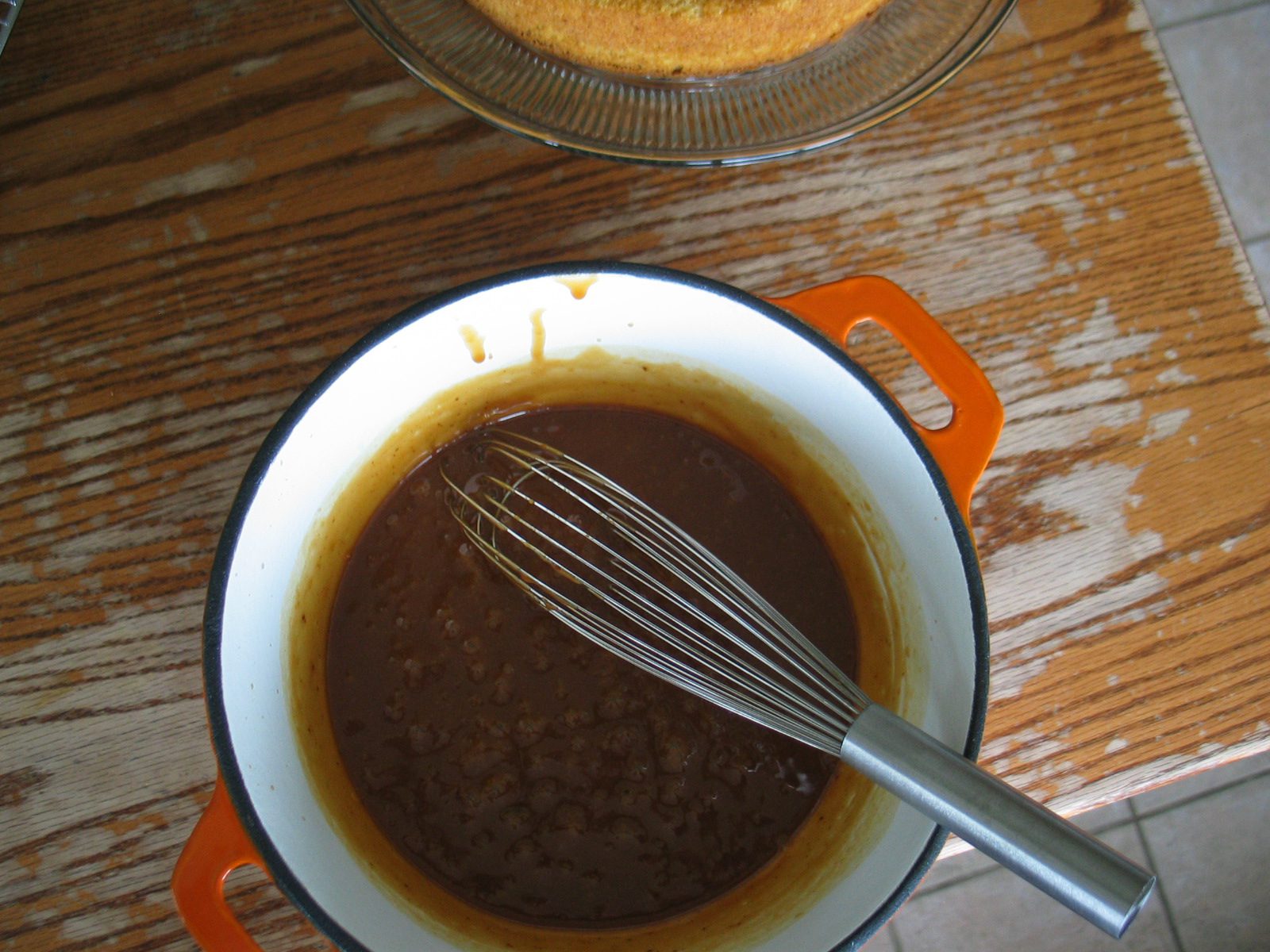
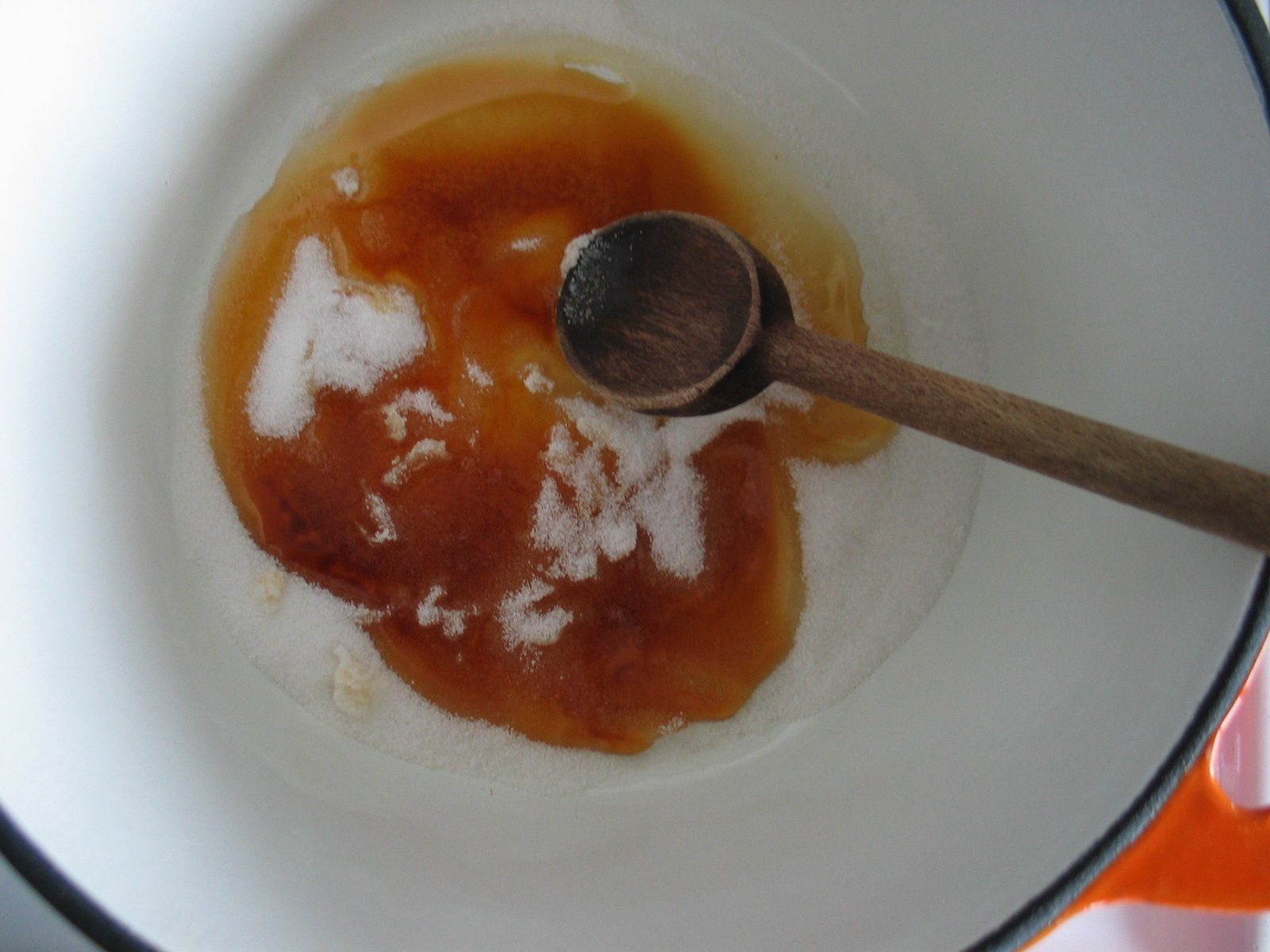
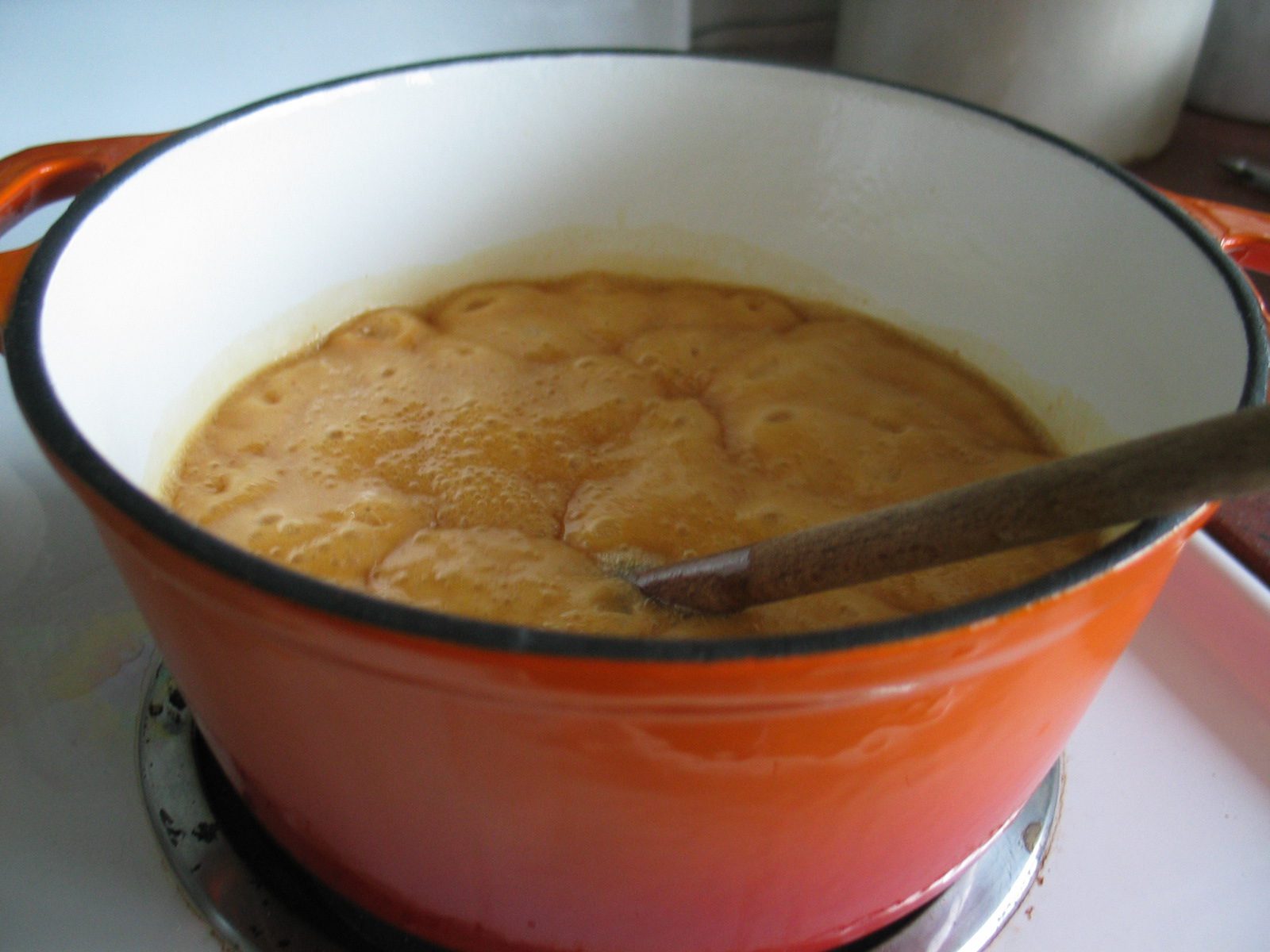
    Measure ½ cup of the sugar into a heavy-bottomed saucepan and heat it over medium heat till it is runny and brown (darker than golden, but not burnt).

    While the sugar is melting, melt the butter in a separate saucepan. Once the butter has melted, remove the pan from the heat and whisk in the milk, the remaining sugar, and then the egg. Set aside.

    Once the ½ cup of sugar is nice and runny, add the contents from the other pan, crank the heat up to medium-high, and boil it for about ten minutes, stirring frequently, until the mixture begins to pull away from the sides and the temperature registers 230 degrees on a candy thermometer.

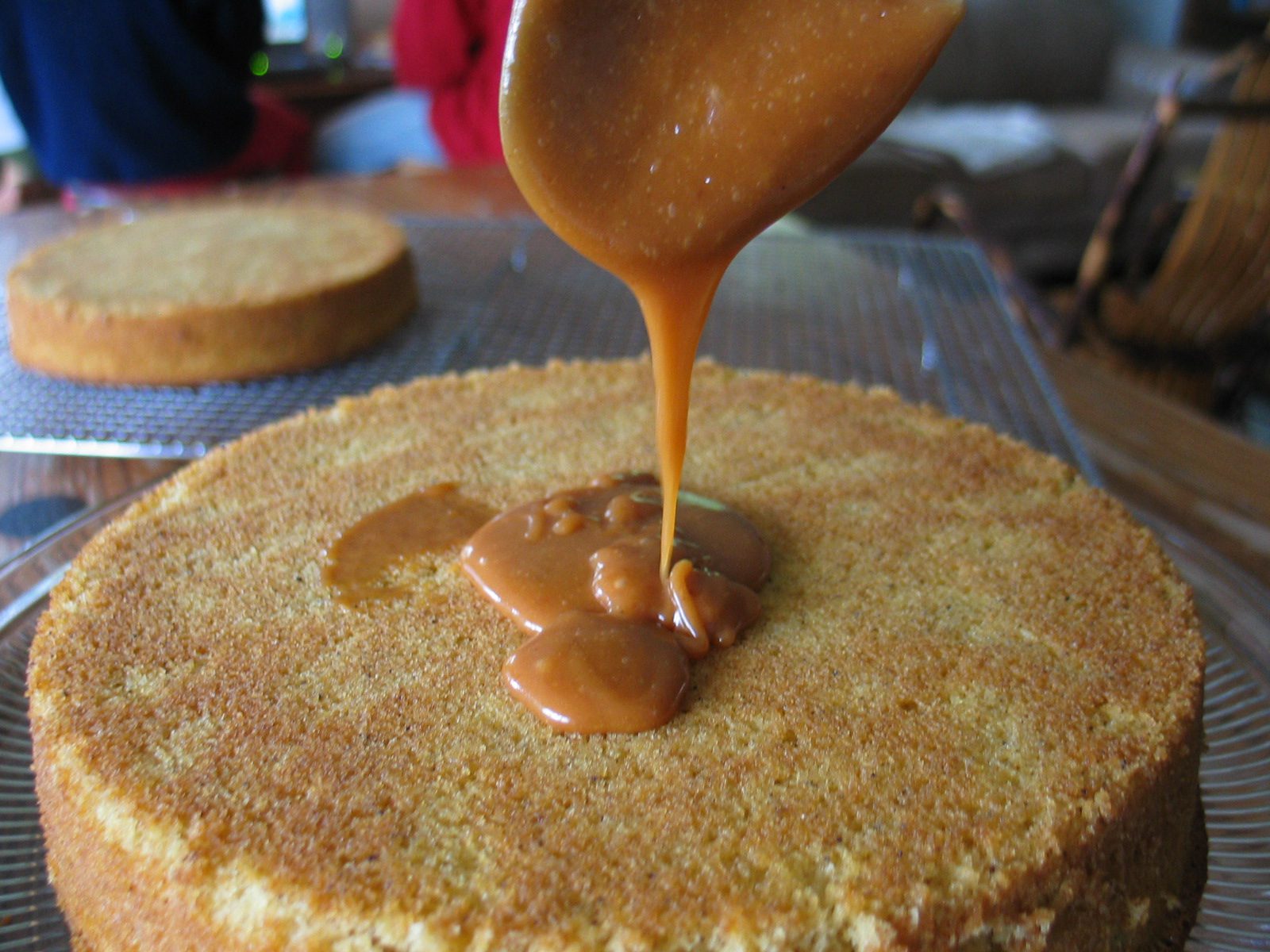
    Remove the kettle from the heat, whisk in the vanilla, and then continue to whisk the mixture for several more minutes, or until the caramel has cooled and thickened a little. Ice the cake layers. (Keep in mind that the caramel will harden as it cools, so work kind of quickly. If the icing gets too stiff, Kathryn says you can whisk in a little cream to thin it out.)

    About one year ago: Garden tales, part two and A storm: talking points rained out

  • A spring tradition

    After a couple weeks of not being able to use my word documents (thanks to a computer that was filled to the gills), I now have a smaller, brand-spanking-new computer with BIG space. I’m slow to acclimate to new technology and I still don’t have the ability to load pictures, but that should (keep your fingers crossed) be fixed soon. And then I’ll be able to show you all the stuff I’ve been up to.

    But since I can’t show you yet, I’ll have to settle with telling. And you’ll have to settle for reading, not just looking.

    I’m such a demanding blogger, making you work like that. Shame on me.

    Anyway, last week it rained. And then it sunned. And then I scurried down to the local greenhouse, bought lots of plants, and came home and threw them—whump, whump—into the garden. Over the course of two days, I planted the entire garden: tomatoes, peppers, jalapenos, anise, fennel, dill, carrots, beets, cucumbers, beans (October Sky, red, black, and green), edamame, and corn. (We have a little space remaining, but it’s reserved for Miss Beccaboo’s popcorn and a row of sweet potatoes.) Yay me.

    It wasn’t just me doing all the work, I’ll admit. I got Mr. Handsome to help (he’s missing a few teeth now), but it was me instigating the whole thing. And that’s the truth.

    I worked outside most of the day on Saturday, so it was fitting that our menu was garden-based, more so than it usually is. For lunch we had a huge salad of fresh lettuce, spinach, thinned chard, radishes, and spring onions (and with ham, boiled eggs, sunflower seeds, raisins, and oven-roasted tomatoes). There is nothing quick about salad when you have to pick and clean the lettuce. That’s why I make it a habit of preparing a huge bowl of salad—for the next several days we are set to go.

    Supper’s colors were spectacular: yellow! white! green! red! Skillet-blackened asparagus topped with poached eggs (and buttered toast to mop it up with), lemony shortcake, sugared strawberries, and billows of whipped cream.


    But what I really want to tell you about is the salad we had for supper the night before: a spinach-strawberry salad.


    I look forward to this salad every spring—its shockingly brilliant colors, the tangy-sweet dressing, the crunchy buttery pecans. It’s the embodiment of sunshine and bare feet.


    I fixed a large bowl of the salad, and between the two of us, Mr. Handsome and I put away the entire thing.


    I first ate this salad at a church potluck, a picnic at a local park. I still remember who brought the salad (Keith) and where exactly on the table the salad was placed (a little beyond a box of pizza). As you can see, it made quite the impression on me.

    Strawberry Spinach Salad

    1 large bag of fresh spinach, about 10 ounces (though I never measure), cleaned and torn
    1 pint fresh strawberries (again, I never measure), cleaned, topped, and sliced
    ½ cup chopped pecans
    1-2 tablespoons butter
    1/3 cup red wine vinegar
    ½ cup sugar
    3/4 cup vegetable oil
    1/4 teaspoon salt
    1 teaspoon dry mustard
    1 tablespoon minced onion
    1 tablespoon poppy seeds

    Melt the butter in a small skillet and add the pecans. Toss them about till golden brown. Transfer them from the skillet to a bowl (so they don’t continue cooking and burn to a crisp) and set aside.

    In a blender, whirl together the vinegar, sugar, oil, salt, mustard, and minced onion. Blend it well, till it’s creamy smooth and pale pink. Pour the dressing into a pint jar and stir in the poppy seeds. Set aside.

    Immediately before serving, put the spinach in a large salad bowl and toss with the dressing. You probably won’t need all of the dressing. Put whatever is left over in the fridge for the next day’s salad (because there will be a next day’s salad)—to use, simply bring to room temperature, and shake well before serving.

    Top the spinach with the sliced strawberries and the toasted pecans. Heap high your plate and dig in!

    Serves 2-8, depending on appetites and whether or not there is anything else is for dinner.

    About one year ago: Garden tales, part one.