• the quotidian (7.9.12)

    Quotidian: daily, usual or customary; 
    everyday; ordinary; commonplace 

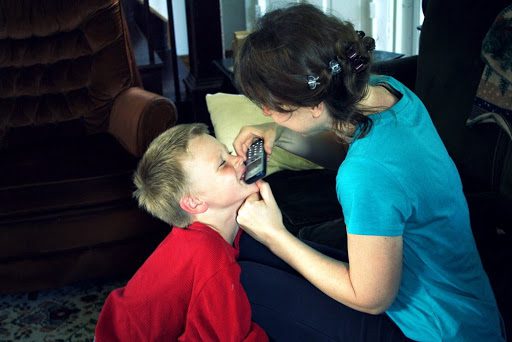
    After weeks of begging and pleading,
    my son finally let my husband cut off all his hair. 
    Also, notice the wrapped toes.
    Every summer, my kids get red spots/blisters on the bottoms of their toes from the pool.
    We have yet to figure out a name and cure for this ailment. 
    Insights appreciated.

    Porch bathing.

    Her first driving lesson. 
    Notice that no one else is in the van with her. 
    That’s because our teaching method is Sink or Swim. 
    It’s rather effective.

    My youngest watched the lesson from the porch, buck naked and wrapped in a towel. 
    He kept covering his eyes because the situation was rather delightfully terrifying.

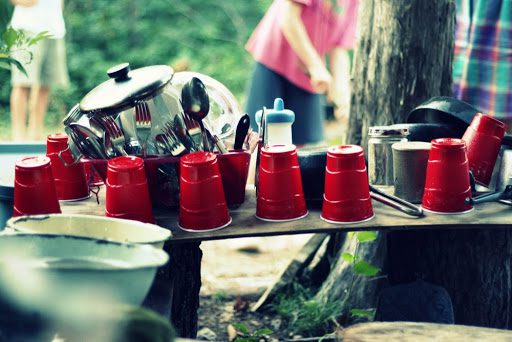
    The wind storm trashed my parents’ camp site.
    They rebounded right spryly, though.

    Homes: it’s what my husband makes with a hammer, nails, and bits of wood 
    (and a few other sundry tools and materials). 
    It never ceases to amaze me. 

    Flaunting his dish-washing procrastination technique.

    A box of goodies from Mavis, the queen of gift boxes. 
    She said she was sending a wig, but then she threw in a million other things, too.

    Wiggin’ out: my daughter is wearing the one from Mavis. 
    And now, thanks to Mavis, another dare is on the table.

    Salt and pepper.

    Painting his toenails red. 
    His sister did his fingernails a fancy red and green stripe.
    And then we went to church and no one batted an eye.

    Drawing on their legs while humming “How Do You Solve a Problem Like Maria?”

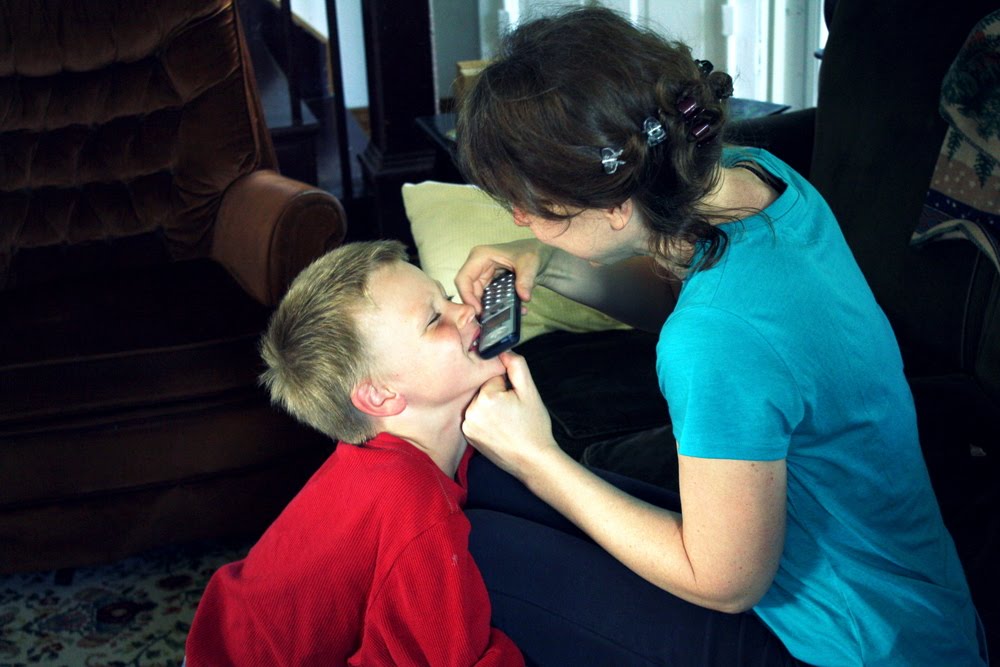
    Talking to Grandmommy on the cellphone after the storm. 
    He’s still dealing with the trauma. 
    Just the other day he told me shyly that he wished he was me.  
    Why? I asked. 
    Because then I wouldn’t be afraid, he said.
    I explained that lots of people are still afraid and that it takes time for the fear to go away. 
    He did some quick calculations, realized that a whole week had passed, 
    and then happily announced that he should soon be done being scared. 

    One of our many heat-induced comas.

    A fab hot weather up-do: it survived a whole day 
    and a bunch of windy car rides (our van’s AC is out).

    Pizzas on the grill: a fun meal, but I wasn’t sold on the idea 
    because the toppings didn’t brown and bubble like they do in the oven. 
    Process: grill one side of the dough, transfer to a tray with ungrilled side down and add toppings, slide pizzas back onto the grill to finish cooking.
    Another summer supper. 

    This same time, years previous: the green-eyed monster and me, quotes for writers (and how I do it), baked oatmeal (the kind my family likes), zucchini skillet with tomatoes and feta, zucchini with sausage, tomatoes, and oregano, simple creamy potato salad, French potato salad, tempero, vanilla pudding, apricot pandowdy

  • grilled flatbread

    World, meet my latest infatuation. I am hopelessly smitten, and you should be, too.

    In case the pictures aren’t enough to rope you in, I made a list spelling out all the reasons to love.

    1. No kneading.
    2. The recipe uses part whole wheat
    3. The dough can sit at-the-ready in the fridge for several days.
    4. It tastes awesome—chewy and tender.
    5. It’s flexible—top it with everything, or nothing
    6. It’s bread without turning on the oven!
    7. (Which means I can now make bread even if the power goes out!!!)

    And that pretty much sums it up.

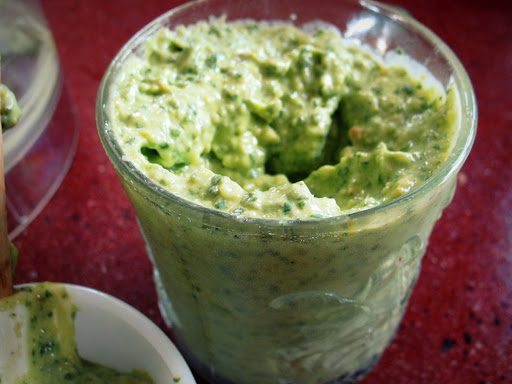
    The other night, I made pesto flatbread by topping the finished breads with pesto (from our first big basil picking!), fresh Parmesan, and some mozzarella and then slipping them back on the hot-but-turned-off grill for a couple minutes.

    The cheeses didn’t melt all the way, so next time I might slip the breads onto a piece of foil and then put them in the lidded, turned-on-low grill for a couple minutes.

    Grilled Flatbread
    Adapted from the July 2012 issue of Bon Appétit

    3 cups warm water
    2 ½ teaspoons yeast
    4 3/4 cups all-purpose flour
    2 1/4 cups whole wheat flour (I used pastry)
    2 tablespoons kosher salt (I used Diamond Crystal)
    ½ cup sour cream

    The dough:
    Dissolve the yeast in the warm water. Stir in the flours and let rest for 20 minutes. Add the sour cream and salt and mix vigorously. It will be quite wet.

    Let the dough rise at room temp for about an hour before covering well with a plastic shower cap and refrigerating.

    Shaping and grilling:
    Very important note: when shaping the dough, you need to do two things: flour it to death and move fast.

    Fire up the grill—you want it to be about 400 degrees. (I really have no idea on this part. The directions say a “medium-hot fire,” so whatever.)

    Snowball a baking tray with flour. Flour your hands. Flour your hands again. Scoop out a handful of the chilled dough, using a scissors or sharp knife to separate it from the rest of the dough. Plop the dough onto the tray, flour the dough well and press it into a flat mass, about 1/4 inch high. Repeat until you have all the flatbreads you need. Put the leftover dough back in the fridge.

    Oil the grill.

    Quickly, and with lots of extra flour so the dough doesn’t stick, scoop up the flatbreads (one at a time, of course) and lay them on the grill. Close the lid. After several minutes, the breads should be bubbly on top and, on the bottom, brown with flecks of black. Flip, and grill for another minute or two.

    Allow the breads to cool for a couple minutes before eating.

    Yield: 8-12 flatbreads, depending on the size.

    This same time, years previous: red raspberry lemon bars, angst over my daughter’s reading, raspberry lemon buttermilk cake, angel bread

  • French yogurt cake

    Monday morning I got an email from my editor saying that she needed
    my column by two that afternoon because, due to the July 4th holiday,
    they’d be running the Flavor section a day early. I spent the morning
    furiously writing (my husband took the kids) and sent it off with seven
    minutes to spare.

    Also, I’m completely out from under The Play’s Cloud. I don’t miss it or think about it much anymore, so that feels good.

    In other words, I’m all sorts of liberated this week.

    But
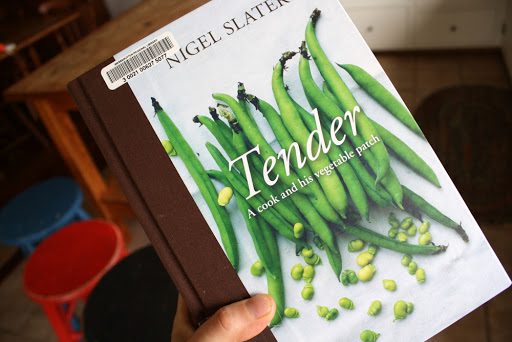
    back to the column. In it, I wrote about a book I read and how it’s
    changed my perspective on eating. I didn’t make all my points in the
    column, though. I couldn’t—I didn’t have enough time to hone my
    thoughts. Plus, I had too many ideas for the allotted 600 words.

    The main point (and you better go read the column
    first if you’re to have any idea of what I’m talking about), one that I
    think I’m just beginning to catch on to, is that we (North America?
    Mennonites? Just my family?) eat for both pleasure and to fill ourselves up, yet food has a primarily utilitarian purpose.

    Much of feeding my kids involves me saying, more or less, Just get it down.
    They are to eat the peas because they’re green, the beans and rice
    because they’re nutritious, the oatmeal to fill them up and give them
    energy for the day. It tastes good, too, but to dwell too much on the
    flavor seems snobby.

    While the French eat for
    fulfillment, too (obviously, they’re human), they also put high priority
    on enjoyment and flavor. Dinner doesn’t get slapped on the table—it
    gets portioned out, discussed, appreciated. Food is to be savored. The differences between the two approaches are small, yet profound.

    I
    was explaining these ideas to my mother and she said, “That’s a really
    sophisticated perspective of food. Starving people can’t eat like that.”

    “But we’re not starving,” I said.

    That exchange, right there, perfectly sums up the tension: I
    feel guilty about eating well. In fact, maybe I even eat like starving
    people—quickly and too much—because I don’t know how to handle the
    bounty.

    The funny thing is, I’ve been taught it’s
    fine—virtuous even—to spend hours upon hours growing, preserving, and
    cooking my food. Yet, somehow, spending much time eating it is
    sumptuous and excessive.

    Of course, I’m not French and
    I’ve never been to Paris (or even Europe), so all my information is
    second hand and therefore probably skewed. But when I serve French-style
    meals to my family, they are well-received, even with the “adult food” emphasis, so I do think I (as a pseudo French person)
    am on to something.

    We had a French-style lunch
    yesterday. Just my younger son and older daughter were present, and
    since my daughter was gone all last week and this was the first time she
    had one of these meals, I asked my son to explain the rules to her.

    “No fussing,” he said. “And you don’t have to eat everything.”

    (Several times, he’s accidentally said “curses” for “courses,” as in, “What’s the next curse, Mama?”)

    First course: Greek cucumber and tomato salad (with green olives instead of black)
    Second
    course: red beans over a mix of brown rice and quinoa (with toppings of
    sour cream, cheese, and salsa), and some tortilla chips
    Third course: apple slices and peanut butter
    Fourth course: molasses cookies

    It’s
    all normal food, leftovers and such. But the genius lies in serving
    only one thing at a time, with the veggies being first, and actively
    discussing
    the flavors—why they are paired up together and so on.

    With
    meals like these, there’s a little more planning involved, but that’s
    mostly because I’m not used to laying out meals in this manner. Also, I find
    I’m thinking about vegetables and fruits more—they’re not simply a side,
    they’re the star.

    Last night’s supper:
    First: a cucumbers, tomatoes, and peppers salad
    Second: grilled flatbread with pesto
    Third: watermelon and cantaloupe
    Fourth: good cheeses (a creamy buffalo and a smoked sheep) from NYC
    And after the sun went down: ice cream cones

    ***

    There
    was a cake recipe in that book, so of course I made it. The author
    claims it’s so simple that French kids make it all the time. It’s
    low-maintenance, for sure, the only tools required are a whisk and one
    bowl, but it took me three cakes just to get a feel for it.

    The
    first cake: I bought two six-ounce containers of yogurt and then, like
    the recipe said, used the empty yogurt containers to measure the rest of
    the ingredients. But I think that method led to inaccurate
    measurements—the resulting cake was too dense and dry. However, it had
    great potential, we all agreed.

    The second cake: I
    converted the measurements to standard cups and made the cake again.
    Yummy, but the bottom of the cake had a single, thin layer of
    denseness—not doughy and not un-done, just a little line of heaviness.

    The
    third cake: I turned to the web. There are tons of yogurt cakes out
    there, mostly from bloggers who read the book and then made the cake (a
    lá Yours Truly). I chose one that was simple and clean-cut. It had an
    extra egg, less sugar, and some nutmeg, but was still heavy on the
    bottom. We preferred the second cake.

    So
    then, rather than make a fourth cake, I decided that the little bit of
    heaviness (and it really is hardly noticeable) is just how it’s supposed
    to be. The cake itself is delicious: mildly sweet and noticeably tangy
    from the yogurt and with a unique crumb—moist, dense, chewy, and springy.

    French Yogurt Cake
    Adapted from Bringing Up Bébé by Pamela Druckerman.

    1 ½ cups plain yogurt, preferably full-fat
    1 ½ cups sugar
    2 eggs
    1 teaspoon vanilla
    3/4 scant cup flavorless oil, such as canola
    3 cups flour
    1 ½ teaspoons baking powder
    ½ teaspoon salt

    Whisk together the yogurt, sugar, eggs, oil, and vanilla. Add the dry ingredients and stir to combine.

    Pour
    the batter into a greased, 10-inch springform pan (or two round cake
    pans) and bake at 375 degrees for 35-45 minutes or until the top is
    cracked and an inserted toothpick comes out clean.

    This
    cake is great served plain, with a cup of coffee, or with whipped cream
    and fresh berries. Also, I think it would be fabulous crumbled into a
    bowl, topped with sugared strawberries and drowned in milk.

    This same time, years previous: butchering chickens, in their words, sauteed Swiss chard with a fried egg