• fun and fiasco: chapter two

    Continued from prologue and chapter one

    Chapter Two
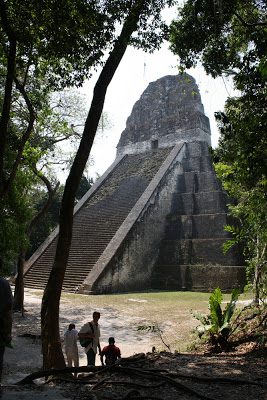
    The Fun: Tikal

    Thursday
    morning we got up early, packed food and water, slathered on the
    sunblock, and got into a private bus that we had contracted the night
    before. The driver took us all the way in to the park and then came back
    for us at the scheduled time. Totally worth the $US38.50.
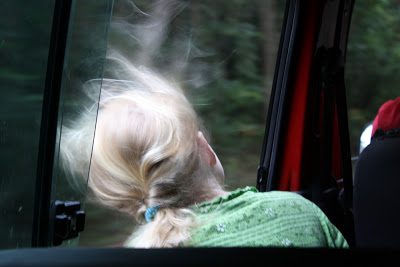
    This girl is part dog. Her head is forever hanging out the window.
    (That dog bite must’ve affected her more than we thought.) 

    I
    knew the children were excited to go to Tikal—we’ve been prepping for
    this adventure for six months now—but I didn’t realize how excited they
    were until we got there. They were like a pack of espresso-fueled
    squirrels. It was all we
    could do to keep up with them.

    Hey, Dad! Come check this out!

    In fact, we didn’t.

    Uh, guys?

    They zipped up and
    down those temples like they were on a mission. It didn’t matter one wit to them that hundreds of tourists parade
    through these grounds every week. To them, it was like they were the
    discoverers. They claimed those ruins.

    Look, Mom! Tikal money! I found Tikal money!

    It
    was early morning—the best time for seeing wildlife—and my husband and I were quite aware of the other tourists, all adults, all composed, all
    without children (though later we spied a few young’uns), so we did our
    best to get our kids to talk in quiet voices. But it was hopeless. The
    thrill was too much. (They did do fairly well—perhaps we were a little hyper-vigilant.)

    And then I
    realized, “Everyone is excited to be here. Some people express that by
    sitting quietly and looking around. Others (eh-hem, yours truly) take
    insane numbers of photos. Others do complicated poses to commemorate the
    moment. Still others read all the signs and charts in an effort to
    absorb as much information as possible. And some—my children, for
    example—express their delight by running around and up and down and
    shouting with glee over every tunnel, staircase, and hidey-hole. It
    takes all sorts of people and children are people, too, so there.”

    Tourists doing their thing.

    No temple was too high, no crevice too small—all of it had to be investigated.

    Yes, he tried to crawl in. Of course.

    Even the ants were fascinating.

    Hey, we’re at some awesome huge giant ruins so let’s video tape these tiny, super ordinary ants!

    Within an hour, the kids’ faces were flushed bright red.

     We paused for granola bars, water, and beef jerky on the plaza.

    The beef jerky was a MAJOR highlight for this meat-loving boy.

    Later there were apples on a park bench.

    Still later, when we had run out of water and I had a headache and my
    vision had gone all wavy, there were Milky Way bars and expensively purchased, and
    carefully divided out, bottled water. I had to force
    myself to finish my chocolate (I don’t think I’ve ever eaten an entire candy bar
    in one go), but  then I started to perk up.

    precious water, equally divided

    Lesson Learned:
    If you think you have enough water, you don’t. Also, high-calorie
    snacks are the way to go. We ate every hour and that was enough, but
    just barely.
     

    random park worker sweeping the path with a branch
     

    At one point, a park ranger came up to express concern that
    the kids might get hurt. This was kind of funny, because in Guatemala,
    kids ride helmet-less, carseat-less, and seatbelt-less. They play in the
    road. They handle machetes. But I guess Tikal has been North
    American-ized. Probably, they’ve been sued for deaths and such.
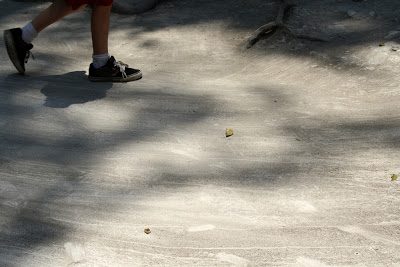
    nifty swirly designs in the freshly swept path
     

    It’s not like bad things don’t happen at ruins. I overheard
    one of the guards explaining that the main plaza temples had been roped
    off (they were open for the climbing when I last visited 18 years ago)
    because there were too many accidental sacrifices. Plus, the last time I
    was at some ruins (in Honduras), one of my friends leaped a stonewall-lined
    ravine, didn’t quite make it to the other side, and knocked her foot
    almost clean off the bottom of her leg (it was still attached, but not
    by much). So the night before we went to Tikal, I fretted. What were we
    doing taking our children to such a place? One slip and SMASH.

    (There was the time when we went up a particular mound to catch up with the children and there, on the other side where
    my kids were running back and forth like clumsy mountain goats, was a
    fifty-foot drop, good grief, let’s go around to the other side RIGHT NOW PLEASE.)

    But
    no one went bang-crash-smash and my husband made friends with the ranger who gave
    my children water from his own stash, bless his heart, and then gave us
    our own private little tour.


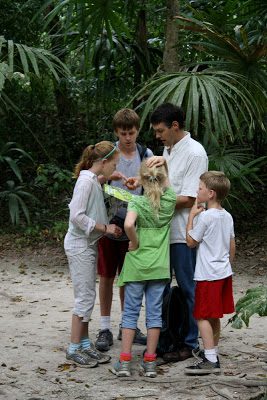
    My husband liked to pretend he was a tour guide.

    Upon seeing this stone door thing, he commenced a-quoting from The Hobbit, his voice all deep and quavery:

    Stand by the grey stone where the thrush knocks. The last light of the setting sun will shine upon a keyhole…

    Apparently
    he was pretty convincing, because on our way back when we passed by it
    again, my younger daughter went over, knocked on it to find the spot,
    and then starting yelling that she found it. She was ecstatic.

    Upon
    climbing a wooden staircase, my husband waxed
    eloquent about how the Mayans used inferior wood for their other
    structures, but for this one, they used the best wood and look how well
    it’s lasted!

    We climbed to the top of Temple IV.

    It was so high that it made me slightly dizzy (or maybe that was the lack of water).

    It
    put the fear of death into my fearless 7-year-old. He was so paralyzed
    with fright that he could only inch around on his behind.

    We kissed, trying to center the smooch over the temple.

    OVER the temple, dingbat son!

    It took a lot of tries, but we finally got it almost right. (Tourists are so weird.)

    We tried to call the States, but couldn’t remember the correct country code.

    Mom, here’s the proof that your son-in-law tried to call you!

    Back down on the solid ground, we took the obligatory child sacrifice photo…

    …and
    then headed back to the central plaza. The kids ran around for the last
    little bit and then it was time to head back. If it weren’t for the
    heat and the lack of water and more food, we could’ve stayed for hours.
    The place is pure magic.

    To be continued….

  • fun and fiasco: prologue and chapter one

    Preamble: this series of posts is long. Epically long. There are two reasons this is so: one, a lot happened. And two, the words pile up when I don’t get to write for five days and then you get this.

    ***
    Prologue: The Premise

    In order to renew our visas, we had to leave the country at the three month mark. Which meant that we had to go to either Belize or Mexico. We opted for Belize. On our way, we’d hit up the Tikal ruins and then do some snorkeling in the Atlantic, we figured. The Belize border dudes aren’t too keen on people walking across the border and then turning right around and re-entering, so since we’d be stuck in Belize for a couple days, we figured we might as well do something fun. We failed, completely and totally, but now I’m getting ahead of myself.

    Piles to be packed. 
    Rules: one backpack per person, and wear the sneakers and carry the flip-flops.

    Note: getting residency, like we did when we were three-year volunteers in Nicaragua, is too complicated and expensive for a short term position, though after what we’ve been through, I’m not quite sure that’s completely true.

    Also, note: at the six-month mark, we can renew our visas in the capital. It should, we hope, involve minimal rending of garments.

    When traveling, take maps. This is called foreshadowing.

    For this trip, I wanted to be as financially savvy as possible. We’d be shelling out the cash for a couple big ticket adventures, but in order to pull it all off, we’d need to be thrifty for the in between stuff. I spent hours researching on the computer and poring over our Lonely Planet guide, trying to plan the best schedule, learn the going rates, and preparing to play it smart. For the Tikal adventure, it all paid off. We saved money and had fun. For the Belize part, well, we’ll get to that later.

    ***
    Chapter One: Setting Out

    We got up early on Wednesday morning, took a taxi the whole way into Cobán (the buses weren’t running yet, plus, sometimes it’s cheaper for us to go in a taxi than to pay six bus fares), and found a bus headed for the Petén.

    The Petén is in the Northern part of Guatemala. It’s flat and low down and excruciatingly hot. We spent five hours riding through it in a packed-full micro bus. If it weren’t for the fruit check point (where everyone has to get out while scary-looking official people root through our bags in search of forbidden fruits) (our expensive apples passed, whew) that happened to have a public restroom, thank goodness, it would’ve been five whole hours without a bathroom break.

    We got off at Santa Elena and hopped another bus to El Remate. The hotel we were going to stay at happened to be shut down (oops!), so I asked a local for an economical place and she took me to her dad’s hotel. We got two rooms (four beds and communal shower, toilets, and pila) for about 13 bucks, which made me immensely proud and feel all sorts of capable, as in, we are so awesome at this backpacking stuff that Lonely Planet should hire us to trot the globe and write about it because I have this stuff down.

    Turns out, the rooms were stifling hot and the shower was shocking (my older daughter got smartly zapped), but hey, the people were friendly! I was not daunted in the least.

    Lesson Learned: economical might not be the most comfortable, but as long as it’s clean (and this place was), we will survive. We might melt, suffocate, and sacrifice privacy and modesty for the sake of an open window and the hopes of a hot breeze, but we’ll make it.

    When we first arrived, it was lunch time. Every place looked touristy and there wasn’t a grocery store in sight, so I stopped at a place that looked like it had food-making potential and eyed the menu board. Everything ran about Q25.

    “Don’t you have anything for less?” I asked. “In the market where we live, we can get a plate of beans and rice for Q10. We just want something simple—food that the locals eat.”

    “I can make you spaghetti with vegetables for Q10 a plate,” the woman offered. We accepted, of course. You really can’t beat feeding a family of 6 for $US7.50.

    We ate there again that night. This time it was eight emapanadas (four filled with mashed potatoes and the other four with chicken, and topped with slaw and a saucy tomato sauce) per plate, again at a cost of Q10. We ordered four servings, plus one more at the end just to make sure we were all filled up real good. The kids scarfed them down so fast that the server, the cook’s husband, busted up laughing every time he set down a fresh plate full.

    Lesson Learned: ask for stuff that’s not on the menu! Tell them what you’re willing to pay and see what happens.

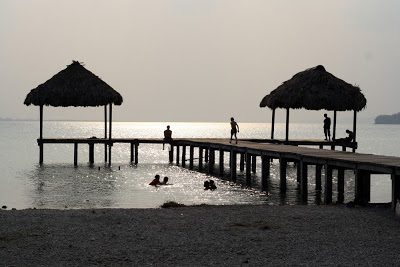
    In between our economical lunch and supper, we headed down to a public dock for some lakeside swimming.

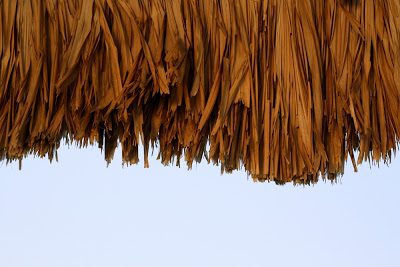
    thatch roofs: cool, breezy, and picturesque 

    There were some fancy docks (swimming pools, too!), but they were private, so we kept asking around until we found a place. It was gorgeous. Hot, yes—even the water felt hot—but gorgeous.

    Our youngest, the kid who I couldn’t bribe to jump off the small diving board at the public pool last summer, is now jumping off high-up docks and swimming the whole way to shore by himself. It’s now official—we have four, fairly stable swimmers, hallelujah!

    To be continued…

  • answers

    out my bedroom window

    Over the past few months, I’ve gotten some thought-provoking questions that I’ve never taken the time to answer…until now. Let’s jump right in, shall we?

    ***

    Question #1: I’m curious to know more about what narrative you use to prop yourself up when the “what in the world are we doing??!!” spiral begins. When the kids are grouchy and sad about leaving friends, snow, familiar places and routines, when you are weary of sorting and packing and planning, when you feel anxious about rain and darkness and being loud and tall, what do you tell yourself (and the children) to find some peace in it? Perhaps it is such a deeply personal experience that putting it into words is impossible, or maybe it is such a step of faith of some kind that explanation is inadequate. But those of us who shrink from the weight of “calling” still would like a reason to turn our lives upside down, if only for a season.

    (This question came while we were still in the states. In a coffee shop one afternoon, I wrote a windy answer that went on for pages and didn’t make much sense. So I dropped it. But I didn’t stop thinking about it. Probably because I’ve been wrestling with these questions for years, and now, in the midst of an assignment, all the more so.) 

    We all turn our lives upside down, in big ways and little, for the things we think are important. We do hard things because we trust we will become better people for doing so. We go to med school, have babies, see counselors, invite the new family at church over for supper, care for aging parents, ride bike to work, and smile at strangers. Also, when we commit to something (marriage, parenthood, a new job, a move), it’s natural to grieve what we are giving up. It’s always the hope that the new venture, while risky and unknown, will provide benefits that will compensate for what is being left behind. This is life.

    My husband and I volunteered with MCC because we wanted to. It wasn’t because we felt a calling or a push or felt a heavy weight pressing us down. It was because I spied a golden opportunity dangling in front of my very nose, so I informed my husband that I was going to go for it and he best come along, too.

    Yes, we are giving something to this little school in the Guatemalan mountains, but it’s peanuts in comparison to what we’re receiving. This doesn’t de-value what we are giving—our time, our skills, our best efforts—but simply states the truth. This is just how it is.

    ***

    Question #2: How could you possibly eat store bought tortillas when you have the best homemade tortilla recipe in the world?

    Because making tortillas takes time.

    For some reason I can’t yet put my finger on, cooking and food prep takes way more mental energy than it did in the states. Maybe because I’m working in a less-than-perfect set-up: one small worktable, few tools, small fridge, etc. In the states, I can bop around the kitchen while talking on the phone, checking email, and keeping one eye on the kids. Here, each thing takes my full attention. It’s easier to buy a pack of chemical laden flour tortillas, or stop by one of the corn tortilla vendors lining the market entrance. If I take the time to make flour tortillas, or any other non-essential food like bread, cookies, or meat, it’s a special treat.

    ***

    Question #3: I am wondering why the mission organization accepts families with multiple kids, knowing these underlying difficulties.

    (This question came after I wrote about how much the kids were struggling with our move. I can’t answer for Mennonite Central Committee, but I can tell you what I’ve experienced from working with this agency for going-on-four years.)

    1. Moving to another culture is hard. Period. It’s challenging for singles, couples, and families.
    2. Working in foreign countries is all about The Relationships. Having children helps to speed up the relationship-building process.
    3. MCC is mostly made up of singles and couples. There are families, but they aren’t quite as common, probably because most parents are smarter than us. Also, it’s more expensive to relocate families.
    4. MCC is aware, as are we, that children are the future leaders of our families, communities, churches, and country. We are exposing our children to experiences and concepts that will help shape their views of the world, hopefully in ways that will make them more compassionate, generous, and confident.
    5. Children are considered a part of the MCC team. While not expected to “work,” their needs and interests are taken seriously.
    6. Stretching experiences, although difficult and sometimes quite painful, are not bad. MCC acknowledges this and does a good job of preparing children for what they might experience. But being prepared doesn’t mean they will be able to avoid the painful experiences.
     

    ***

    Question #4: What insects are you encountering? (Thinking of all the cracks and crevices in the houses.)

    Flies!
    Flies are everywhere now that it’s warming up. Crickets. Moths. June
    bugs. Unidentifiable flying insects that crash into my head while I’m in
    bed at night trying to read by the glare of the single lightbulb.
    Spiders. We have to shake out our clothes before wearing them because
    unworn clothes make fabulous spider houses.

    ***

    Questions #5: Sometimes I feel like you think you should be able to live in these conditions and not mind the cold, etc. because the natives are acclimated. Is that true? Because, I just want you to know that it sounds perfectly miserable. I like the buffer. I want the buffer. I must have the buffer. Why is it that Mennonites think they have to suffer in order to do good for the world?

    1. I don’t like to suffer.
    2. I don’t think anyone should have to suffer.
    3. We aren’t suffering here—on the contrary, it’s an honor to experience something so different from our norm. But! This doesn’t mean it’s all roses and coffee in bed.
    4. The pleasure and wisdom we gain from life is in direct correlation to the hard stuff we experience. I’m not sure this is always true, but I think it’s true much of the time.
    5. I think I did as much, if not more, good stuff for the world in my comfy home in Virginia.

    ***

    Question #6: Are you feeling okay about being there now, enjoying the experience and feeling like it’s a worthwhile endeavor . . . or are you quietly counting the days until you’re heading back home?

    I am feeling extremely okay about being here. There are things I miss about home, and if I let myself think about them—soft sofas! Netflix! my own van! family! fresh sourdough bread!—then I feel all sorts of forlorn, so I don’t let myself think about them.

    It’s an incredible gift to be able to experience another culture as a family. Most days, I feel like I hit the jackpot. I revel in this amazing experience that I dreamed of but thought we’d never have. And now we do!

    The children, on the other hand, miss home. They’ve accepted their lot in life, even embraced it, but there is definitely a countdown going on. While my husband and I could probably stay longer, I think the kids—at least at this point—would be crushed. So we’re taking this time for the gift it is and living it to the max.

    ***

    Questions # 7: How does Luvia tie off the braids without the help of a hair band? 

    (I can’t track down this exact question—maybe it came in an email?—but I do know someone was wondering…)

    I never saw her do it, but I did take a photo of the end product.

    Maybe you can figure out how just by looking?

    More questions, observations, challenges? All are welcome, so ask away to your heart’s content!