• managing my list habit

    My husband is not a list maker. When—if—he manages to scrawl a column of words, that’s about as far as he gets. More often than not, he’ll get up to go do something and then never look at the list again. Or, if it’s a shopping list, there’s a good chance he’ll leave it at home (like he did on Saturday). Even when he remembers to take the list with him, he often forgets to refer to it, which means he is notorious for forgetting key items.

    I have tried to help. “Cross the stuff off as you go, hon,” I’d coach. “It’s not hard. At least make sure you read over the entire list before entering the checkout line, okay?”

    When my suggestions didn’t do the trick, I took to reading my lists out loud before he’d leave home. “It says fresh ginger,” I’d say, “but I only need a little. Just two or three inches worth.” Or, “The generic seltzer water. And don’t get something flavored by mistake, hear?”

    “I know, I know!” he’d huff impatiently, trying to snatch the paper.

    “Call me before you leave town,” I’d shout as he hustled out the door. “So I can make sure you have everything!”

    To be completely fair, he does do a pretty good job most of the time (as long as he remembers to read the freaking list). It’s just that he’s not … list-inclined.

    There is one exception to his I-don’t-do-lists rule. Whenever I get hit—usually on a Saturday morning at breakfast or late at night before bed—with a wave of there-is-so-much-to-do anxiety and launch into an involved tale of all the ways the world is crashing down on my head right this very minute, he’ll listen for approximately 17 seconds (about how long it takes him to judge the severity of my meltdown) before cutting me off.

    “Just write it down,” he’ll say. “Make me a list.”

    And so I do, and then he does all the things. (Except for the ones he skips. But I’ve learned to compensate for his sub-par list-reading skills by bulking up the list with extra items. That way I don’t get as peeved when he skips a few.*)

    I, on the other hand, am a voracious list maker. I make grocery lists, to-do lists, wines-I-like lists, books-I’ve-read lists, food-I’ve-served-company lists, ideas-for-gifts lists, what-to-write lists, and so on. Lists keep me focused, rooted, and productive. They are my coping method for managing the crazy town that is my brain and the chaos that is my house and the whirlwind that is my husband. In other words, lists are my cheap therapy.
    My list habit means that I’m always jotting things on bits of scrap paper and then leaving them lay. This drives my husband crazy. He can’t stand all my fluttery reminders cluttering up the surfaces. He’s been hounding me to get a notebook for years. But I don’t want a notebook; I like the transience of scrap paper and the fun of throwing it away when it has served its purpose. Then just a few weeks ago I hit upon a method that makes both of us happy. It goes like this:

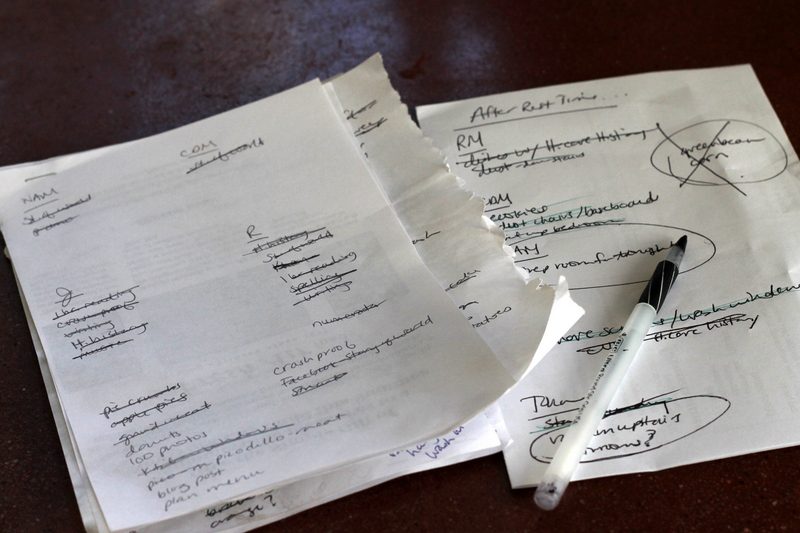
    On Monday I make my typical to-do list. This list usually includes a section of studies and chores for each of the children, so I can keep track of them, plus my own agenda. Throughout the day, I cross tasks off and add new ones. I also use the list to record phone numbers, recipes, and other random bits of pertinent information.

    On Tuesday morning, I start a fresh list, place it on top of Monday’s list, and staple the two together. Then Wednesday’s new list gets stapled a-top the old, and then Thursday’s, Friday’s, and so on. By the end of the week, I have a fat packet of accomplishments. I review the lists and copy over anything that’s still relevant to a new list before discarding the whole pack of scraps (or, confession, letting the packet lay on my desk for another few days).
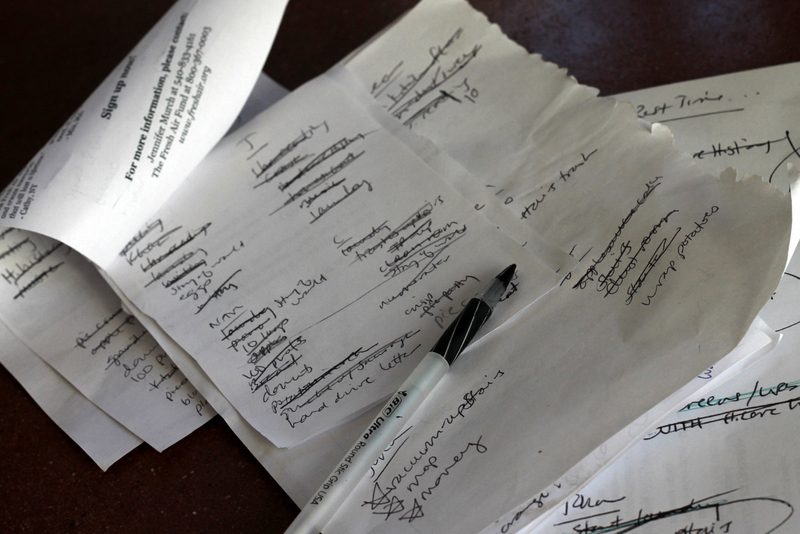
    So that’s my brilliant new method. Aren’t you impressed?

    *When my husband read my bulking-up-the-list technique, his eyes grew round. “I don’t…Are you…? What in …,” he stuttered. His shock quickly turned to indignation—You are so bad!—and then laughter, “Are you sure you want me to know this?”

    This same time, years previous: the quotidian (12.8.14), okonomiyaki!, the quotidian (12.9.13), smoking hot, a family outing, zippy me, peanut butter cookies, baked corn, and butter cookies.

  • the quotidian (12.7.15)

    Quotidian: daily, usual or customary; 
    everyday; ordinary; commonplace


    Sweetness. 
    I am of the firm opinion that Little Brother needs to relocate his family to the Shenandoah Valley…
    or at leastpretty please?Washington D.C.
    For research purposes.

    Uh, now what, Mama?

    The Russian nesting doll of babysitting: I babysit girl babysits twins.

    My companion in illness: good health ought never be taken for granted.

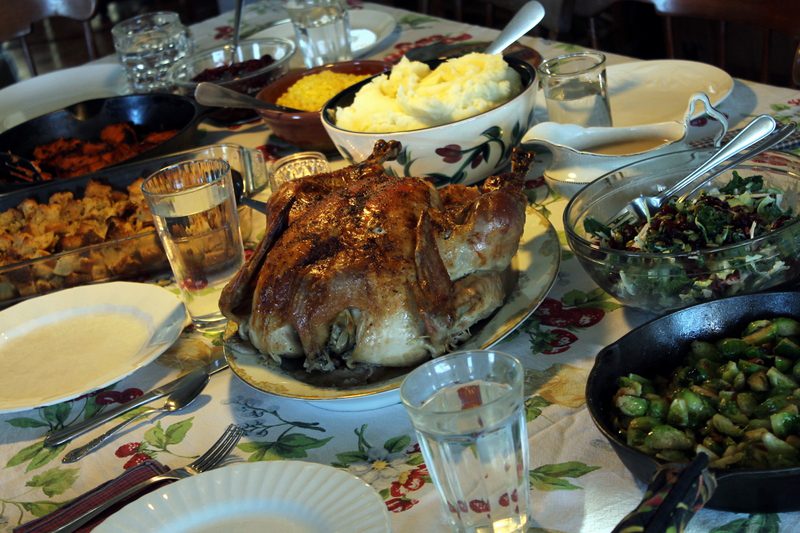
    Turkey is so easy. Why don’t I make it more often?

    I wanted leftovers. Now I have leftovers.

    This same time, years previous: holding, iced ginger shortbread, winter quinoa salad, my kids are weird, raisin-filled cookies, chocolate truffle cake, and the selfish game.      

  • oatmeal sandwich bread

    It is after five p.m., the sky is darkening, and I’m sitting on the sofa in front of the fire where I’ve spent most of the day sleeping. I don’t feel awfully sick, but it’s not like me to sleep off and on until mid-afternoon so I guess I am. I did rally enough to clean out the bathroom cabinets, which is totally not my sort of thing, thus making me wonder if my condition is more dire than I first thought.

    Mid (one of my many) nap, the neighbor woman stopped by with a basket of grapefruits and oranges. She didn’t know I was sick, and I didn’t even go talk to her—she was gone before I could heave open my eyelids—but all that citrus generosity made me buzzy happy and eventually I toddled out to the kitchen to eat one of each. And then I ate graham crackers, cleaned off the art table, and picked up my (coughing, oh dear) daughter from work. In keeping with my random, sick-girl behavior, I just ate a bowl of potato chips and now I want to tell you about bread, so humor me, please.

    We eat sourdough bread most of the time in this here house, but every now and then I get a hankering for fresh bread the easy peasy, commercial yeasty way. So a couple weeks back when I had whole grains on my mind and a large sack of hard red spring wheat in the pantry, I did some old-fashioned recipe perusal and then settled on an oatmeal sandwich bread from Kim Boyce’s fabulous book, Good to the Grain.

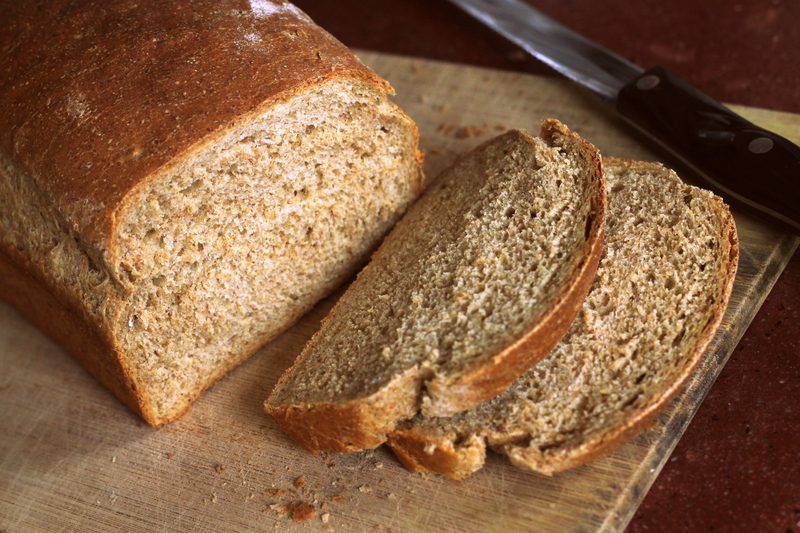
    It was neither the “oatmeal” part nor the “sandwich” part of the recipe that intrigued me, but rather the recipe’s straightforward method and the bread’s dark golden hue. It looked perfectly wheat-y and whole grainy, exactly the brown bread I was after. So I made it and fell, as is my custom with good recipes and delicious food, madly in love.

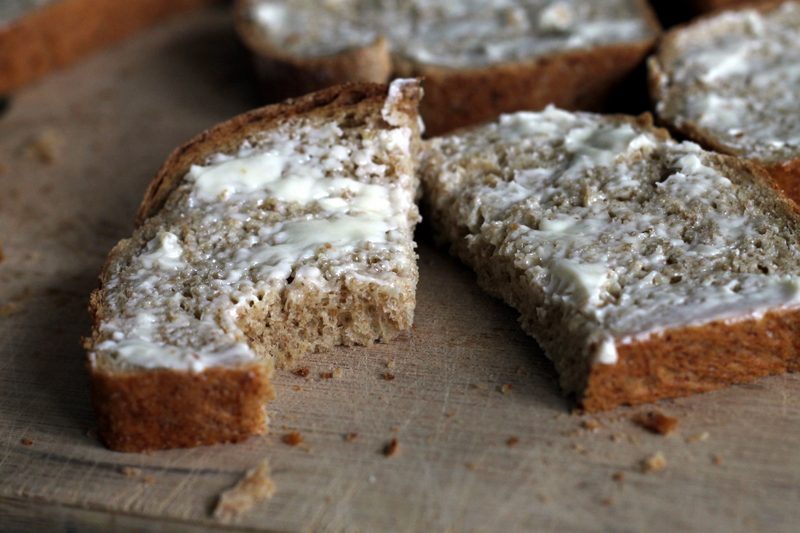
    The recipe was a breeze to work with (especially when enlisting a Kitchen Aid) and I learned all about autolyse, which is the delightful and profound process of allowing the ingredients to rest before adding the salt and kneading. Autolyse(ing?) allows for the grains to absorb more of the liquid so the bread stays more moist. And boy, does it ever! The bread was angel cloud, meltingly soft. I was S.O.L.D. sold.

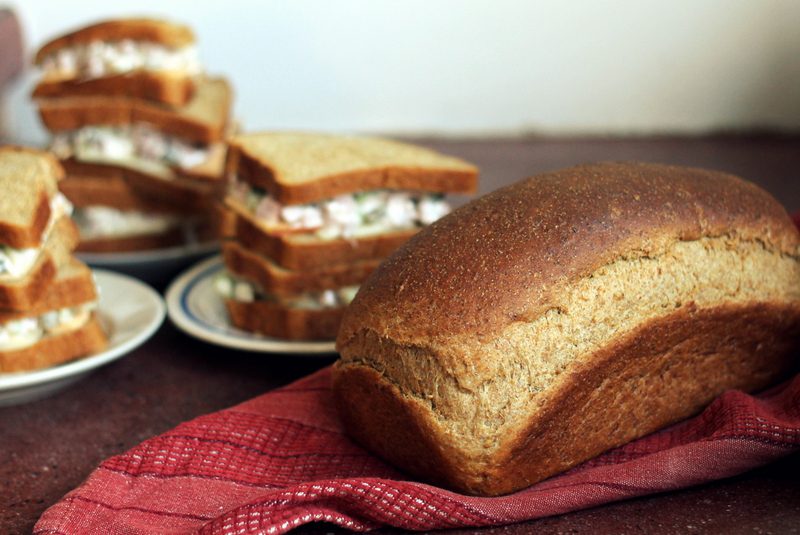
    And then, rather by happenstance, I ended up using the fresh bread to make sandwiches—we were running errands or going to the theater or something, so I rustled up a ham salad and slapped together some sandwiches—and then I totally understood why the bread was classified as sandwich material.

    The bread was so tender and soft that it melded to the filling. Sometimes you want a sturdy sandwich bread to stand up to the filling—that’s the way of sourdough—but other times you want a bread that is a bit more comfortable with sharing its space, more accommodating towards textures and flavors, and this, my friends, this is that bread.

    PS. I wrote this post on Thursday. On Friday I felt like a million dollars and made an entire turkey dinner to celebrate. On Saturday, I didn’t feel quite as hot but still managed to muster enough energy to make a batch of this bread. For the requisite turkey sandwiches, of course.

    Oatmeal Sandwich Bread
    Adapted from Good to the Grain by Kim Boyce.

    This recipe is supposed to yield one loaf but I made two. My pans were on the large side so I worried that the loaves would be too skimpy. Turns out, the dough rises well so the loaves shaped up quite nicely (though slightly on the small side).

    1 tablespoon yeast
    3 tablespoon molasses
    2½ cups whole wheat bread flour
    2 cups bread flour
     1 cup rolled oats
    ½ stick (4 tablespoons) butter, melted
    1 tablespoon salt

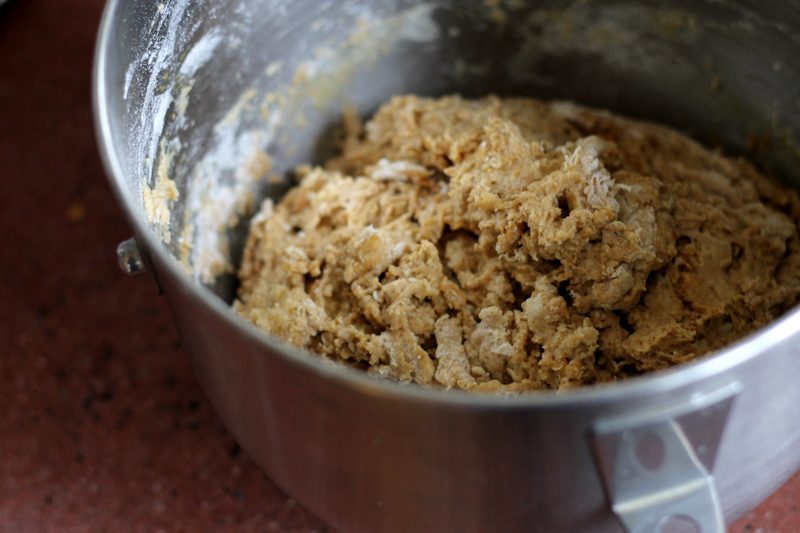
    In a large mixing bowl (or in the bowl of your stand mixer), measure 2 cups of warm water, the yeast, and molasses. Stir briefly and let sit for five minutes until bubbly. Measure in the flours, oats, and melted butter. Mix until just combined. Now, autolyse! In other words, cover the bowl with a towel and let sit for 30 minute. So complicated, I know.

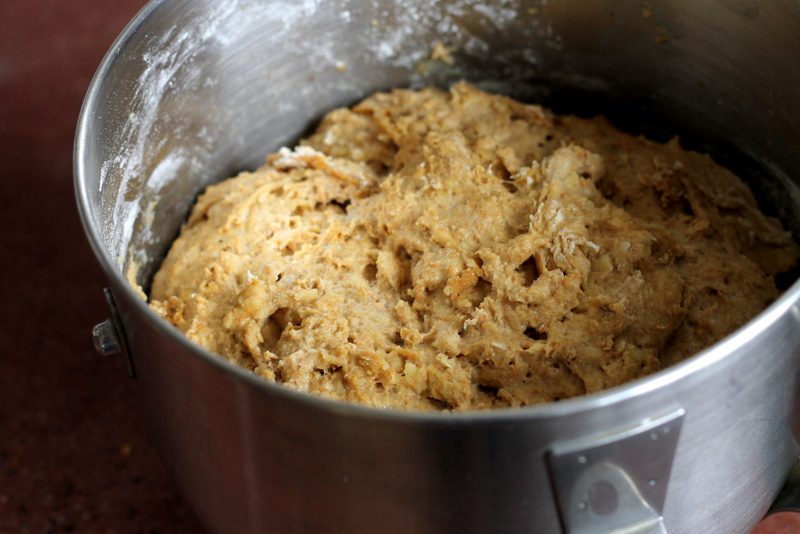
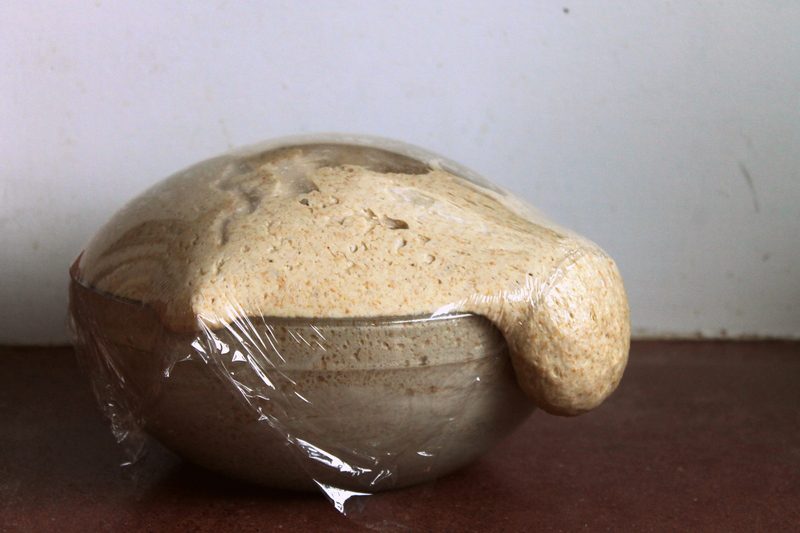
    After thirty minutes is up, the dough should be ragged and poofy. Add the salt and mix for 4-6 minutes. The dough will be quite soft and slightly sticky, so, if mixing by hand, you’ll get a workout. (If kneading by hand, be extremely sparing with the flour.) Place the dough into a greased bowl and cover with plastic. Let rise until double, about 30-60 minutes.

    Turn the dough out onto a floured surface and divide it into two parts. Shape into loaves and place into greased loaf pans. Cover and let rise until doubled. 

    Bake the loaves at 400 degrees for about 30-40 minutes, rotating the loaves partway through. Remove the loaves from the pans and let cool before slicing. Make sandwiches!

    This same time, years previous: nanny sitting, the college conundrum, in my kitchen: 6:44 p.m., sushi!!!, cinnamon raisin bread, the quotidian (12.3.12), baked ziti, 17 needles and 4 children, the quotidian (12.5.11), red lentil coconut curry, and wild.