My anxiety has dropped considerably. Now that things are getting bad and people are taking it seriously, it no longer feels like such an ominous threat. The danger is here and so are we. Now I can adjust accordingly.
I’ve been thinking a lot of parents with small children.
When my four kids were six and under, I went crazy on a daily basis and that was with lots of childcare swaps, my parents’ help, and outings to the library and children’s museum and church and the park, etc. Take all those options away and it’d be a recipe for disaster. Or at least a lot of maternal meltdowns.
Now with the kids all big and mouthy and helpful, it’s a totally different story. They do the housework and tell me stories and argue with me and make the popcorn for family movie night and initiate the dance parties and give me a reason to make lots of food and let me sleep in. AND when I say I need a break, they leave me alone.
So yeah. I can not imagine living through this stay-at-home order with small kids. To you parents with wee ones, my heart goes out.
***
A couple weeks ago, a request went out for volunteer babysitters for hospital staff. My first impulse was to sign us up. My girls just lost their babysitting gigs. We’re all at home. This could be one way we could help.
But our weakest link right now is my husband. He has asthma, and he’s our main source of income. Keeping ourselves healthy in order to protect his health, and so we can operate with a modicum of normalcy and self-sufficiency and not be a drain on others, might be the best thing — the most generous thing — we can do right now.
And yet, it also feels terribly selfish. My whole life I’ve been taught to reach out, to include, to assist, to welcome, and now here we are barricading the door.
***
Did you know that the emergency relief money we’ll supposedly be getting — 1200 per adult*, 500 per child under 16 — does not include anything for dependants who are disabled adults, elderly, and between the ages 17-24? (At least as of now; maybe they’ll change this?) As though these people aren’t also losing jobs and getting sick and paying bills and buying groceries?! As though they cost less than our children under 16?!
When my husband learned this, he hit the roof. So sorry, kids, he told our two oldest. According to the US gov, you don’t count.
(But maybe he’s wrong? Please tell me he’s wrong!)
*Fact: the $1200 is more than a person would earn working 40 hours a week, for four weeks, at the national minimum wage of $7.25 per hour.
***
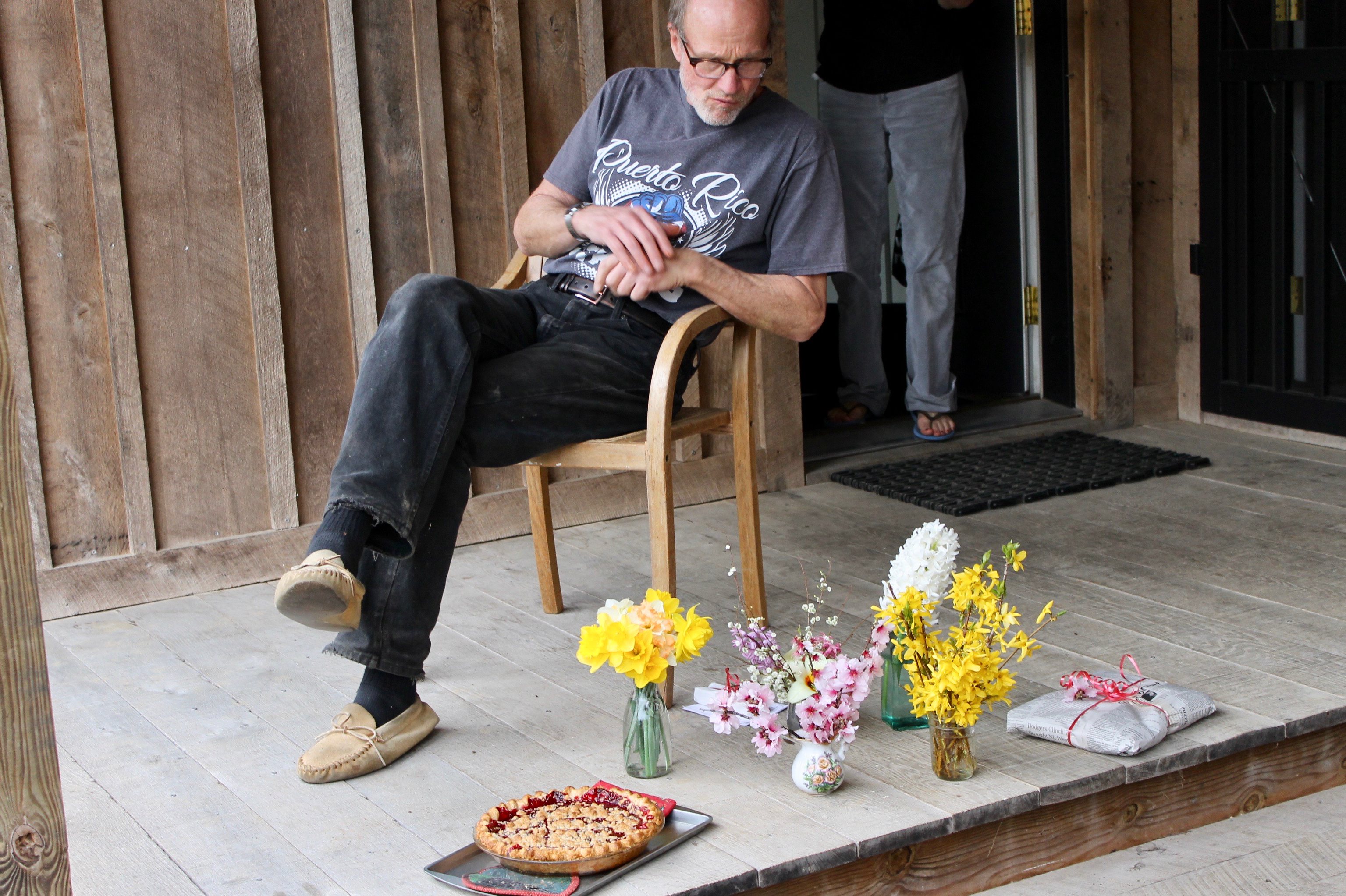
My dad’s birthday was last week. To celebrate, we had a drive-by party.
My brother’s family, and another neighboring family, went in the morning, and we made our stop at the end of the day.
Flowers, presents, and pie: it was more fun than I thought it’d be.
***
The gist of the article is this: The mad rush to keep things normal — to transition classes to online, to maintain our projects, to stay productive — is foolish. We want to keep things the same, but the truth is, things will never be the same. “The emotionally and spiritually sane response,” Ahmad writes, “is to prepare to be forever changed.”
How do we do this? Conveniently, she breaks it down into three stages.
Security, in which we spend the first few days or weeks focusing on food and family. This is the part where we identify our team (the people we’ll be supporting and working with), secure our home, and let go of all our “shoulds.” This is the mental adjustment period, and it’s profoundly uncomfortable. If we feel bad, good. It means we’re doing the hard work.
The mental shift, in which we begin to adjust to the new reality. Gradually, the brain resets and our ability to do higher-level work returns. This happens at different times for different people; don’t rush it.
Embracing the new normal, in which we dig into the reality of our new situation and begin to establish routines and structure. We become high-functioning people, even while still living in a crisis. We develop schedules and get things done. “Understand that this is a marathon,” writes Ahmad. “Emotionally prepare for this crisis to continue for 12-18 months, followed by a slow recovery. Right now, work toward establishing your serenity, productivity, and wellness under sustained disaster conditions.”
I think I am at the tail end of stage one, beginning to enter stage two. I’m once again able to focus on small things, like blogging and washing the windows and trying a new method for sourdough bread. Before, these activities felt so unimportant in the face of such a huge crisis that I could hardly bring myself to do them. Now, though, they feel satisfying and life-giving.
(I still can’t write, though. And that’s okay. The article gave me permission to let that go.)
And now, for a few musical gems from the last week.
My brother and his wife put out a new song.
In his email to the family, my brother said: We wrote this mostly before COVID-19 made staying at home a national pastime; even under normal circumstances, a lot of our everyday work and play takes place in our home, with out home schooled kids scampering about. Side note: Numerology, in which we have zero interest, relates 60 to “family, home, and nurturing” and 55 to “independence and personal freedom.” We considered using our actual house number, but it didn’t rhyme so nicely.
(The ending’s my favorite.)
And have you seen this family singing Karaoke?
Every time I watch it — and I’ve watched it a lot — my face about splits in half from grinning so hard.
And
this, I’m sure you’ve seen — it’s gone crazy viral. The bickering in the beginning makes me feel right at home.
And one more: Do Re Mi, Covid-19 version.
And…that’s a wrap!
xoxo