Remember how I said I wished I had a grandma to teach me how to make cheese?

Well, a few weeks back I got an email from some professor guy. Apparently one of my girlfriends works with him, and when he told her he was into cheesemaking, she mentioned that I was also making cheese: Would I be to talk about and/or trade cheeses with him? he wondered.
I wrote back (paraphrased), Whoop! Can I come watch you make cheese?
But I was hoping to shadow you! he responded, which cracked me up because, judging by the cheeses he was making — Cotswold, Cheshire, butterkase, Colby, peppery Italian-style, etc — he was leagues ahead of me.
So anyway. That’s how, a couple Saturday’s back, I ended up in some stranger’s kitchen watching him make dill Havarti.
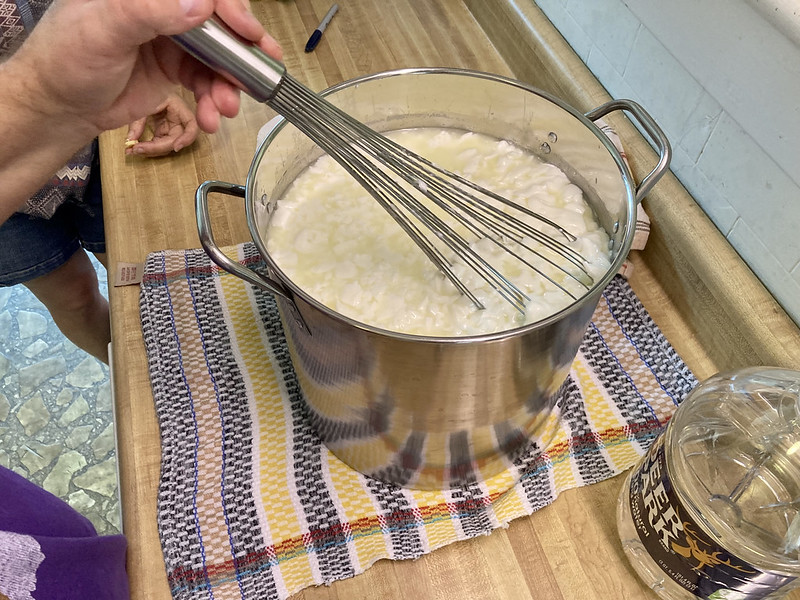

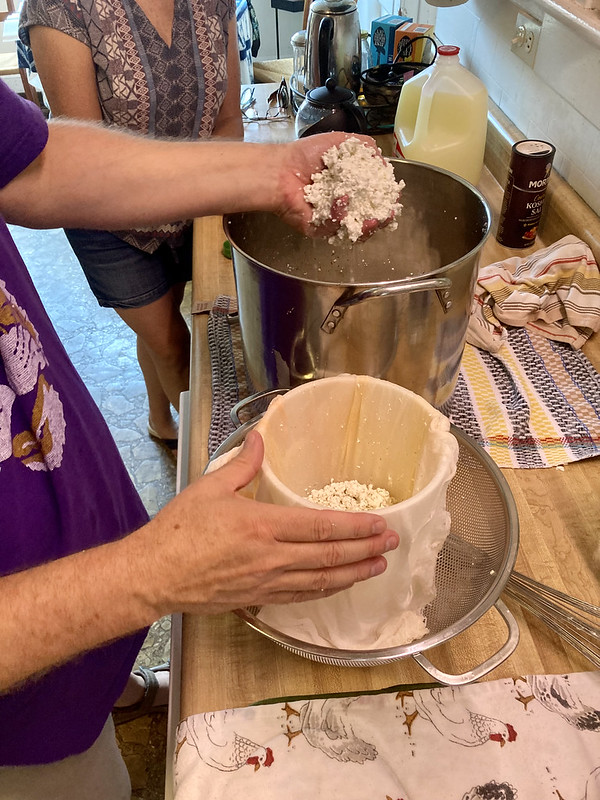

his son (or son-in-law?) built the press
He’d cut into a Lancashire he’d made months before so we could nibble (or, as in my case, feast, ha!), as well as a Belper Knolle. Both cheese were insanely good. Like, mind-blown, bar-raised, and “take some home and don’t tell my parents when they stop by because I don’t want to share” good. This guy’s cheese was as good as — no, better than — good quality store-bought cheeses.

Belper Knolle on the left, Lancashire on the right
While there, I got to go down to the basement to see where he ripened and aged his cheeses. I couldn’t get over the variety of cheeses stashed away in his fridge-turned-cheese cave— they looked so professional, so delicious— and I asked about everything, from the plastic mats in the bottom of the ripening boxes to brine solution to cultures.

LOOK AT THOSE CHEESES
Turns out, I was right on both accounts: 1) he did know much, much more than me, and 2) seeing someone make cheese — discussing and watching his process and asking questions — did wonders for my cheesemaking education. I came home from his place PUMPED.

Right away, I made a batch of dill Havarti while the process was still fresh. I ordered supplies — ripening boxes, a better spoon, more cultures, annatto, a curd knife, more bamboo mats — as well as a new cheesemaking book that I am loving. I dug out a spray bottle of vinegar-water solution (1:1 ratio) and a roll of paper towels — I needed to be more finicky about sanitation — and made a batch of Belper Knolle (more on this later). I spent hours watching youtubers he’d recommended: the Biegel family makes their cheese from goat’s milk (check out this cheese feast), and Gavin Webber, aka The Curd Nerd, knows everything.
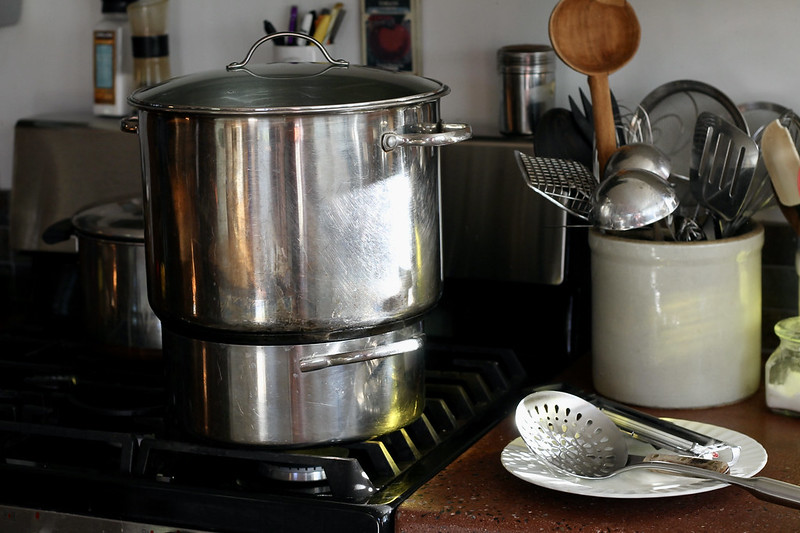
makeshift double boiler for three gallons of milk
My biggest problem, though, was figuring out how to dry cheeses at room temp — it was so crazy humid-hot in our house — and then where to keep them for long-term aging. Ideally, cheeses are aged at 56 degrees, in either a root cellar or a refrigerator that’s been cranked up high (which is what the Cheese Professor did) or in a wine fridge, but I had nothing.

Leicester
So we started testing things. Our little dorm fridge stayed too cold, as did the full-sized fridge we had in the barn. My husband began researching what it’d take to transform an old upright freezer into a cheese cave. I put out feelers on social. We scoured craigslist. Nothing. In the meantime, we stuck the air conditioner in the downstairs bedroom, turned it down way low to a chilly 63 degrees and used the whole room as my temporary cheese cave. Not very practical, but oh well.

stirred-curd jalapeño
And then my older son’s (then) girlfriend said her dad had an unused wine fridge we could borrow; when the two of them visited her family to announce their engagement, they brought it back with them. At first it didn’t cool properly (or at all, actually), but then my husband waved his hands over it and brought it back to life AND NOW I HAVE A FANCY-ASS CHEESE CAVE.
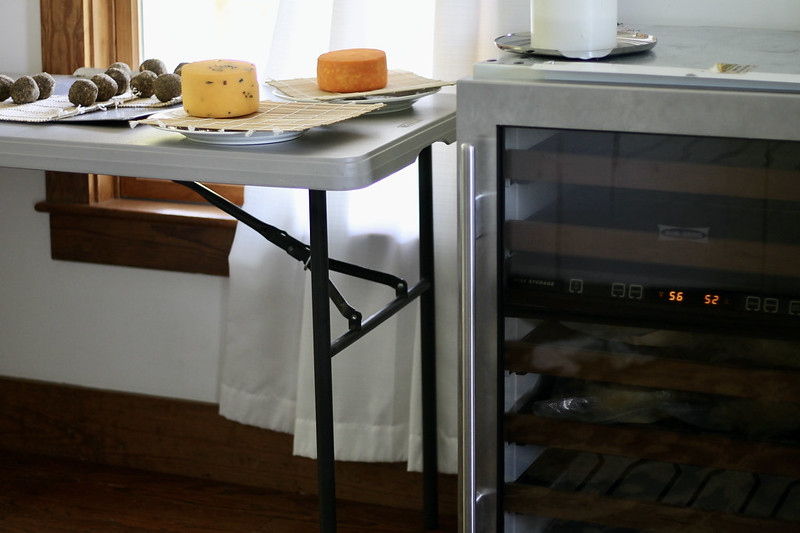
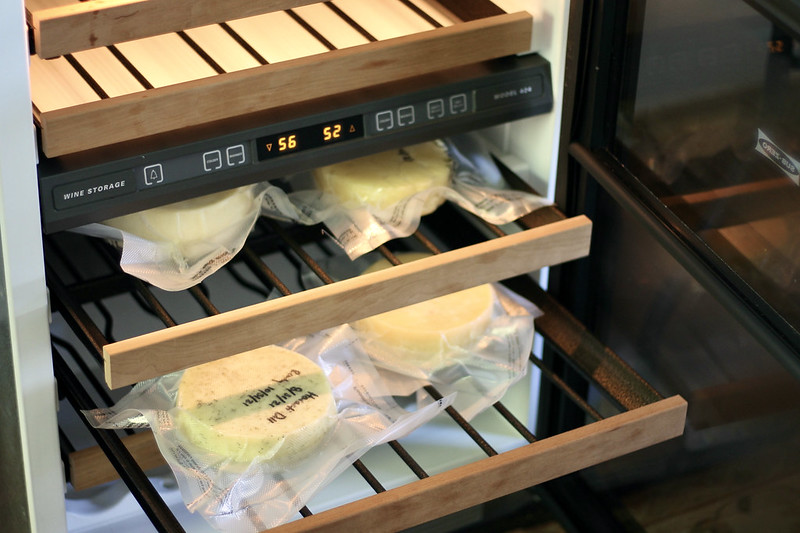
Currently, I’m air drying Leicester, stirred-curd jalapeño, and Belper Knolle. And in the cave, I have stirred-curd cheddar, traditional cheddar, Monterey Jack (which I’m pretty sure is punk), and the dill Havarti.
The bad thing about cheesemaking is that it takes months until I know if the cheese is any good. What if we hate it? But the product seems consistent— things look as they should, I think, and the curds taste good— so I’m deciding to trust the method, the instructions, and the cheesemaking instagrammers and bloggers and just run with it. It’s not like I have any other option, right?
This weekend I cut into one of the week-old Belper Knolles — I couldn’t take it anymore — and it was fabulous. Not as fiery and intense as it’ll be in several more weeks but good enough for me to eat a solid half of a cheese and then make plans to get going on a few more batches.

Those little nuggets are gold.
I’m learning that cheesemaking takes time and focus. I can’t be zipping around doing a million other things (since sanitation is huge, I have to take care not to be simultaneously working with sourdough — cross-contamination with yeast is a sure-fire way to ruin a cheese) so the only other thing I can do while making cheese is read. As a result, I’ve taken to calling cheesemaking days my “Cheese and Read” time. In between monitoring temps, stirring curd, finagling double boilers, setting timers, and meticulously sterilizing equipment, I read.

It’s a lovely way to pass an afternoon.
This same time, years previous: the quotidian (9.10.18), what writing a book is like, retreating, 2012 garden stats and notes, whoosh!, Indian chicken.


