• Before church

    I need to get this off my (flat) chest before I go to church tomorrow. It’s a recipe for potatoes that is so incredibly delicious it’s a crime for me to keep it to myself. If I were Catholic I would have already gone to confession and said multiple Hail Mary’s for the sin of Extensive Recipe Withholding.


    I told my mother, the queen of potato gluttons, about the recipe and after waiting all week for me to post about it, she finally called me up on the phone yesterday, demanding I give it to her immediately. But then she ended up not making it that night after all because my father took her out to see Frost Nixon and they ate cereal at home before going out and then they ate McDonalds’s on the way home, and while the movie was good, I know she would’ve like these potatoes better. She’ll get to them, though, so I’m not worried.


    But I am kind of worried about the rest of you. I know everyone has their own set of likes and dislikes and no one should be bullied into eating a certain dish, and it’s not a good idea to bully people in general, but I don’t think it’s too great a sin to cajole someone into please, pretty please, trying something new. It’s not like I’m sitting across from you at the dinning room table, fork in clenched fist, trying to jam a wedge of potato down your throat. For crying out loud, I’m on the other side of your computer screen and you can shut me down anytime you like.

    So that’s why I’m kind of worried. You might click away before you even read this whole post. Or you might read it and then decide not to try the recipe. Which would really be quite dreadfully sad considering it is such a good recipe and all.

    Do you want to know how good it is? Do you need proof? Yes? Then read on. (If you’re already sold, you can skip the following six paragraphs and cut straight to the recipe.)


    Late last Saturday afternoon after I finished tossing the potatoes in their garlicky dressing, I speared one potato wedge with a fork, slipped on my Crocks, and ran out to the barn where Mr. Handsome was working on an ongoing project called Bringing Order Out of Chaos. I brandished the fork in his face and said, “Try this.” He opened his mouth obediently and started chewing. And then he said “Wow.”

    Folks, first of all, Mr. Handsome does not say “wow” about food. He just doesn’t. Second, he hates it when I wave speared food in his face—hates it, hates it, hates it—and as a result, he has made it his custom to act as nonplused as possible after chewing said food because he doesn’t want to encourage the forced taste-testing episodes.

    But get this, not only did he say “wow”, he also smiled (and he does not make a practice of smiling just for the heck of it), and then, as though that weren’t enough, he asked me what was in the sauce. He was genuinely interested!

    I flew back inside to my kitchen nest, happy as a jay bird, and devoured a couple plates of the potatoes myself. Sweetsie ate a bowlful, and Miss Becca Boo and her friend shared a bowl of the potatoes, and then another one or maybe three. (The boys weren’t home, so I can’t say yet if it has the family’s unanimous seal of approval.)


    When Mr. Handsome finally came inside, he had so many helpings that he finally quit dishing the potatoes onto his plate and just started eating directly out of the serving dish, a flowered, blue ceramic bowl that we got for our wedding.


    Are you convinced? Have you fetched a pan of potatoes and a head of garlic? Alrighty then. Here’s the keeper.

    Potatoes with Roasted Garlic Vinaigrette
    Adapted from Cooking Light Magazine, November 2008

    The original recipe calls for small new red potatoes, but all the knobbly little spuds rolling around at the bottom of your potato bin will work just fine. I used small Fingerlings and just pretended they were new red potatoes.

    3 pounds small potatoes, washed and quartered like fries
    3 tablespoons olive oil
    1 1/4 teaspoons salt
    ½ teaspoon black pepper
    7 garlic cloves, unpeeled
    1 tablespoon onion, minced (or 3 tablespoons minced chives)
    2 tablespoons white vinegar
    2 teaspoons Dijon mustard

    Mix 1 ½ tablespoons olive oil with ½ teaspoon salt and 1/4 teaspoon pepper and then toss with the potatoes and garlic. Lay the vegetables on a large cookie sheet and bake in a 400 degree oven for 40-60 minutes, stirring after 35 minutes. The potatoes should be crispy brown on at least one side and fork-tender.

    While the potatoes are roasting, mix together the remaining 1 ½ tablespoons olive oil, 1/4 teaspoon pepper, 3/4 teaspoon salt, the onions, vinegar, and mustard. When the vegetables are done roasting, let them cool for ten minutes. Squeeze the garlic pulp our of its skins and add the paste to the dressing. Stir well.

    Transfer the roasted potatoes to a serving bowl and drizzle the vinaigrette over top, tossing to coat. Serve immediately.

  • Understanding the concepts

    I have written hardly anything about sourdough lately. I’m afraid you’ll take that to mean that I haven’t been doing any baking, which is not the case at all. Not only have I been baking, I have also been experimenting with my own recipes, reading up on the chemistry behind the sourdough, dreaming about having a masonry oven, and teaching others (albeit just one other, but that number should change to two after this coming week) how to make the bread.


    After three years of off-and-on baking, I’m starting to get into a more moderate baking rhythm. I get my starter out of the fridge, feed it for a couple days (if it’s been in the fridge for just a couple weeks, it only takes one day to wake up), increase the amount of starter, do a several days of big bakings, and then put the starter back in the fridge for another couple weeks.

    I’ve experimented with enough recipes that I know what my family likes best, so I’m more efficient, no longer spending large amounts of time trying out new recipes (though I think it’s because of the wide-range of recipes that I’ve made that I’m finally becoming more comfortable with sourdoughs).


    I have done away with the whole wheat starter, not because we don’t like it, but because I think there should be a way to make a nutty whole wheat bread using the white starter, a bread that rises better and tastes a little less sour. Which leads me to my first experiment. One morning, just a couple weeks back, I increased the amount of starter that I reserve each morning (I normally keep back a half-cup which provides enough, after a full day of feedings, to make a batch of Country White, with a little starter left over) to one full cup, putting it in a gallon jar to give it adequate room to grow.

    I gave the starter it’s accustomed third and final feeding right around suppertime, but then at bedtime I shook things up a bit. I poured out some of the starter into a quart jar and fed it again, a fourth time, but this time with whole grains and freshly ground flour. My hope was that the whole grains would absorb enough of the water that they would soften to provide a chewy, nutty texture to the final product. Likewise, I wanted the ground flour to have some time to ferment and sour, giving the bread a deeper, more complex flavor.

    The following morning I scraped the whole-grain starter into the mixing bowl, and proceeded with the recipe for Country White. I substitute some whole grain flours to the bread in place of the white flour, but because I didn’t want to make too many changes at one time, the modifications were minimal.

    The resulting bread is a whole wheat version of the Country White, just what I was hoping for, proving that I can indeed make a good whole wheat without a whole wheat starter and by following the standard recipe. Granted, the changes that I made were moderate ones, and I suspect that if I were to make substantial changes I would need to make other changes as well, such as upping the water or decreasing the salt, but for minor changes this method worked well, the key being to add some of the whole grains to the starter the night prior to mixing up the dough.


    I have written down my changes into a recipe format, just for the sake of clarity and good record-keeping. Bear in mind that there is nothing magical about the grains I used. It’s the method that is important (though flexible) as well as the proportions of flour-water-starter. Once you understand those concepts, the sky is the limit.

    Rye-Whole Wheat Sourdough

    Day One
    Several hours after the starter’s final daily feeding (in other words, right before you go to bed), measure out 6 ounces of white starter and put it in a quart jar. Add 2 ounces rye flour, 1 ounce rye flakes, and 3 ounces water. Stir well, cover lightly, and go to bed (both you and the baby).

    Day Two
    Mix up the dough as per the instructions for Country White. The proportions are as follows:

    the jar of rye starter (12 ounces)
    2 pounds and 2 ounces of flour: 1 ounce rye flour, 5 ounces whole wheat flour, and 1 pound 12 ounces white bread flour
    1/4 cup wheat bran
    1 pound 2 ounces water
    4 ½ teaspoon sea salt

    Day Three
    Bake the bread.

  • The whole lemon

    I gotta show you this lemon tart I made today.


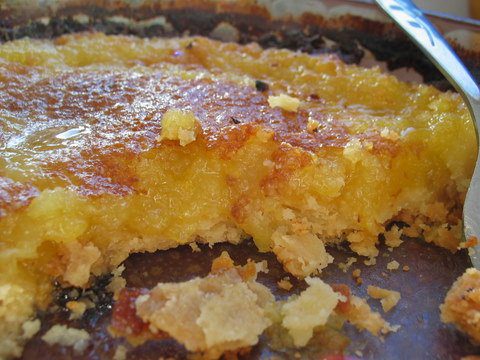
    I totally bombed it, appearance-wise. The tart crust I used (not the recommended recipe because I was feeling ever so slightly petulant) slouched down to the bottom edges of the pan, like a cool-dude teenager’s baggy, low-riding, boxer-showing jeans. I decided to just dump the filling on top of the crust anyhow, and of course it boiled over and down just as I expected it would, and the edges burned some, but aside from that, it passed our taste-tests with flying colors. Yo-Yo Boy said that maybe he would ask for a bunch of lemon tarts for his birthday cake. And his pants are still firmly anchored above his hips.

    The recipe comes from Deb over at Smitten Kitchen. I’m in love with her blog! I can’t believe I’ve been web-literate (not to be confused with web-fluent) for this many months and just now found it. She’s in the same boat, or at least in the same cove, as Orangette, and that is some pretty high praise, coming from me, a smitten Orangette fan.

    Anyways, this is an amazing recipe, not just because of the flavor and the simplicity, but because the recipe calls for blending up an entire lemon, minus the seeds, in a food processor with some sugar. The resulting bits of chewy, candy-like lemon rind stud the creamy tart, and pack a punch flavor-wise. Is that not totally fantastic? Like, wassup, dude, this is some cool piece of sweet!


    Obviously, it doesn’t take much to make my day. Just give me a lemon and a food processor and all signs of pubescent petulance vaporize, poof.

    Now if I could just comfortably button my disconcertingly hip–huggin’ jeans…

    Lemon Tart
    From The Smitten Kitchen, and she, in turn, got it from Dorie Greenspan.

    For the crust:
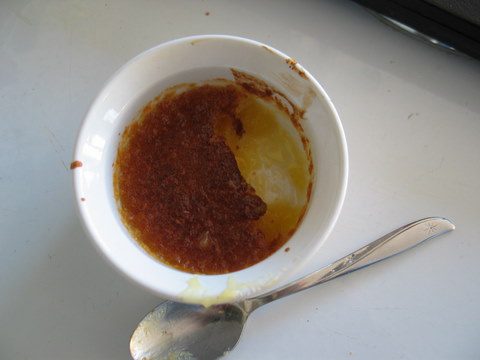
    Use the recipe that Deb recommends (I’ll be trying it next time around), or your favorite tart crust, or even an everyday pie crust. Or, skip the crust all together and pour the lemon custard into little ramekins, set the ramekins in a pan of hot water, and bake them as you would a custard, till brown on top and the middle no longer jiggles (though keep in mind that after you eat the little non-middle-jiggling custard, your middle will be jigglin’).


    I just tasted the little ramekin of lemon filling (I had a some leftover after pouring the majority of the filling into my slouching-crust bottom) and it kind of divided as it baked, with the top and edges turning extra chewy with bits of crystallized sugar, and the bottom staying mostly creamy-smooth. So on second thought, though it would probably be quite tasty with a scoop of vanilla ice cream or some whipped cream, my preference is for a tart with a bottom crust, even a slovenly one.

    Partially pre-bake the tart crust. (I took that bit of instruction to mean that I was to bake the crust till it was set and turning brown on the bottom, and since that part turned out fine, I think I was correct in how I took that to mean. Are you still with me?)

    For the filling:
    Wash and dry a lemon, slice it thinly, and remove the seeds. Place the sliced lemon in your food processor along with 1 ½ cups sugar. Pulse until well blended, sandy in some places and creamy in others. (I licked some of the lemony sugar off my thumb, and it crossed my mind that this would be a fabulous mixture to have on hand come summer for stirring into sweaty, tall glasses of iced tea.)

    In a separate bowl, whisk together an egg, another egg yolk, 1 ½ tablespoons of cornstarch, the lemon-sugar, and a stick of butter that has been melted and then cooled.

    Pour the lemon filling into the tart crust and bake at 325 degrees for 20 minutes, and then increase the temperature to 350 degrees and bake for another 15 to 20 minutes. Cool to room temperature and serve.