• on eating meat

    Sometimes I look at a meal and it’s, you know, just food everyone eats, like Costco meatballs (I love Costco meatballs), or store-bought spaghetti with Food Lion frozen peas. Other times, so much of the food on my plate has come from us, or close to us, that I have to do a double-take. Like, seriously? All that came from us?

    It’s fun to parse the mash-up of earned, gleaned, scavenged, grown, and made. For example, in this particular round of “Source Your Food”…

    Stale sourdough bread from the bakery. 
    Butter from our cows. 
    Onions and cherry tomatoes from the farm where my son works. 
    Green peppers from our garden. 
    Steak from our grass-fed steers.
    Scrambled eggs leftover from the diner where my daughter works. 
    Cheese from our cow Daisy. 

    ***

    Recently when I was chatting with some out-of-town friends, I happened to mention that our supply of beef is dwindling so if we didn’t want to run out then we needed to start raising a steer now. I also said I was kinda bummed that Fern and Petunia are the slow-growing hog variety of hog — I wanted sausage now. 

    Do you eat a lot of meat? they asked. 

    “I’m trying to eat more of it,” I said. 

    “Why?” they asked.

    I didn’t know what to say. Why am I trying to eat more meat? Why did they seem surprised? Why did I suddenly get the feeling I was doing something wrong? I thought about that conversation for days, trying to figure out what was going on. 

    burger with homemade cheese, pickled veggie salad, and toasted, discarded bakery sourdough

    And then I remembered what I’d grown up learning about meat eating: it was bad for the environment because it required more land, water, and energy to produce one pound of beef (pork, chicken, etc) than one pound of grain. Therefore, the story went, plant-based eating was more environmentally friendly. Factor in the climate crisis and in some social circles eating meat is practically unethical. And rightfully so! The meat industry does wreck enormous havoc on our environment. 

    stale bakery baguette, homemade mozz, steak from us,
    veggies from our garden and the farm where my son works, dressing from Costco

    But there’s another side to the story that conscientious eaters who are removed from their food sources might not be aware of. 

    1. Crops require fertilizer, either chemical or organic, and when animals are removed from the equation there’s increased reliance on chemical fertilizers which isn’t that great for the environment. 

    2. When animals and plants are grown together on a small scale — animals and crops rotated in a symbiotic manner, manure used for fertilizer, etc — the natural give and take is actually good for the environment. 

    raw milk cheeses, discarded prosciutto from my daughter’s work

    Not that we’re doing any crop-animal field rotation — that’d require fencing and legit planning and we’re much too slap-dash for that. Most of our animals’ poo stays exactly where it plops.

    However! The amount of calories we get from letting a single steer mow and fertilize the back field (and then slaughtering and eating it for its troubles) is far greater than what we’d ever raise in our piddly and neglected garden. Add in a cow or two and we get an even greater variety of nutrient-dense calories via the milk and cheese. (Not to mention a calf to raise for beef or sell for cash.) Toss in a couple piggies and a flock of chickens to gobble up the whey and all the garden/kitchen scraps and now we’ve got sausage and eggs to boot. 

    grass-fed beef burger on a Costco hot dog bun, raw milk Gouda, discarded diner bacon, homecanned zucchini relish, tomatoes from the farm where my son works

    Grass-fed beef, farm-fresh eggs, and ooo-la-la artisanal raw-milk cheeses are wildly pricey. If I had to buy them, we’d eat them sparingly, if at all. However, since we’re doing it ourselves, these food items are actually the cheaper, more economical choice. So when I said I was trying to eat more meat, what I meant was that I’m working at shedding my “meat is a treat” mentality and training myself to eat more meat because this is what we have. Our homegrown food is both a luxury and the pragmatic, economical choice. 
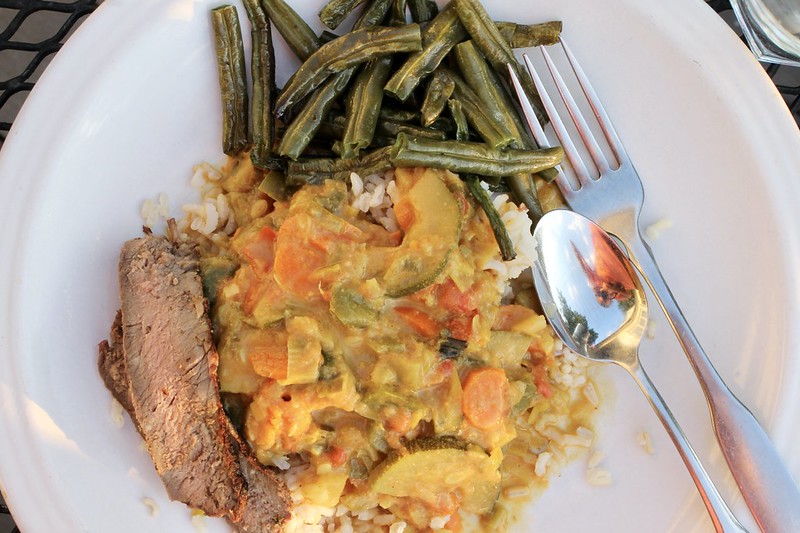
    scavenged green beans via a neighbor, leftover steak, groundnut stew

    Eating more meat doesn’t mean we’re routinely feasting on beef or no longer eating our vegetables. (If you look at one of the weekly menus I post on our fridge, you’ll notice there’s usually quite a few meatless meals.) Rather, it simply means I’m making a conscious effort to work meat into our diets more regularly.

    What does this look like?

    leftover diner biscuits, eggs from my daughter’s chickens, steak from our steers, butter from our cow

    Grilling up a couple extra steaks and then thinly slicing the leftovers and flash-frying them to go with groundnut stew or our morning eggs. Making burgers whenever the urge strikes. Ignoring the ice cream freezer section in the store (this is hard!) and then taking the time to make ice cream when I get home. Keeping stocked in mushroom salt for big beef roasts. Using my cheese mistakes in mac and cheese and on pizza. Tossing hunks of ricotta into the pancake batter even though it’d be perfectly fine without it. 

    It’s saying yes to what we have and what’s available and then building a menu accordingly. It’s shopping less and making more. It’s eating a lot, a lot, a lot of leftovers. It’s accustoming our palates to flavors that are sometimes stronger and earthier. It’s sometimes boring. It’s occasionally limiting and challenging.
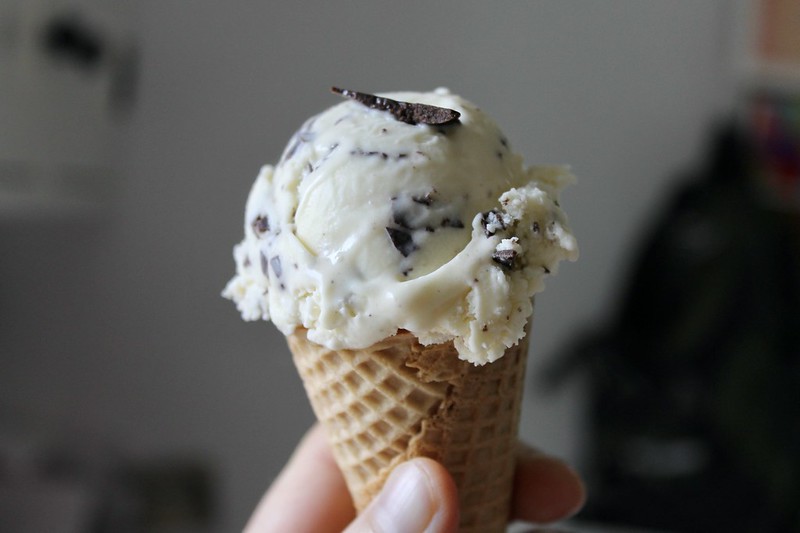
    mint chip

    And most days, fortunately, it’s also filling and delicious.

    This same time, years previous: no-hands mozzarella, perks, the quotidian (8.26.19), a big deal, on love and leftovers, don’t even get me started, atop the ruins, fresh tomato salad.
  • jammy oat bars

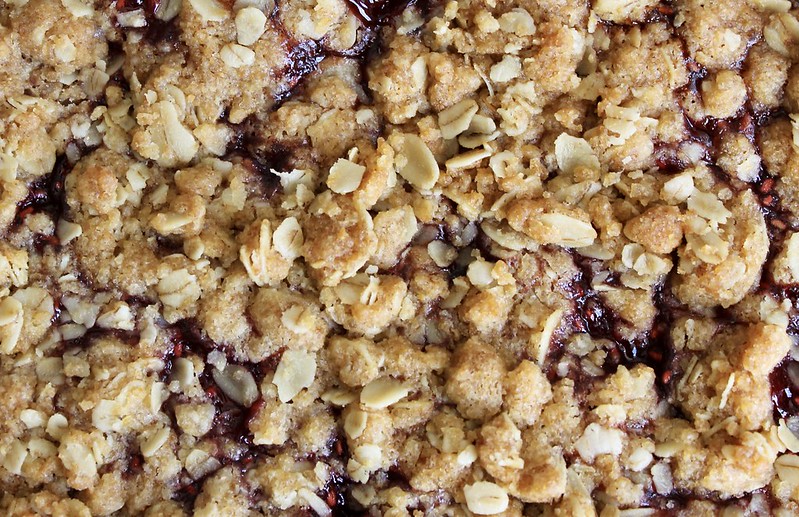
    Taking a quick break from all the goings-on — in the last week: salsa making, dinner guests, my first cheese contamination and subsequent freak-out bleaching spree, bakery work, corn processing, a (borrowed) bull(!!!) — to tell you about jam bars. The recipe comes from Kate and everyone on social media is always going on and on about them and then I made them and I’m like, OK, I get it now. 

    They aren’t fancy or expensive or all that unique — they don’t even have any spices! — but it’s for precisely that reason that they’re so good: just (mostly) oats and butter mushed into pan, spread with any sort of fruit filling, and then more of the oat-butter mixture sprinkled on top. It’s their simplicity and utilitarian nature that make them so brilliant. 

    Also, they’re freakin’ delicious. I ate about a sixth of a pan for my lunch yesterday, and then my younger son came home starving (he’d accidentally packed himself a bag of frozen grated Parmesan cheese instead of leftover pizza for his lunch) and ate nearly a quarter of it, half of which he scooped into a bowl and then topped with milk poured. Then we had it for dessert, and I packed it into lunches for today, and then I ate a piece for my breakfast this morning. There are three small pieces left, and I’m saving them for this afternoon when my mom comes over for coffee and a chat. I hope she knows how lucky she is.

    The fruit filling is supposed to be any sort of fruit sauce (think pie filling) or jam, and some people say they even use applesauce. I think an actual jam would be too sweet…but I could be wrong. These, I made these with red raspberries that I cooked down with water and sugar. 

    I’ve adapted the recipe somewhat — halving it, adding salt, decreasing the sugar, substituting some whole wheat in place of the white flour. It’s infinitely adaptable, and that’s exactly the point. I’m considering doing with it like I do with my pie pastry and crumb toppings: make a quadruple batch and freezing it in the correct proportions so I can just whip up these bars whenever the mood strikes. 

    Jammy Oat Bars
    Adapted from Kate of Venison for Dinner

    These are actually similar to my berry crostata recipe, but this one has more butter and less…other stuff. For the recipe photographed here, I used 1½ cups flour, ½ cup whole wheat pastry flour, an additional ½ cup quick oats (because the mixture looked too wet), and all homemade butter (which tends to yield a softer final product). 

    About pan size: in a 9×13 pan, these bars are on the thin side. This same recipe can be made in a 10-inch springform pan, though it will be thicker (and still good). While too thin is better than too thick, I kinda think a triple batch divided between two 9×13 pans might be the perfect thickness.

    2 cups flour (substitute with whole wheat, rye, oat flour, GF flour, etc, if you want)
    1 cup rolled oats (plus another half cup quick oats, optional)
    1 cup brown sugar
    ½ teaspoon baking soda
    ¼ teaspoon salt
    spices, nuts, zests, etc, absolutely optional
    1 cup butter, melted
    2-3 cups jam, fruit sauce, pie filling, etc. 

    Stir together the flour, oats, sugar, soda, and salt. Add the melted butter and stir to combine. (If it feels too wet, feel free to add some more oats.) 

    Press ⅔ of the mixture into the bottom of a greased 9×13 baking pan. Spread the fruit sauce over the crust. Sprinkle the remaining crumbs on top. Bake at 350 degrees for about 45 minutes. 

    Red Raspberry Filling
    Simmer 3 cups red raspberries with ½ cup water and ½ cup sugar. In a separate bowl, mix together 2 tablespoons cornstarch and 2 tablespoons water. Once the fruit boils, stirl in the cornstarch slurry. Let it bubble briefly before removing from the heat and cooling. (This sauce is also excellent stirred into yogurt.)

    This same time, years previous: quark, walk the walk 2020, chocolate cake, full circle, fresh nectarine galette, the quotidian (8.24.15), that special date, 16, coming up for air.

  • the dairy and cheese report

    I have yet to successfully make cream cheese. There’s always a thin layer of milk that settles to the bottom and then sets up into cheese, and then the milk cheese nubbies mix in with the cream cheese and wreck the texture. However, I have figured out a workaround, at least for making cheesecake: mix 1 part quark to 1 part mascarpone and voila! Creamy, luscious cheesecake.  

    ***

    Twice now, I’ve tried to make cup cheese and twice now I’ve failed. Want to know the worst part? It’s my own recipe I can’t follow, gah! Talk about pull-your-hair-out frustrating. Everything goes swimmingly until I get to the part where I heat the curds in the double boiler. They’re supposed to go all melty-soft, like marshmallows, but mine just seize up. Maybe it’s an acid level thing? 

    quark on the left, failed cup cheese number one on the right

    Anyway, the cheese turns out not as it should, but edible. Kinda like a not-entirely-smooth cream cheese. The last time I blended it up and it got pretty darn creamy.

    It still wasn’t the right texture for cup cheese, but I dipped potato chips in it for breakfast and called it good.

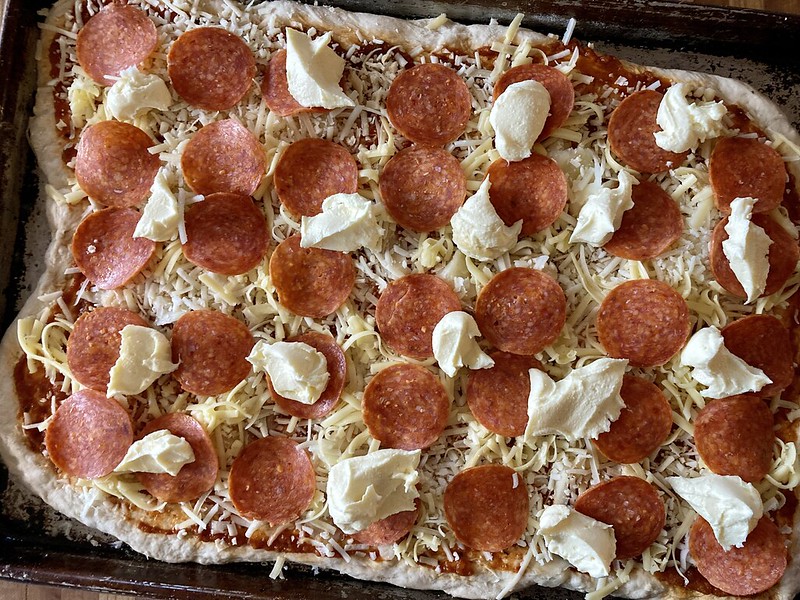
    And then I dolloped it on pizza.

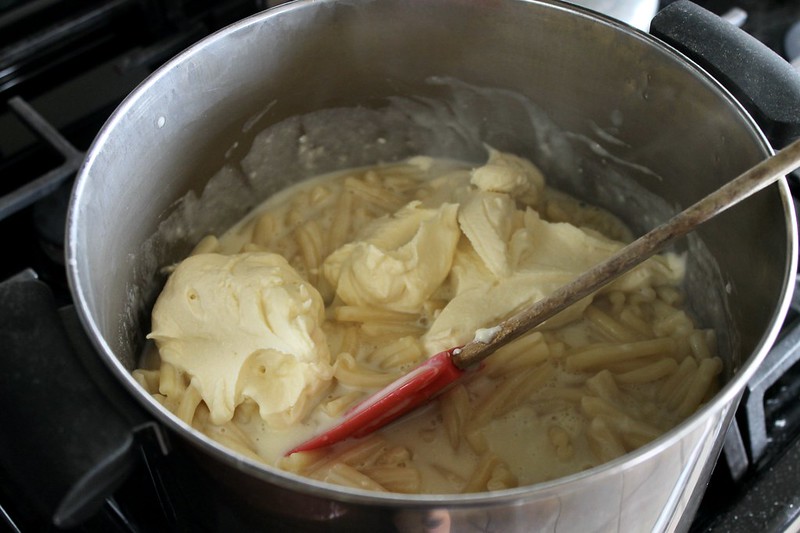
    And tonight I threw the last of it into a white sauce for tomorrow’s baked mac and cheese.

    ***

    The one good thing about the failed cup cheese is that I get sour cream from it. When making cup cheese, the milk is mixed with buttermilk and then sits at room temp for a good day or so and then, before proceeding with the cup cheese recipe, I skim off all the cream that’s risen to the top.

    The cultured cream is thick and — I know this sounds gross — kinda stringy. But hear me out! The flavor is delicate and sweet, and the texture isn’t that far off from the Central America’s beloved “crema”. 

    We eat it with beans and rice — kinda pour it over — and I’ve used it to sauce up pasta dishes. It’d go great in potato soup, I think. It’s still not the thick, spoonable sour cream that we’re all used to, but for now it’ll do. 

    ***

    The other day I cut into a Gouda Divino that was so divino it gave me goosebumps.

    Repeatedly! Seriously, it was so good it was like I really did die and go to heaven. 

    Two things about Gouda:
    1) I just learned that it can be aged for years and years and years and will get sweeter and harder over time.
    2) I think I need to try smoking it. 

    (I also cut into a Gruyere which was kinda disappointing because it didn’t taste like Gruyere but then I realized it was more like a cheddar and then I was like, Hang on a minute. I just made a Cheddar Gruyere! and got all strutty proud for creating my own unique cheese, toot-toot!) 

    ***

    Believe it or not, I didn’t make whipped cream with our own raw milk cream until this last week. I wasn’t sure it’d whip properly but it did great.

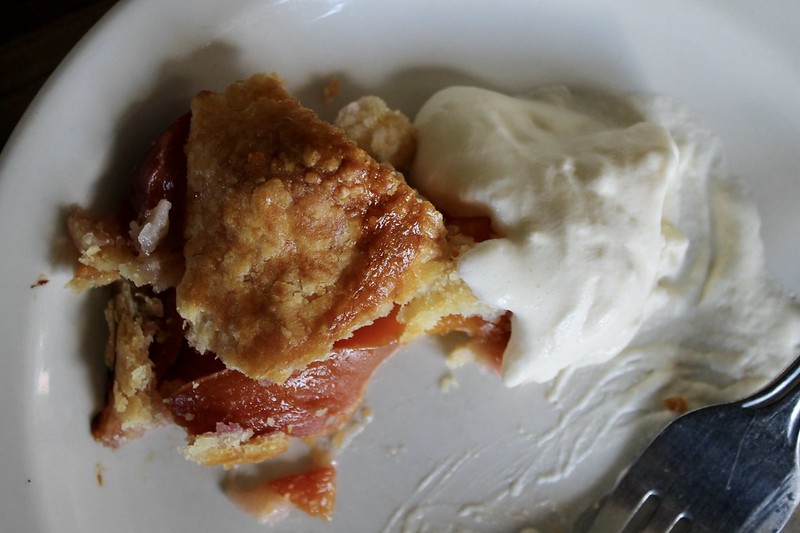
    We ate it spooned over wedges of fresh nectarine galettes.

    ***

    And speaking of galettes (this is turning into quite the “if you give a mouse a cookie” post), for the first time ever, I’ve been making pie pastry with 100 percent homemade butter. 

    brown sugar and bourbon peach pies

    The resulting pastry is softer and more pliable, almost like an oil-based crust. It’s delicious but also entirely different from pie pastry made with store-bought butter.

    The deeper I get into making things from scratch (in this case, dairy), the more I notice how wildly my homemade creations vary from the store-bought versions. These variations, I think, underscore just how industrialized our food has become, just how far afield we are from real food in all its nuanced glory.

    ***

    And finally, here’s a video that’s all about the cheese.

    It thrilled me to the tips of my tippy-toes, it did. Viva el queso!

    This same time, years previous: the coronavirus diaries: week 76, the quotidian (8.19.19), passion fruit juice, starfruit smoothie, garlicky spaghetti sauce, an August day, how to get your refrigerator clean in two hours.