• 2022 garden stats and notes

    It felt like another slow year in the garden (neither of us like to garden so we avoid it), but we still managed to tuck away a fair bit of food, thanks to local orchards, farmers, and friends.
    My younger son worked part-time at the produce farm and kept us well stocked in lettuce, kale, cabbages, onions, heirloom tomatoes, beets, and new potatoes, and from our own garden, we had plenty of green peppers, jalapeños, basil, rosemary, strawberries, red raspberries, and asparagus for fresh eating. 

    We are still feasting on beef from the three steers we slaughtered a couple years ago. The bakery/diner keeps us stocked in stale bread and leftover pork products. Our cow supplies all our milk and cheese and yogurt, as well as a good amount of butter and ice cream. We’ve swapped/bartered with friends for free-range chicken and pig bones for broth. All our eggs come from my daughter’s flock of chickens.

    The Stats

    • Rhubarb, frozen: 2 gallon bags
    • Apple Mint, dried: one-half dehydrator made 3 quarts of tea leaves
    • Strawberries, frozen: 12 quarts
    • Sour Cherries: 1 cup frozen; 2 quarts and 3 pints of canned juice (with sugar); 4½ quarts bounce
    • Wineberries, frozen: 3½ quarts
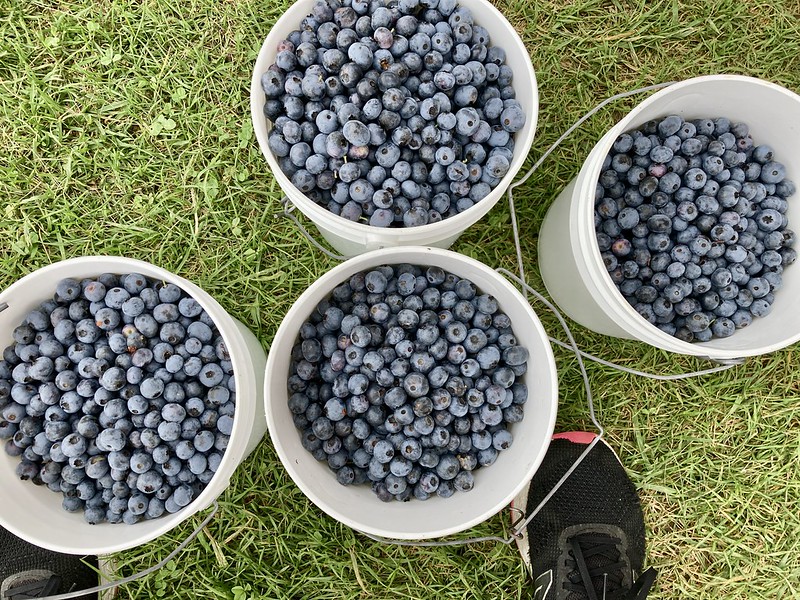
    • Blueberries, PYO: I forgot to record these, but maybe 4 gallons or so?
    • Applesauce, Lodi (4 bushes): 62 quarts, canned
    • Green Beans: 6 quarts free from a friend, frozen; 14 quarts Roma, frozen; 14 quarts Roma, canned; 15 quarts Tenderette, frozen
    • Oven Dills: 14 pints 
    • Sweet Pickles: 14 quarts, 2 pints
    • Pesto: 6 half-pints, frozen
    • Peaches, Glohaven (2 bushels): 3 gallons, chopped and frozen; 19 quarts, canned
    • Tomatoes, Salsa: 14 quarts and 8 pints
    • Tomatoes, chopped and canned: 8 quarts
    • Nectarines (2 bushels): 7 quarts canned; 12 quarts, dried and frozen; 1 quart, sugared and frozen
    • Red Raspberries: 19 quarts, frozen; 5 pints and 6 half-pints jam
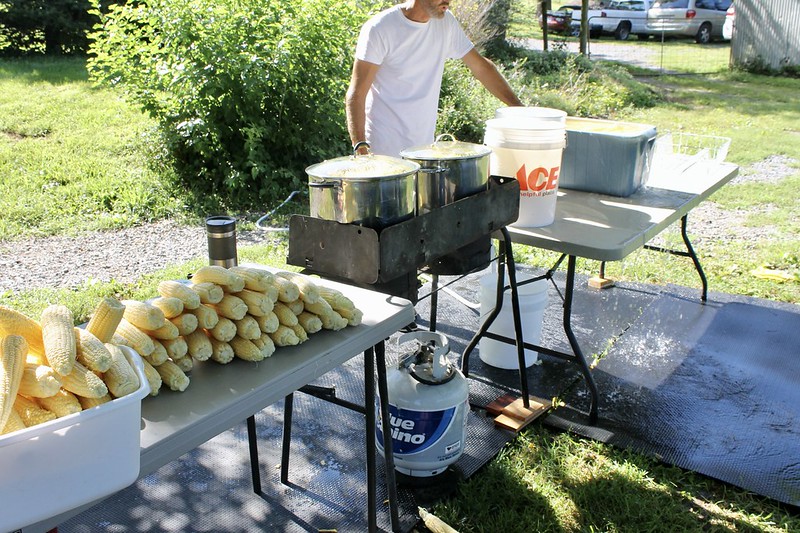
    • Corn (processed with family): 42 pints for us (157 pints total)
    • Grapes: approx 5 quarts juice, 7 3-cup containers pie purée
    • Broth: 14 quarts chicken; 14 (and counting) quarts pork
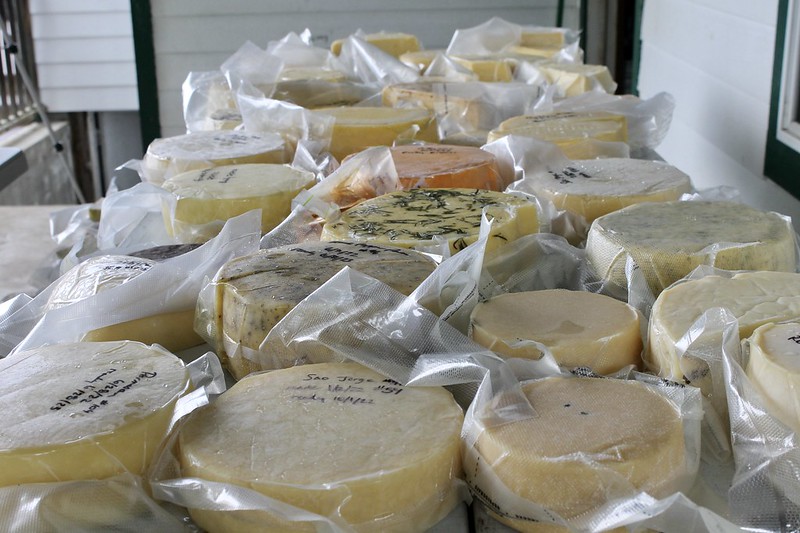
    • Cheeses: at least another 75 hard cheeses, plus ricottas, mozz, bries, etc.
    The Notes
    *It was a struggle to find Lodi apples this year. Our regular orchard is no longer growing them, and many of the places I called only had a small amount…maybe. After searching fairly far afield, I finally found some at another (local!) orchard and happily snapped them up: $18/bushel. (I filmed the whole process but then I transitioned the YouTube channel to focus on cheese and never posted it.)

    *Five pints of my oven dills didn’t seal, so I just popped them in the barn fridge and used them up first. Good news: certain family members are learning to like dills! We’re eating through them faster than I expected. 

    *After years of failed spring plantings of green beans, we finally waited to plant till mid summer — and it worked — a one-time-only planting with good germination. From now on, summer plantings are the way to go.

    *We were totally out of sweet pickles so I made a quadruple recipe. I thought it’d be plenty, but the way we’re tearing through them, I’m not so sure. (I planted 18 cucumber plants so I could harvest a whole bunch of cucumbers at one time — I don’t like puny pickings — and next year I might have to do 24.)

    *Since we still had some pesto from the previous year, I only made a quadruple batch of pumpkin seed pesto.

    *We enjoyed the previous year’s family corn processing day so much that we did it again. We ordered 40 dozen ears from a local farmer for 200 dollars. After about 6 hours of work, we were totally done. Efficiency is a glorious thing! (And the corn is delicious.)

    *Both nectarines and peaches were $40/bushel. We love dried nectarines — I have to bury the bag in the freezer so they don’t get gobbled — so I dehydrated more than normal. I discovered that slicing them in thickish rounds, not wedges, is easier and more toothsome.

    *I finally learned how to pressure can! My maiden voyage was green beans, and it was soooo easy. Now I’m getting into bone broth. I’ve always bought cases of boxed broth from Costco, but the homemade stuff is much richer and more flavorful, and the accessibility of canned broth can’t be beat. I love adding it willy-nilly to everything: rice, beans, soups, etc.

    *If I had to choose one fruit plant/tree, it’d be red raspberry. From July through September, the bushes give and give and give. I pick 1-2 quarts every other day and after a month of pickings, I’m pretty well stocked. (That’s when I call my sister-in-law and tell her it’s her turn to take over.)

    *I’m two-thirds of the way through my dried mint and it’s still November. Next year, make more. (This lovely stainless steel French press is the reason I’m crushing so much tea.)

    *We bought several bushels of baking and eating apples from our local orchard (the Pink Lady variety is outrageously delicious for fresh eating), as well as about 12 gallons of cider to freeze.

    For the satisfaction of hard work completed, and for all the good food, I’m grateful.

    This same time, years previous: what I don’t do, fight poem, a fun kitchen hack, the quotidian (11.19.18), the quotidian (11.20.17), curried Jamaican butternut soup, apple raisin bran muffins, how to use up Thanksgiving leftovers in 10 easy steps.
  • three girlfriend recommendations

    Do you oil your hair? 

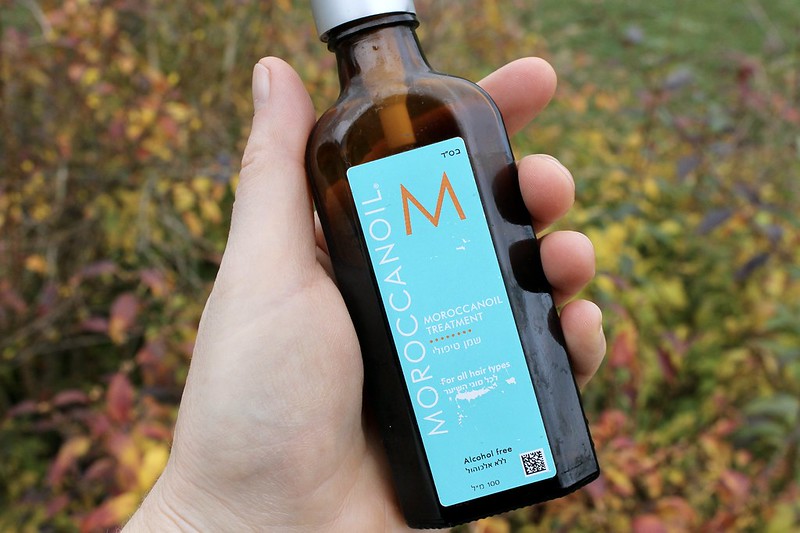
    To me, it always seemed counterintuitive since the whole reason for washing hair was to get rid of the grease, but a long time ago at a girlfriend’s behest I bought some oil, and then, for whatever reason, I kinda forgot about it.

    dry and poofy

    However, the other week, probably about three days after I’d last washed it, my hair was feeling super dry and wiry, so I squirted some Moroccan oil on my hands and ran my fingers through my hair, paying special attention to the ends and using my palms to press down the more frizzy out layer of hair.

    The transformation — felt, more than seen — was astonishing.

    oiled

    My hair went from brittle and crispy-frizzy to shiny, soft, and curly. I could practically hear the hair sucking up the moisture and sighing with contentment.

    I don’t need to do this all the time — maybe once every couple weeks — but it’s a real treat when I do. 

    Makes me feel fancy.

    ***

    This summer I finally figured out how to use the pressure canner that I’ve had for about 15 years. I canned green beans and nothing exploded (though it turns out my kids prefer frozen green beans to canned; the canned ones do have a different flavor), so now I’m getting into bone broth. I’d always bought cases of boxed broth from Costco, but the homemade stuff is much richer and more flavorful.

    And then on a walk the other day when I mentioned my blossoming love affair with pressure canned bone broth to a girlfriend, she said, “You know the trick with onions, right?” I didn’t, so she enlightened me: add some onion skins along with the other veggies and it’ll turn the broth a gorgeous rich bronzy-brown.

    And what do you know, she was right. 

    without onion skin, with onion skin

    with onion skin, and without

    It doesn’t take much — just a single layer of onion paper from a couple onions is enough to make the magic happen.

    And then some friends butchered a hog and gave us a five-gallon bucket heaped with bones. 

    My pressure canner is getting quite the workout.

    ***

    There’s a new little bookstore coming to town! It’s called Parentheses and it’s gonna live right across the road from the bakery where I work, in an old abandoned warehouse that Magpie’s owner leased.

    See the “for lease” sign on the warehouse on the left? That’s the place.
    (photo from 2020)

    A few days ago I saw on Facebook that the bookstore owner (her name is Amanda) has a kickstarter campaign to raise the money to buy the stock. I pledged 10 bucks — a bookstore next door to where I work? cool! — and went on with my life. 

    But then this week, Sofia, a local writer I-kinda-but-don’t-really-know but I’ll call her my girlfriend for the sake of this post’s title, popped into the bakery and we started talking about the bookstore. The deadline is next week, she said, and if they don’t meet their goal, then they don’t get any of the money. Get your friends to pledge!

    As of today they’ve got 6 days left and they’re only halfway to their goal of fifty thousand dollars, YIKES.

    Door to Parentheses is on the left; big door in the middle will be the entrance to the shops.
    photo credit: Kirsten Moore

    So listen up, people. If you’re local and like to read (we all like to read, right?), consider chipping in five bucks — or fifty!

    And if you’re not local but wish you were, or simply want to support female-owned, independent bookstores, then do. Who knows, maybe some day you’ll find yourself in the Shenandoah Valley, and you’ll decide to drop by the bakery for a croissant and then mosey across the road to the browse the stacks in a sunny bookstore next to the train tracks, and it will be as lovely as it sounds.

    This same time, years previous: cheese tasting, round two, change, spiced applesauce cake with caramel glaze, the quotidian (11.17.14), sock curls, lemony lentil goodness.

  • fat cow

    I got it into my head that I wanted a super-creamy slicing cheese, so… I developed one!

    Fat Cow is a variation of Butterkäse, that crowd-pleasing, semi-soft, washed-curd German cheese. My changes included culturing the milk with homemade yogurt and boosting it with an entire half gallon of cream because: if you want a creamier cheese, add more cream! Also, I tried to handle the curds less than normal: cutting them larger, cooking them more slowly, and stirring them less. 

    The result?

    It was exactly what I was going for: a sliceable — yet spreadable! — snacking cheese that’s mild with a bit of tang (think: cream cheese), ready in only 4 weeks, and enormously high-yielding.

    sliceable AND spreadable

    My six-and-a-half gallons of milk and cream yielded a 10-pound monster. ROAR.

    Tasting video coming soon…

    I do realize this isn’t a recipe most people will attempt, and I try to reserve the intricacies of cheesemaking for my YouTube channel, but since this blog is where I compile all my recipes — including the cheesy ones, haha — here we are.

    Fat Cow Cheese
    Recipe inspiration from Gavin Webber, Venison for Dinner, and Cheese 52.

    If starting the cheese in the early morning, it should be ready to go into the brine at bedtime. If started late afternoon, it will be ready for the long press right at bedtime, and then can be popped into the brine first thing the next morning. 

    To watch the recipe in development, go here.

    6½ gallons whole milk
    2 quarts heavy whipping cream
    1½ teaspoons calcium chloride
    1½ teaspoons rennet
    1 generous cup yogurt
    saturated salt brine

    Milk-To-Curds
    Heat the milk and cream to 102 degrees. 

    Thin the yogurt with some of the warm milk and add it to the milk. Stir gently for about a minute. Lid the kettle and let the milk ripen for 40 minutes.

    Dilute the calcium chloride with a little water and stir into the milk. Dilute the rennet with a little water and add to the milk. Stir gently (in an up-and-down motion) for no more than one minute. Lid the kettle and let rest for 40 minutes. 

    Check for a clean break. (If not yet ready, let rest for another 10 minutes.) Cut the curds into ½-inch cubes. Let them rest (heal) for 5 minutes. 

    Gently stir the curds for 20 minutes. Cut/break any curds that are still too large. Allow the curds to rest for 5 minutes to settle to the bottom.

    Washing the Curd
    Remove half of the whey. (I couldn’t get half of the whey because the curds kept popping up. I could’ve held the curds at bay with a strainer and scooped the whey out of that, but instead I choose to start washing the curds and then, once I had more liquid, I removed more. Either way! Just make sure you don’t stir too much or too hard — be gentle!)

    Over the course of 5-10 minutes, add warm water (about 140 degrees) until the temperature reaches 108 degrees, stirring gently all the while. (If you didn’t get half of the whey removed the first time around, do it during this part.) 

    Once the curds reach 108 degrees, turn off the heat and continue to stir gently for 10 minutes. The goal is to poach the curds — they should be cooked through, with no whey trapped inside. (Trapped whey damages the cheese during the aging process, resulting in a more acidic, crumbly cheese.) If you find curds that are too juicy-wet, simply tear/cut them in half, or remove them.

    To test if the curds are done, squeeze them in your fist. The curds should knit together in a solid mass that can roll around in your hand, or dangle from your fingertips without falling apart, and will then separate back into curds when you rub them. 

    Let the curds rest in the whey for 10 minutes. 

    Pressing and Brining
    Pour off the whey. Transfer the curds to a cheesecloth-lined mold and top with a follower. Press lightly for the first hour, flipping every 30 minutes. Increase the pressure to 20-30 pounds (this is still fairly light) and press for 9 hours. Flip as needed.

    Weigh the cheese and then brine it in a saturated salt brine, about 4 hours for every pound. (For example, my cheese weighed 10 pounds so I brined it for 40 hours.) Flip halfway through. Dry-salt the exposed surface.

    Air Drying and Aging
    Air dry the cheese for 2-3 days, flipping twice a day. Vac-pack and age at 55 degrees for 4 weeks, flipping twice a week. 

    This same time, years previous: the quotidian (11.15.21), sourdough English muffins, guayaba bars, success!, Thai chicken curry, the quotidian (11.16.15), lessons from a shopping trip, official, the quotidian (11.16.11).