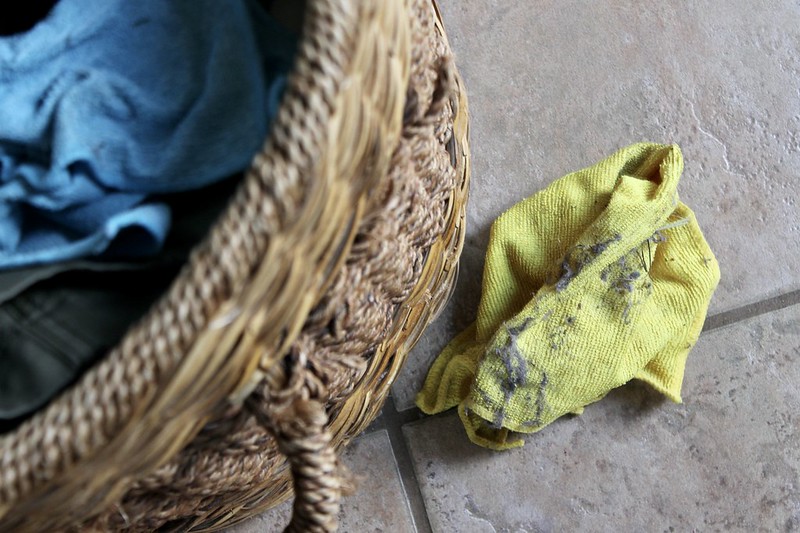
This morning I found a dirty rag on the floor beside the basket of laundry. I took it downstairs, along with the laundry, and called the bathroom-cleaning child over for a look-see.
“Things that are full of dirt can’t go directly into the machine with all the other clothes,” I said. “You have to wash out the rag and then put it in the laundry. Now go do it right.”
I do this a lot, calling kids back for a re-do follow-through. Last night at bedtime I called someone downstairs because there was a dirty thermometer on the kitchen counter, shoved up against the wall as though that solved the problem. The other day I noticed a ring of gunk around the base of the pedestal sink and had to explain (again) how to scrub a floor and then make sure it got done again — this time, properly. This morning I sent someone outside to pick up all the pieces of twine that were strewn over the trailer, remnants from hauling a load of hay.
The constant follow-through exasperates my husband. “We shouldn’t still have to tell them how to do it properly!” he rants, and I get it. It would be nice if they scurried around doing all the things before we even knew they needed done (and sometimes they do; sometimes they’re freaking amazing).
But wishing something doesn’t make it true.
The truth is that my children are 16 and 18 (and older) and while they do most of the dishwashing, toilet scrubbing, dusting, vacuuming, laundry, porch sweeping, trash emptying, etc, I still monitor and track.
The truth is that teaching kids to work takes work. It’s on-going — a marathon, not a sprint — and it takes years.
The truth is that it’s the little things, like setting the trash basket down properly (upright and in the right place) after emptying it, or wiping the bits of cleaning rag lint clustered in the mirror’s corner, or delivering the stacks of folded laundry to the proper rooms and then returning the empty washbasket to its spot atop the machine, that are the difference between a half-assed job and a completed job.
The truth is that the stupid little things are actually rather enormously important: attention to detail, finishing a project all the way, caring enough to do, enduring temporary discomfort for later gratification, seeing things from another perspective (mine).
The truth is that my children know how to work and I’m still teaching them to work. Two things, both true.
Would it be easier to do the work ourselves? In the short-term, yes, in some ways, but in the long run, no, absolutely not because: 1) I don’t want to do it do it all myself, 2) I can’t do it all myself, and 3) I don’t enjoy children who expect to be waited on. So I make notes of the piddly things like “put coats away,” “fold blanket in hall,” “pick up the paper you swept off the porch into the yard,” and then make them follow-through. Because — another truth — practice makes better, and we have an endless supply of things to practice on!
P.S. While I was working on this post, I got a text from one of my children showing off a freshly-cleaned room (in another house). “It blows me away how amazing I am,” the text read, and I thought back over the years of markered walls, junk-strewn bedrooms, and the hours upon hours of gnashing teeth and dragging heels as I taught them again and again and again how to work — and I laughed. Amazing indeed.
This same time, years previous: what we ate, a new dress, how we homeschool: the suburban correspondent, today…, marching, high on the hog, breaking the fruitcake barrier, the quotidian (1.6.14), headless chickens, buckwheat apple pancakes.


