• and then we moved into a barn

    Wow. It’s been a whirlwind couple days. We found a place out in the country, talked about it for a few hours, decided to move, and then, a few hours later, there we were, living in our new digs. Amazing.
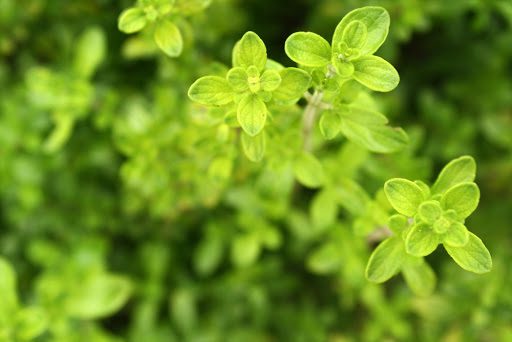
    mint from our backyard

    To tell the truth, I am so excited I can hardly slow down enough to type the story, the gist of which is:

    WE MOVED INTO A BARN AND WE ARE SO HAPPY.

    Okay, so it’s not actually a barn barn. There aren’t animals in it (thought there was that mouse that made an appearance tonight—the girls and I were screaming so loudly my husband thought a stranger walked into the house waving a machete) (and the dogs sometimes sneak in) and it’s not at all haymow-y. It’s more of a big storage shed that has had some bedrooms built into it. It suits us perfectly.

    Our new home is located on a large finca (farm). There are about seven other homes on the property—some family and some rented. The finca—Rancho de la Santa Fe—is located a short walk out of Chamelco, a small, friendly, family-centered town. (Carcha was more industrialized.) Bezaleel is a five minute bus ride from Chamelco, so now we are a bit closer to the school. And that’s it for the geography lesson.

    There is so much green. So much. We are more isolated than we were in the city, and security is excellent. I can walk around outside with my camera!

    the view from the back door

    At first we were a little concerned that we will be too isolated. That we won’t have neighbors to visit with. That the kids won’t have neighbor kids to run around with. So far, that is not the case. There are two boys who live up at The Big House, the same ages as my boys. All day long, the kids have been back and forth between houses. Many times during the day I paused what I was doing and realized that I didn’t know exactly where the kids were and it was okay. After not being able to let them even open the door without permission, the freedom is over-the-top glorious.

    the rope swing at one of the rented houses

    And even if we are more isolated, we will be going to town for errands and church, and to Bezaleel for work. If anything, I think it will be nice to have a place to get away from it all. Having a safe haven is so important.

    About the farm: the owner’s daughter is getting her degree in forestry engineering. She is reforesting with lots of pine trees, and she’s working at taking down the wire fences and putting up natural fences. There is a creek and a whole bunch of ponds—one of the renters is using them to raise Tilapia and trout. There are fruit trees and banana plants and flowers everywhere. There is a ping-pong table up at The Big House and a (currently drained) in-ground swimming pool. One of the renters has a horse.

    There are three mild-mannered, intelligent dogs. Amarillo, especially, is extremely pliable.

    The house is rather cavernous, but we have some ideas for how to make it cozier, and—get this—it has windows with see-through glass and big barn doors (but of course!) that open wide. Luvia came out to work today, even though it was Saturday.

    She scrubbed the bathroom from top to bottom, and I scrubbed the metal barn doors, inside and out. We washed windows and scrubbed floors and did (a little) laundry. Some workers have been painting the house, and the gardener has been cleaning up around the place and “mowed” the yard with a machete.

    My husband and older son went to Coban today and came back with a TIGO stick—a do-hickey that you put in the USB port so that you can get internet anywhere. So now I am sitting in my bed, drinking tea, and hanging out on the web.

    This place feels so, so right.

    It’s even crossed my mind that I might not want to go home.

  • first day of classes

    Last Saturday we went out to Bezaleel for the first day of vocational arts classes. The Saturday program is the main reason we are here. We are supposed to be giving support to the instructors and helping out where needed. There is a lot of other work we can be (and will be, no doubt) doing, but for now, this is our focus.

    part of the campus, as viewed from the carpentry shop/porch

    When we arrived, a general assembly was in full swing. We walked in and took seats. Before long, we were called to the stage to introduce ourselves. I did most of the talking into the echo-y microphone. Afterwards, the students were excused to go to their classes.

    the kitchen (up top) and one dining room (below), as viewed from the carpentry shop/porch

    I sat in on the cooking class. For the first hour, the teacher, Iris, dictated notes to the students. Someone loaned me a pen and paper and I took notes, too. The lesson was on good hygiene. After the break, the class headed up to the kitchen and set about making a “salad,”—a hot vegetable stir-fry that they topped with a squirt of mayonnaise and sold to the other students at lunch time.

    peeling carrots

    Between the 16 students, there were three knives and three cutting boards. While they took turns painstakingly chopping the vegetables, I wandered around the campus observing the other classes, checking in on the kids (who were hanging out with Wilmer), and meeting people.

    some of the younger boys in the class: checking their notes

    In one of the kitchens, a group of teenage girls were patting out the tortillas. I asked them to teach me, so they did. We stood there, patting tortillas (most of mine fell apart, but a few turned out okay!), and visiting.

    The carpentry instructor didn’t show, so my husband ended up teaching his first class.

    The shop is located on the downstairs porch across from the kitchens and consists of a couple of wooden work benches and several dull handsaws. When I stopped by, my husband had them cutting up wood to make a toolbox (for the tools they don’t have…yet). The boys seemed to be having a grand time.

    At lunch time, the students appear in the serving room, a bowl and cup in their hand. Lunch that Saturday was a scoop of greens in broth (I didn’t get to try it), a stack of tortillas, and coffee. There’s always a bowl of saucy hot peppers sitting out for them to scoop onto their food. Lots of kids opted to pay the 35 cents to get a serving of the salad. (The cooking class students were instructed to hawk it and about died from embarrassment—the money they earn will go back towards buying more supplies for the class). Afterwards, the students wash their own bowls and take them back to their rooms where they store them with their personal possessions.

    the head cook and her daughter: they have four big stoves like that

    A couple days before when we first visited the school, lunch was rice, a piece of chicken, and tortillas (always tortillas). My younger son adored the rice. He kept begging for more. We told him that there was no more. I explained that if he eats more than his share than other children can’t eat. It’s a simple concept, yet a hard one to grasp. In the States, when I say there is no more food and we’re done eating now, there is always more food somewhere, in some form.

    We stopped by the school yesterday to talk with Virginia, the program director, and Manuel, the accountant. We discussed tools for the classes and the schedule. We plan to arrive again tomorrow to, once again, observe and learn to know more. But, we explained, our focus right now is in setting up the house and learning out to go about the daily task of living. As soon as we’re settled, we’ll be much more available.

  • what you can do

    Dear Readers,

    Lots of you have been asking about care packages. Can you send them and how long will it take and what happens when they come through customs. Your concern and care, just in the asking, is hugely encouraging and supportive of us. Thank you!

    Here’s the deal: right now we are going through culture shock. Everything is new and different and it all (or a lot of it, anyway) rubs the wrong way. This is normal. It is not something to run away from but something to work through. In order to do this, we have to slow way down, be flexible, and focus on the heart of what matters, i.e. being together, bed time read alouds, eating healthy, getting good sleep.

    Perhaps this is one of the drawbacks of blogging. You get to see the hard stuff much more quickly and closer up than you would if I were corresponding via snail mail. (And if I was doing snail mail, I’d be sharing these details with only a handful of close friends and family.) So there’s that.

    Also, maybe I am being too honest? I want to tell it like it is, but I don’t want to come across as a complainer. Transitions are hard for me, and they are super hard for at least one of our children (the one who just woke up and is informing me that she’s not going anywhere today).

    What we are going through affects you—I need to be aware of that. No one likes to watch someone else flounder about like a fish, and for those of you who know us well, listening and watching without being able to do is a yucky place to be.

    Which brings me to the point of this post: what you can do.

    By far, the most important thing you can do is just listen and offer encouragement. Your emails and Facebook/blog/twitter comments are HUGELY encouraging. Knowing that you’re following along on our journey gives us strength, more so than I thought possible.
     

    practicing new skills while reading emails

    But some of you want to do more than that, something concrete, like care packages. I adore care packages, but in the name of honesty, let me be perfectly clear: we don’t need anything. Almost everything can be found in this country (if you’re willing to pay). I mean, Walmart is here (not that we intend the shop there). People live here all their lives and manage just fine. There are Twix bars and excellent coffee and rolling pins and whole wheat flour. There are drills and shoes and clocks and detergent.

    True, at first glance many things are hard to find, things like baking soda, cocoa powder, forks (I found some and I bought a whole pack of 36 [they didn’t have smaller quantities]—let’s have a party!), long ignitors, easy-to-light matches, sturdy clothespins, floor mats, good DVDs, lactaid pills, etc. But that doesn’t mean those things aren’t here!

    Still, if you want to send care packages (and I have no idea how long they will take or what will happen in customs or how much they cost), we will jump all over them.

    Our mailing address is:

    c/o Comite Central Menonita
    19 Avenida 5-94 Zona 11
    Colonia Miraflores
    Ciudad de Guatemala
    Guatemala

    (Keep
    in mind that all our mail goes to the capital, and once it arrives, it
    might sit there for a couple more weeks until we get into the capital.)

    Another option is that MCC has opened a personal drawing account (PDA)for us. This account is for our personal expenses like vacation, ice cream, clothing—all things we need to pay for ourselves. You can write checks to MCC and put our names in the memo line and the money will go into our PDA. Contact MCC to confirm the procedure. Also, money gifts (in this format) are not tax deductible.

    Yet another option is that you can just give money to our church (Community Mennonite Church in Harrisonburg, Virginia) with “Guatemala Project” in the memo line. This money will help cover unanticipated expenses, give us some funds to work with at Bezaleel school, help pay for child care and Spanish studies for the children, cover our medical costs, etc. This money is tax deductible.

    And yet another option is to donate directly to MCC. This will not help us outright, but it will help the agency we work for. And it might be a healthy outlet for your care and concern for the people here and in many other countries where MCC does relief and development work.

    Much love to you all. You guys rock.

    Love,
    Jennifer