• black lives matter

    Monday evening, my older daughter, younger son, and I attended our town’s silent march.

    To quote the organizers, “We are going to bring attention to these matters that have been oppressing our black brothers and sisters for way too long!”

    The march itself was, as planned, mostly quiet and completely peaceful: hundreds of demonstrators with signs held high walking by the courthouse and jail and then cutting back through the downtown.
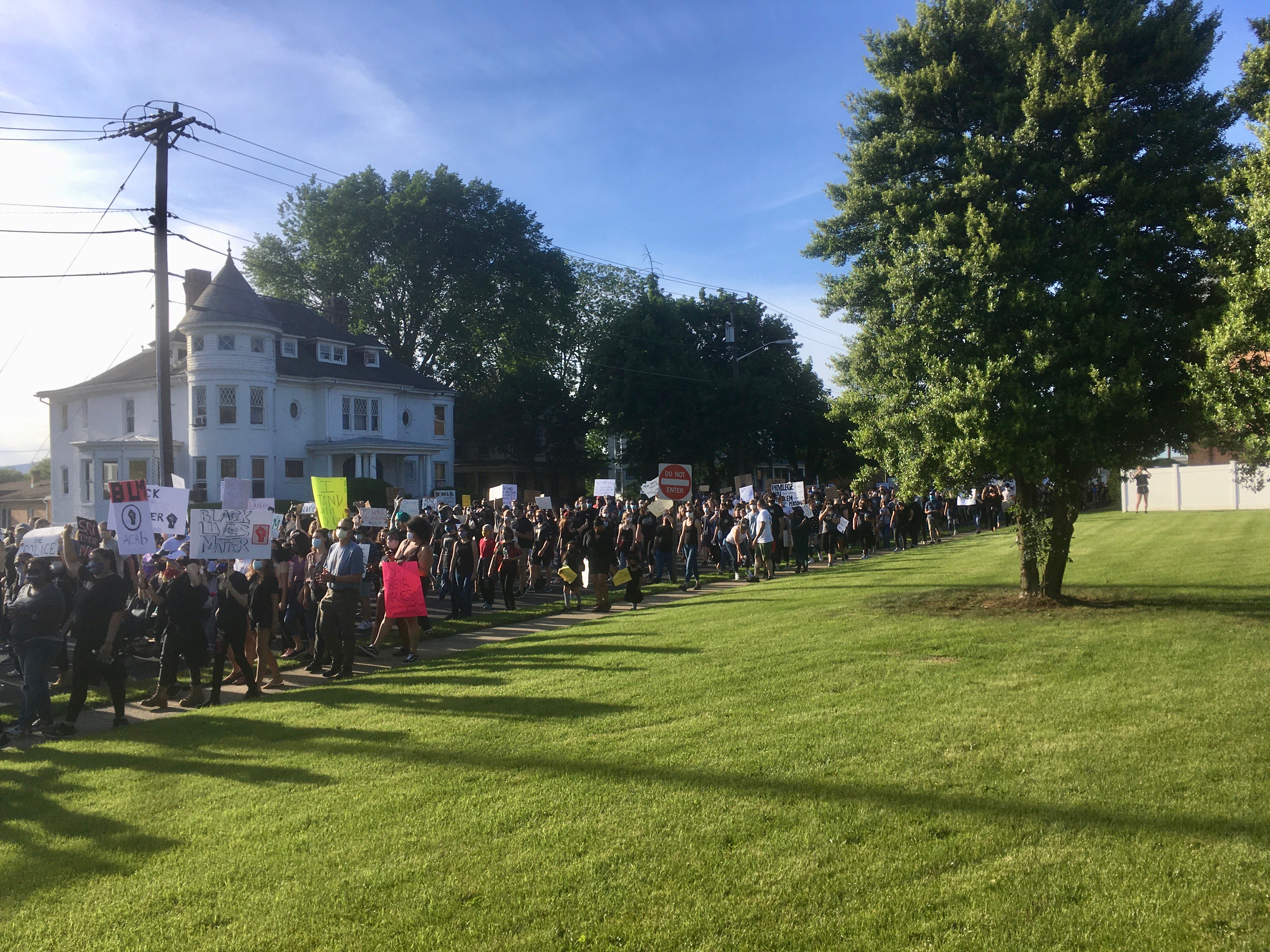
    The organizers had told us we were to stay on the sidewalks, but there were so many people that we filled the streets completely. Police accompanied us, stopping traffic (and, I’ve since heard, silencing an irritable driver who was honking). Passersby pulled their cars over to film the march, and some non-marchers stood along the route, or sat in their parked their cars, holding signs. As we neared the end of the route, people started chanting, the shouts of “No justice, no peace!” echoing against the walls of the public library, the children’s museum, the office buildings.

    We hadn’t been able to hear the opening remarks — so many (masked) people! — but we were able to stand closer to the speakers during the closing remarks. The line I most remember (wildly paraphrased):


    We come with our anger and hurt, and we come with a fierce love for each other.

    Amen.

    ***

    A (summary of a) conversation from this morning…

    “Have you seen what people are saying about being silent?” my older son said. “That anyone who remains silent on issues of oppression takes the side of the oppressor. I feel obligated to do something but I don’t know what.”

    “Silence comes in different forms,” I said. “Turning a blind eye is one thing, but being quiet in order to allow others to speak up is very different.”

    “But I want to help out in some way. I feel like I should do something. Like I should say something, but because white males have been dominating for so long, I don’t feel like I can say anything.”

    “So what’s the opposite of that?” I asked.

    “Being quiet,” he said.

    “Then listen,” I said. “Listen to black and brown people. We have to listen to what they say they need from us. We need to read their books, see their plays, listen to their podcasts. Follow their lead.”

    I don’t know if that’s the most helpful advice, but it’s what I came up with. Like many, I’m on a steep learning curve.

    ***

    *75 Things White People Can Do for Social Justice. (Medium)

    *For the month of June, Just Mercy is streaming for free from multiple platforms, including YouTube, Amazon Prime, and Redbox. (I can not recommend it highly enough.)

    *From Ibram X. Kendi, a list of 24 of “the most influential books on race and the black experience published in the United States for each decade of the nation’s existence — a history of race through ideas, arranged chronologically on the shelf.” (New York Times)

    *Specific to the current riots and demonstrations, this interview with the Brooklyn Borough President on Fighting Police Brutality From the Inside. “At 15, Eric Adams was beaten by police. He later joined the force and worked to reform NYC policing by co-founding 100 Blacks in Law Enforcement Who Care.”

    *I don’t have Instagram, but for those who do, here are five accounts to listen to and learn from. (Cup of Jo)

    *And finally, if you haven’t yet seen it, this video of Trevor Noah: George Floyd and the Dominos of Racial Injustice.

    ***

    This morning my cousin posted the following on Facebook…

    My beautiful boys. Marc is 13 and Luc is 10.  

    I have to teach them what to say and do if confronted by a police officer. It still may not matter.  

    When they wear their COVID masks, I have to tell them to keep their hoodies down. It still may not matter.  

    My son Marc started to run for exercise before Ahmaud was murdered. He’s not allowed to run alone anymore. It still may not matter.  

    Following the murder of George Floyd, I watched as some people in my town attached confederate flags to their vehicles, touting their white privilege/supremacy. I can do everything in my power to protect my boys, but it still may not matter.  

    My sons are caring, kind, respectful, and hilarious. They are bottomless pits, athletes, gamers, and cuddle bugs. They work hard at their household chores and don’t hesitate to help their neighbors. They are creative, loving, and fearless. They are black. 

    And their lives matter. 

    Reading my cousin’s words, the tears came. I’m not sure why, exactly. Was it because these children are family? Because I’d just returned from a run with my son? Because Mother Pain is something I connect with? Because of the cumulative stress, tension, and pain of the events of the last few weeks? Whatever the reason, I wept.


    Thank you, Karen, for sharing. All my love to you and your precious, beautiful boys.

    This same time, years previous: the quotidian (6.3.20), mama said, this is us, brown sugar rhubarb muffins, the quotidian (6.1.15), the quotidian (6.2.14), the quotidian (6.3.13). small pasta with spinach and bacon.

  • gluten-free bread

    A few weeks back my husband started wondering if he might have a gluten intolerance. He’s known he’s lactose intolerant for years now, but recently the pain — the stomach cramping and bloating he’d usually been able to keep under wraps with his lactaid pills and reduced dairy consumption — was flaring up. In fact, this time it didn’t even seem to be linked to dairy. So he decided to experiment with gluten.

    I took his announcement in stride. The man is forever saying he shouldn’t eat something or other and then forgetting what he said and eating it anyway (and feeling just fine). There was no way I was going to overhaul my cooking if this was just another one of his whims, so when he declared war on gluten, I just rolled my eyes.

    “Sure, go for it,” I said, pulling steaming loaves of crusty sourdough bread from the oven. “Maybe you’ll feel better.”

    So then after skipping gluten for a week and feeling great, he ate some sourdough bread and spent the next 18 hours feeling terrible. Which then sent me into a tizz. How, exactly, did one go about cooking gluten-free?

    Of my four basic starch groups — rice, potatoes, bread, and pasta — two were gone. Overwhelmed, and unable to sort out a menu that didn’t upend our lifestyle entirely, I dashed to the store for a bunch of GF foods: frozen pizza, rice noodles, pancake mix, sliced bread, all-purpose flour substitute. Once I had some supplies, I felt less trapped. Now I could make a plan. In the meantime, he wouldn’t starve.

    Turns out, the switch to gluten-free cooking wasn’t actually that big a deal. We ate more rice and potatoes, tons of veggies, a little more meat. My husband, to his credit, was extremely low-key about it all: granola with water for breakfast; boiled eggs, nuts, and apples for lunch. He didn’t make a stink about missing food or needing anything special. As long as he had chips on hand, he didn’t even seem to miss the pies, cakes, and bread that had gone missing (though I missed making them for him!). 

    I quickly realized that, since the store-bought GF bread tasted distressingly like cardboard, homemade gluten-free bread was the number one thing I’d need to figure out. (The number two thing would be pie pastry.) My sister-in-law shared some of her recipes with me, and after a couple tries and a few tweaks, I was actually quite pleased with the end results.

    the psyllium and yeast mixture

    Even though this bread is yeast based, it handles more like a quick bread: no kneading and a spoonable dough. Instead of flour — and it feels so weird to make bread without flour! — I use rice flour, tapioca starch, and an all-purpose gluten-free substitute. Which made a very white bread. So then, for color and texture, I toasted a half cup of rolled oats until they were dark brown and ground them into flour.

    so brilliantly white that I almost need sunglasses

    Psyllium, the husk of a seed that is often used as a laxative (and that I hear advertised on NPR all the time), is the special ingredient. They say it makes all the difference in gluten-free baking since it helps the bread to retain moisture and makes it a little more elastic.

    Don’t go overboard on the psyllium, though! Once I mistakenly added too much and the resulting bread had a distinctly cobwebby mouthfeel.

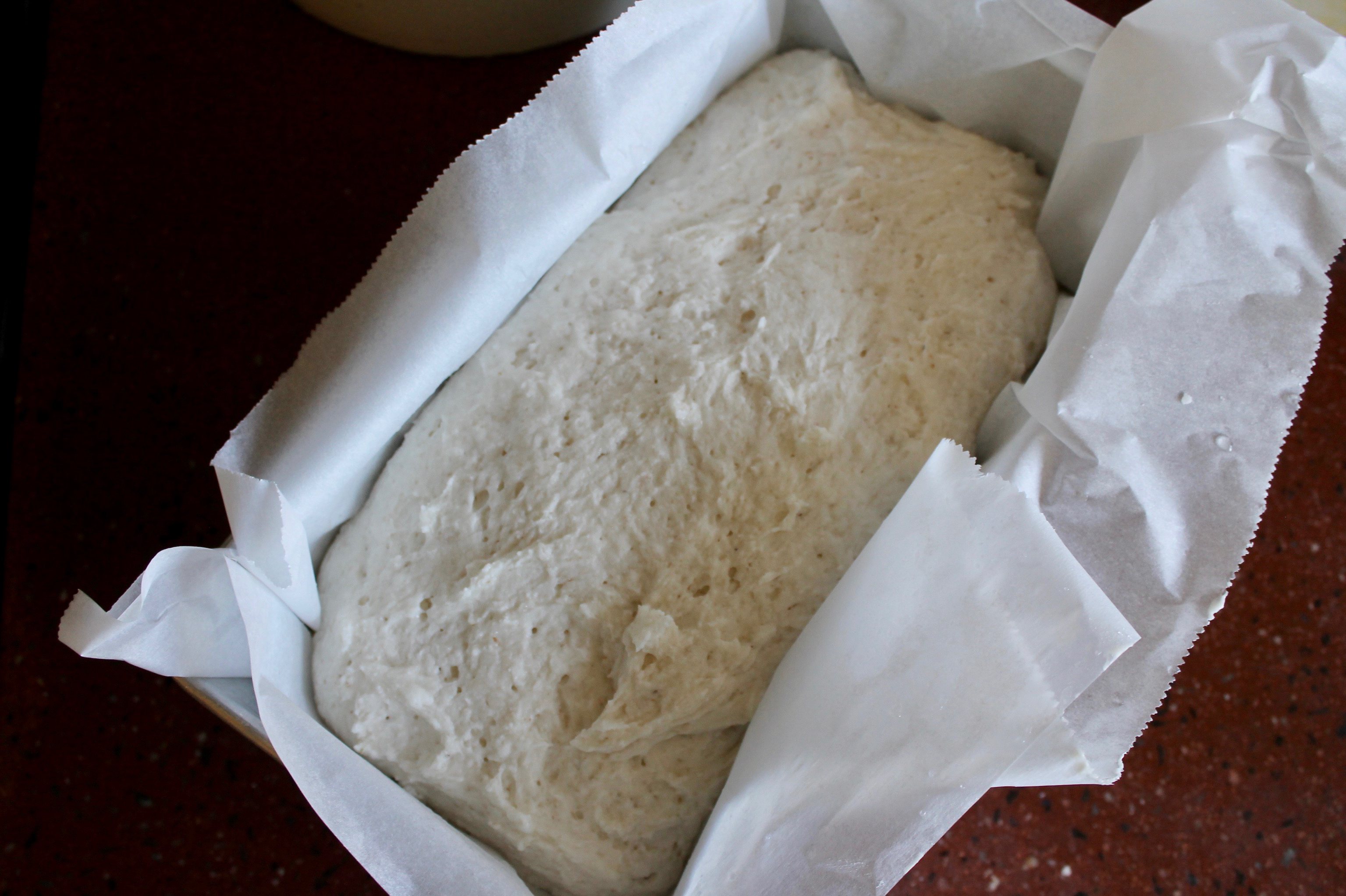
    scooped into the pan and ready to be smoothed out with the back of a spoon

    fully risen

    The bread doesn’t rise in the oven at all (again, weird!), and the top turns dusty-white as it bakes instead of golden brown. The bottom and sides, though, get nice and golden.

    The bread needs to rest for a good 12-24 hours before slicing into it because otherwise it’d be gummy.

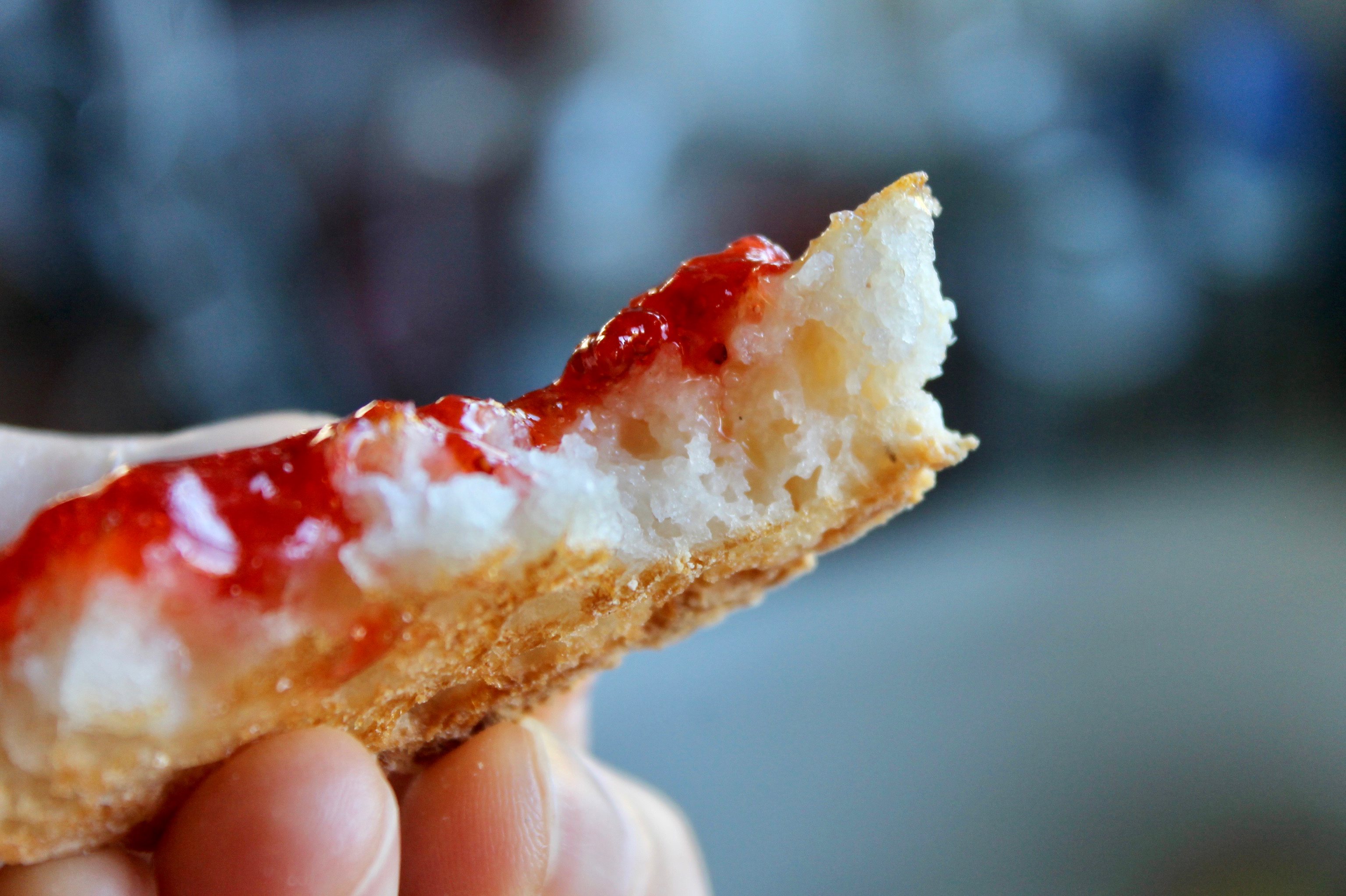
    It’s not anything like sourdough, of course, but it tastes good. The texture, what with all its little bubbly holes, reminds me of English muffins. There is a slight grittiness to it (the psyllium?), but it’s barely noticeable.

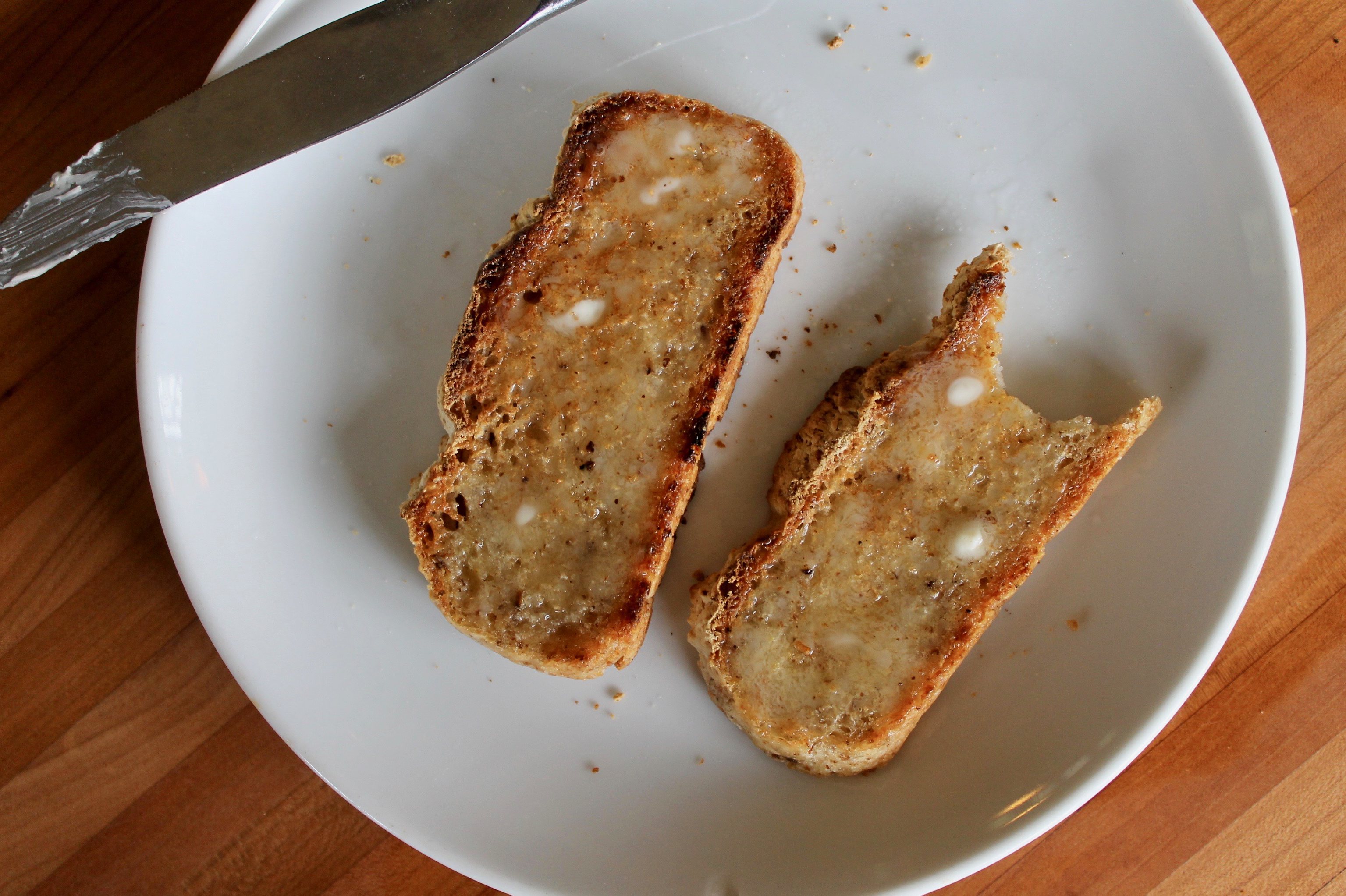
    Toasted, with butter and jam, it’s delicious, and even though I’m not gluten-free, I eat it willingly (or I would eat it if I wasn’t saving it all for my husband).

    And then just as I was getting into the swing of things (stocking up on tapioca starch and xanthan gum, contacting GF bakers, finding GF blogs), my husband did another gluten test. This time, wouldn’t you know, he had no negative reaction.

    We tested a couple more times since but with mixed results. Sometimes he has stomach pain when he eats gluten, and other times he eats it and then feels perfectly fine. It’s all very confusing. I’m convinced he needs to adopt a scientific approach — tracking his diet and monitoring his symptoms — but that would require him to remember to do that, and he and I both know that’s probably not going to happen.

    with toasted ground oats

    So now I’m back to cooking however want, and he eats however he wants. Whatevs. It is sort of disapppointing, though. I would love for him to feel better and, all things considered, eliminating gluten would’ve been a small (and easy) price to pay.

    Oh well, at least now I know how to make a yummy gluten-free bread.

    Gluten-Free Bread 
    Adapted from a screen shot of a recipe that my sister-in-law sent me.

    There are lots of other GF breads and methods out there (including, I hear, sourdough!) so I’ve only scratched the surface. Which makes me feel hopeful — there are options should my husband actually need them. GF bread is doable. Be ye (me) not afraid.

    The original recipe called for black olives and caraway seeds; I skipped both. Also, it called for sorghum, which I didn’t have. My sister-in-law said I could substitute millet flour, but I didn’t have any of that, either, so I ended up using more rice flour and the all-purpose blend. But then a couple days ago when I was digging around in the basement freezer, I discovered a five-pound bag of millet flour, oops!

    1⅔ cups warm water
    1 tablespoon honey
    2 teaspoons yeast
    4 teaspoons psyllium powder
    ½ cup rice flour
    ½ cup ground rolled oats (that have first been well-toasted)
    ½ cup tapioca starch
    ¾ cup all-purpose flour substitute, such as this
    1½ teaspoons salt
    1 tablespoon apple cider vinegar

    In a mixing bowl, stir together the water, honey, and yeast. Once the yeast begins to bubble, stir in the psyllium and let it rest for ten minutes. Add the remaining ingredients and stir to combine. The batter will be like a stiff, spoonable cookie dough. (If it’s too runny, add more of the all-purpose flour blend.)

    Line a loaf pan with parchment paper and, if you wish, brush it with canola oil. Spoon the dough into the pan and smooth the top. Cover with a towel and let rise until double, about one hour. It will not rise at all in the oven, so make sure the bread is well-risen prior to baking.

    Bake the bread at 400 degrees for 45 minutes. Remove from the pan and set the loaf directly on the oven rack and bake for another 15 minutes. The tops of my loaves always take on a whitish hue.

    Let the loaf cool to room temperature before storing in an airtight bag. Wait to slice the bread until the second day — if you cut into it the same day, it will be gummy.

    This same time, years previous: facts, the quotidian (5.29.17), simple lasagna, the quotidian (5.30.16), an evening together, in her element, spicy cabbage, the race we saw, showtime!, the saturation point, barbecued pork ribs.

  • the coronavirus diaries: week twelve

    My constant struggle against the downward suck of boredom is starting to have a numbing effect. By the end of last week, I felt like I’d crawl out of my skin. All week long, I’d been at home (and it’d been depressingly dark and rainy and cold) and now the weekend loomed with more of the same. Normally a homebody, I suddenly found myself longing for the excitement of the unfamiliar — Airplanes! Sticky-hot beaches! Open-air restaurants! Packed buses! Potholes! Strange insects! A different language! Weird smells! — with such intensity that it was almost a physical ache.

    But I can’t go anywhere so so much for that.

    I keep reading that, in times like these, people dig deep into themselves and find reserves they didn’t know they had. They become more settled and peaceful. They grow.

    But I’m just becoming stagnant, it seems. I go running and cook food and write (yes, I’m writing again) and check my daughter’s algebra problems and watch Netflix and read and pick the asparagus and with each passing day, I feel like another small bit of my soul has shriveled up and died.

    So dramatic, I know, but it’s true.

    And it’s also true that I’m perfectly fine, sigh.

    I said I needed more cuddles.
    ***

    How are you navigating the reopening?

    Without a comprehensive national plan, it appears we’re all on our own for figuring out when, and how, to do this.

    For now, I’ve decided that I’m waiting for the following: 1) to see how reopening goes — will there be an uptick in cases? — and 2) waiting for our local area numbers to go down for fourteen consecutive days. Last I heard, they’re still on the rise so it will probably be awhile yet.

    ***

    Good news! Now that it’s getting warmer, we can at least do a bit more socializing as long as we stay outside.

    On Saturday, my parents and my brother’s family came over for supper. It was such a treat to sit outside in the fresh air, chatting and watching the dogs run circles around each other.

    My mother is forever giving my husband That Look. 

    And then last night, we had more friends over for pizza and salad. Here we are, giving them space while they serve themselves first:

    Turns out, there’s a big bonus to socially-distanced, outdoor hosting: no need to clean the house!

    ***

    While rolling out pastry for a raspberry tart, I listened to Poet Sonya Renee Taylor on NPR’s Here and Now speak truth after truth.

    For example:

    I heard someone say the other day, you know, ‘In this time of great fear,’ and I thought to myself, ‘There’s always been great fear.’ We are not experiencing something new. We just happen to see it more clearly.

    Also:

    Here’s the scary thing: We have nothing but the opportunity to reinvent ourselves. … If we’re saying, ‘This space is open right now,’ then we also are saying, ‘I have some choice about what I would like to see put in it.’ We are at a tough time, but I believe that it’s possible to really activate what I like to call our liberatory imaginations to what it is that will deeply bring us joy.

    It left me wondering: What space is open to me right now? What “liberatory imaginations” do I have that need activating? Quite honestly, I have no idea. And that truth leaves me feeling mildly bereft…

    Listen to the (way too short) interview here.

    ***
    Attending a church council meeting.
    ***

    Have you watched Hannah Gadsby’s new show on Netflix? I’m excited to see it. Also, here’s her interview with Terry Gross; I just finished listening to it today.

    For our Sunday night movie, we watched Just Mercy. At one point, we were all crying (some were sobbing), but we all agree: it’s absolutely a must watch. No, scratch that. It’s a must, must, MUST watch. (Also, Bryan Stevenson’s interview with Terry Gross is wonderful, as is his book —I read it months ago and then dug it out again after watching the movie and now my husband is reading it.)

    ***

    And to read…
    *Quarantine Fatigue Is Real (The Atlantic). By drawing on what we learned from the AIDS epidemic, we know that “… an abstinence-only message doesn’t work for sex. It doesn’t work for substance use, either. Likewise, asking Americans to abstain from nearly all in-person social contact will not hold the coronavirus at bay — at least not forever.” Instead, in order to learn to live while in a pandemic, we need to learn to 1) differentiate between low-risk and high-risk activies, 2) acknowledge contextual factors for different individuals, and 3) stop shaming people who continue to chose high-risk activities and instead provide them with tools to minimize danger.

    *From Camping to Dining Out: Here’s How Experts Rate the Risks of 14 Summer Activities (NPR).

    *When The World Went Away, We Made a New One (The New York Times Magazine). If you have an extra twenty minutes, this personal essay about a single mother (who is also a recovering alcoholic) parenting her toddler while sick with Covid makes for a good read.

    xo!

    This same time, years previous: period, the quotidian (5.28.18), butter chicken, the hard part, the quotidian (5.26.14), the quotidian (5.27.13), one dead mouse, strawberry shortcake with milk on top.