• fig walnut biscotti

    You know, these deliciously chilly nights and crisp days are giving me a serious hankering to bake. 


    Pause.

    Did you know that eating certain foods at certain times of the year is not a universal concept? Back when Melissa was living with us, she observed one day that we didn’t eat much soup. 

    Her comment stopped me in my tracks — because I love soup and didn’t think of myself as a non-soup eater — but then it dawned on me that she was right: we didn’t eat much soup . . . because it was summer!

    So then I explained the idea of seasonal eating: how we eat more hot soups and casseroles and rich food and pie in the winter and summers are for lots of fresh salads, grilled meats, ice cream, and watermelon.

    To Melissa, it was a new idea, and to me it was a new idea that it’d be a new idea. I mean, I knew this (I’ve lived in Central America and eaten my fair share of hot soups on sweltering days) but still, when something I take for granted bumps up against someone else’s normal, it always throws me a little. Funny, that.

    Anyway, what was I talking about? Oh, right. Biscotti. 
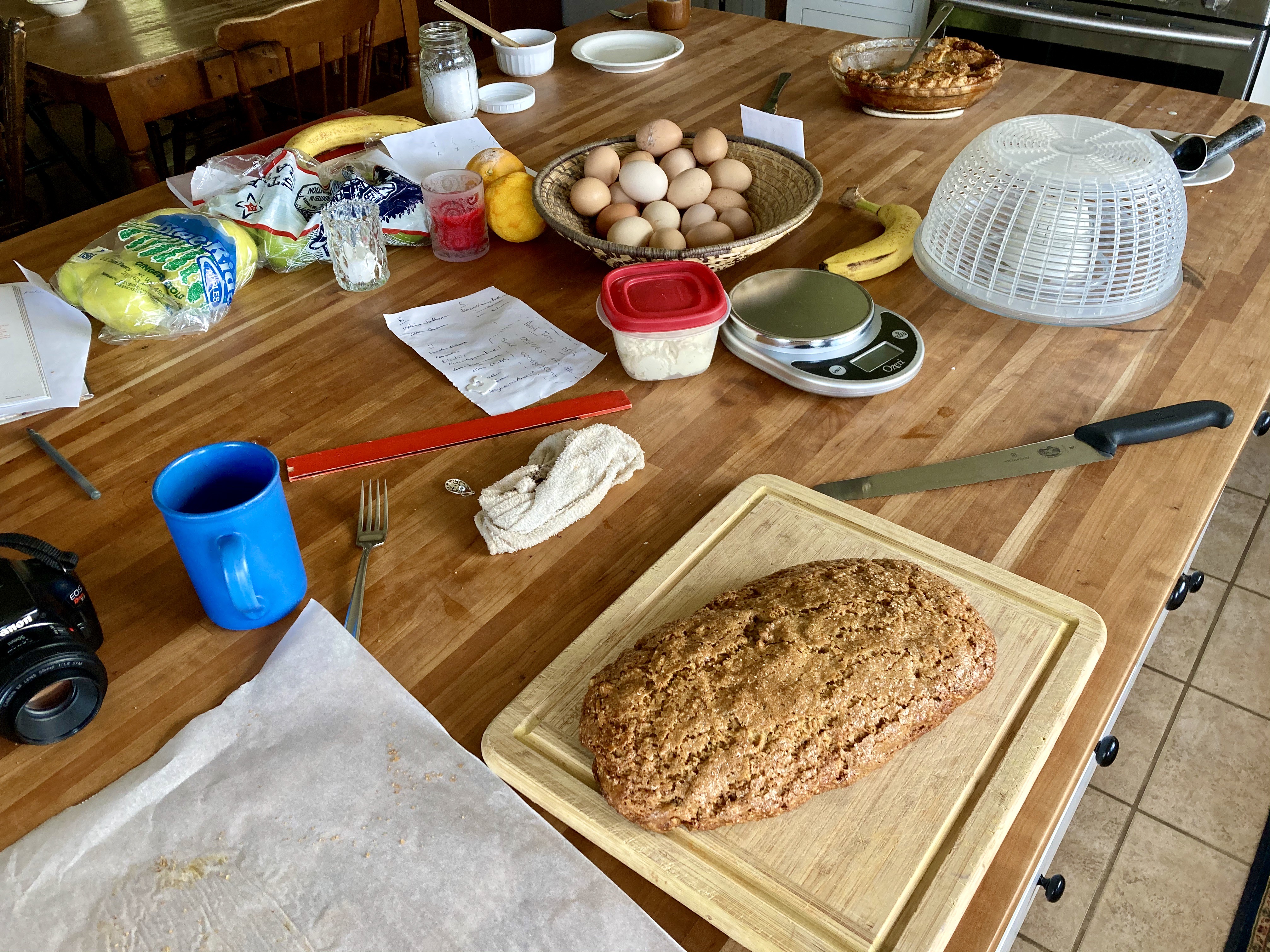
    To me, biscotti is wintertime food. Twice baked — with the second baking being low and slow — biscotti is the perfect project for warming up a chilly kitchen. Plus, since it’s often heavily seasoned with citrus, nuts, and spices, biscotti makes the whole house smell cozy and rich, like Christmas.

    This biscotti, to me, has the ideal texture: dry and crunchy all the way through — no soft middles for me! — but softly hard, not break-your-teeth rock hard. It’s sweet, but not overly so, and, thanks to the nuts and fruit, it’s delightfully wholesome, in a French farm kitchen sort of way. (French, not Italian, and don’t ask me why.) Eating it, one feels practically virtuous. 

    Fig Walnut Biscotti
    Adapted from Smitten Kitchen

    Consider doubling the recipe: it’s a good biscotti.

    1 cup walnuts
    1 cup dried figs, quartered
    6 tablespoons butter
    ¼ cup white sugar
    ⅓ cup brown sugar, packed
    2 eggs
    1 teaspoon vanilla
    zest of one orange
    2 cups, minus 2 tablespoons, flour
    1 teaspoon baking powder
    1 teaspoon cinnamon
    ¼ teaspoon baking soda
    ¼ teaspoon salt
    ¼ teaspoon nutmeg
    ⅛ teaspoon cloves
    1 egg white, lightly beaten until frothy
    More white sugar, for sprinkling

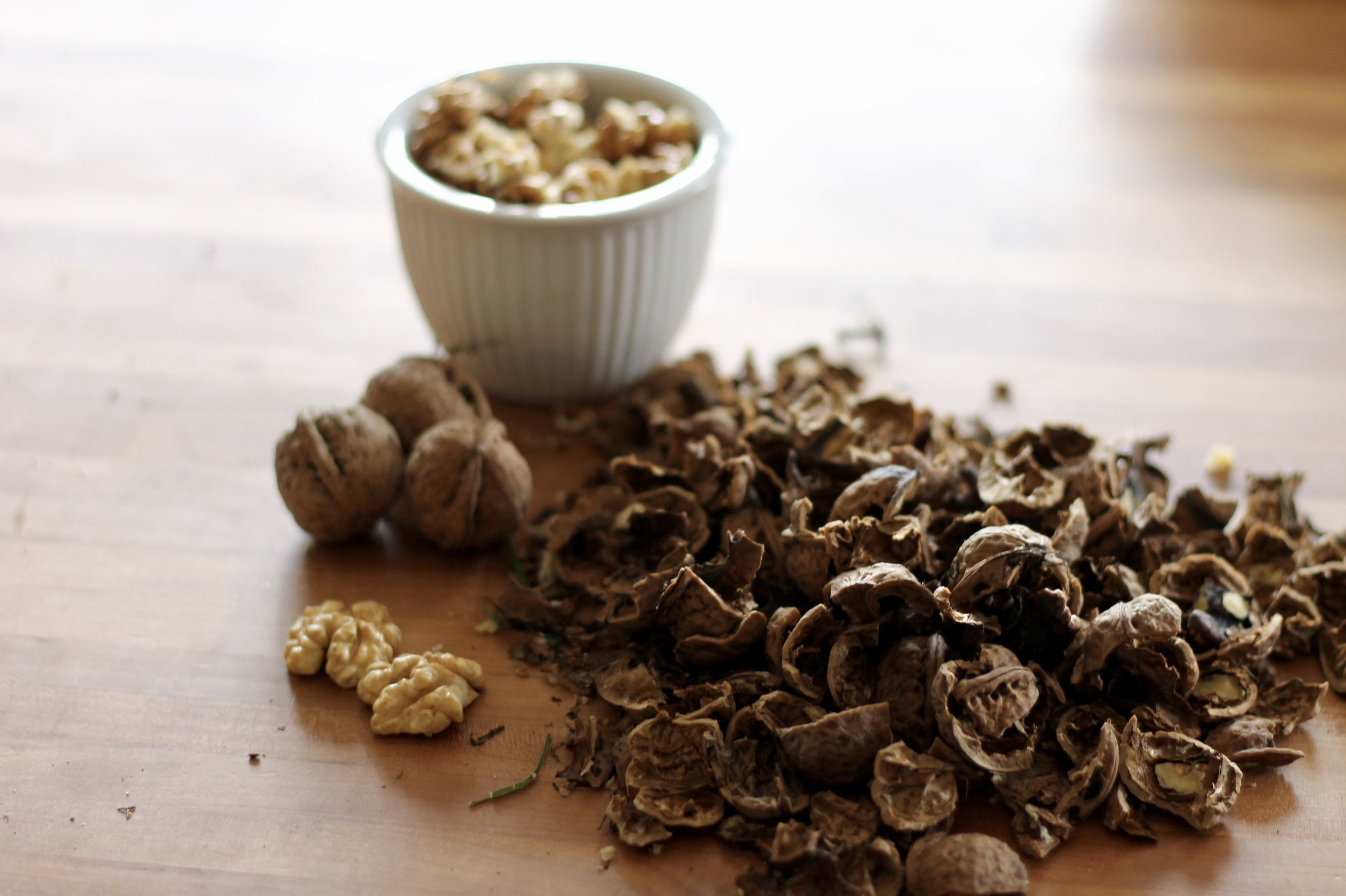
    Toast the walnuts in a 350 degree oven for about 10 minutes, or on the stovetop in a skillet. Remove to a bowl and cool to room temp.

    Place the walnuts and figs in a food processor and pulse until ground (some larger pieces are okay). 

    Cream together the butter and sugar. Add the eggs, vanilla, and zest and beat to combine.

    In a separate bowl, stir together the dry ingredients. Combine with the butter mixture. Add the nuts and figs and stir until just mixed.

    Chill the dough for at least one hour before shaping into a log — long and skinny, short and fat, whatever you like — and placing on a parchment-lined baking sheet. Brush the top and sides with the beaten egg white and sprinkle liberally with white sugar (or raw, if you prefer). 

    Bake the loaf at 325 degrees for 20-30 minutes, or until the top is firm to the touch and has little cracks. Remove the loaf from the oven and cool for 30-40 minutes. Using a serrated knife, slice the loaf. Arrange the slices, cut side down, on the baking sheet and return to the oven for another 20-40 minutes, flipping the pieces once halfway through, or until the biscotti is dry and lightly browned (it will harden as it cools). 

    Store the cooled biscotti in a pretty glass jar atop. It will keep for several weeks, at least.

    This same time, years previous: if you ask a Puerto Rican to make a pincho…, the quotidian (10.8.18), happy birthday, sweetie!, twelve thousand doughnuts, the soiree of 2014, a lesson I’d rather skip, one foggy morning, at least I tried.

  • sunflowers


    The other day when I ran out the door to go on a walk with my sister-in-law, I was wearing my BLM

    shirt. For a brief second, I paused. Was it safe? 

    Oh, don’t be ridiculous, I told myself. Of course it’s safe. I’ll just smile real big at everyone who drives by so they don’t run me over.

    There seemed to be an awful lot of pick-ups on the road that day. Was it my imagination, or were they shooting daggers at me with their eyes? My sister-in-law must’ve sensed the negative vibes, too, because after one truck drove by, she looked at my shirt and said, “Feeling brave today, eh?” 

    I laughed, but then after we split at the corner (and the same pick-up passed me for the second time, um… yikes?), I did zip my jacket and jog the rest of the way home. No point in being stupid about things. 

    Nothing happened — spoiler: this is kind of a non-story — but just the feeling that I might be at risk left a lasting impression. 


    “Have you seen the photos of the fires out West?” my older daughter asked me one evening. “Everything glows red.” 

    “Yes,” I said, but that was only a half-truth. I’d seen some things on social media that evening — the light in one photo an eerie demonic red — but I avoided looking too close. I knew I wouldn’t be able to sleep if I looked at them right before bed.

    I feel this way about much of the news. It’s so heavy, so dark and troublesome and unsettling. Every issue feels like a full-blown crisis: the rising COVID death toll, QAnon conspiracies, climate change, revolutions, police violence, the relatives devoutly hanging on our unhinged president’s every word. 

    Listening to the radio, scrolling through Facebook, reading family emails, skimming the NYTimes headlines, I get a knot in my stomach. 

    Is there something we should be doing? I ask my husband. 

    Like what? he says.

    I don’t know….

    My voice trails off as my mind ticks through the typical end-of-the-world shopping list of generators, extra gas, more firewood, medicine— 

    But no. It’s too much work to think this way. Besides, those are the superficial things. The things I feel I need to prepare for — but what? how? — go much, much deeper.


    The Sunday after the 2016 election, our pastor reminded us that our hope, as Christians, is not in our nation’s elections, and then she cautioned us against taking on the weight of the world: To think we are in charge is to make gods of ourselves.* 

    Strong words for a group of progressive thinkers and doers, those. To me, it felt like a rebuke.

    Also, a release.

    I’ve been thinking about that sermon a lot recently. No one (and certainly not Jesus) ever promised things would be easy. People the world over deal with horrible injustice daily. Why would I think I wouldn’t be touched? 

    Also, I am not in charge. Fixing this [gestures expansively] is not my responsibility. 

    But at the same time, I believe that I need to — I want to — do what I can to make the world a better place. 

    What’s the line between the two? How to strike a balance? How to keep perspective? 


    Sometimes I wonder if I have a touch of PTSD from that march I did

    PTSD is, of course, too strong of a word, but I’m not sure what to call this rawness, or heightened sensitivity, paranoia, whatever. 

    It didn’t feel that disruptive in the moment, but it’s one thing to hear about the negativity and hate in the media — it’s another to see it made manifest, to feel it.

    It’s scary.


    In a recent NPR report on the trauma of ongoing covid quarantining, an expert explained that trauma is best survived by:

    a) refusing to complain and/or getting stuck in an endless loop of negativity, and

    b) by focusing on the things we do have control over, and being grateful for small pleasures. 

    These people, the expert said, are the resilient ones. 


    Back when I was having my BLM sign dilema, one of my friends said, “Even asking whether we want to deal with whatever happens by putting up a sign is white privilege…. Do we want to deal with the outcome or not?”

    “Of course,” I said. “But does that change anything?”

    I still have to make my choices. I still have to stand up for what I think is right. I still have to take care of my family, of myself.

    So here’s what I do.

    I check on my BLM sign every morning. It makes me smile. 

    I corner the younger kids and make them listen to yet another chapter of Little Women — the book is taking us forever to get through. I wipe up the mouse turds on the window sill and frown at the empty mousetraps. I go for my runs even though I’d rather not. 

    Weekday mornings, I force myself to march upstairs to my room to write about what I know: that our children’s learning doesn’t have to be nearly as disruptive, fraught, or disconnected from daily life as we’ve been led to believe.  

    I turn the radio off.

    I watch Schitt’s Creek before bed — only happy thoughts before sleeping! This is my second time through, and this time I’m bringing (read: forcing) my husband along for the ride. Also, I’ve learned how to do GIFs on my phone, and my older daughter and I have entire conversations with Schitt’s Creek GIFs, Ew, Deevid!

    I spend a lot of the time sitting out on the porch drinking wine (or coffee or hot chocolate) and reading. (This book is a game-changer. READ IT.) 

    I bake my heart out, collapse into bed early, and then pop awake in the middle of the night thinking about orange zest and soggy bottoms. 

    I mail in my paperwork to be a poll worker. I have no idea what being a poll worker entails, or even if I’ll be needed, but since it’s always older men and women sitting behind the folding tables in our voting station, and they certainly shouldn’t be out and about when we’re in a pandemic hot zone, I figure I might as well step up. 


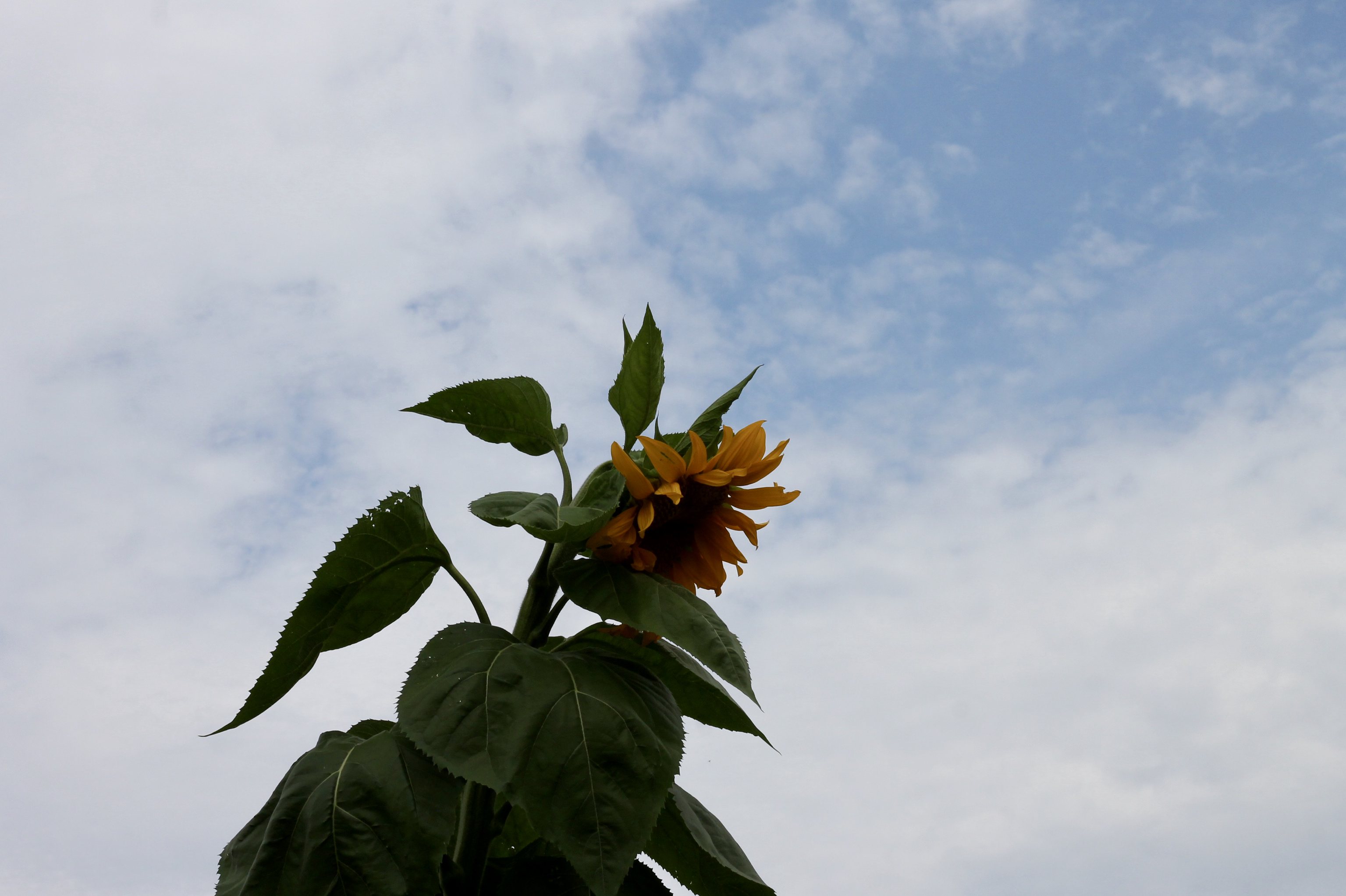
    This year my dad used the bottom half of our garden for their corn and sweet potatoes. Midway through the summer, I noticed that he’d planted a bunch of sunflowers, too. They were brilliant, a bright wall of color rising up out of the gnarly knot of our late summer garden. 

    “I didn’t know you were going to grow sunflowers,” I said. 

    “The corn didn’t all come up,” he said, “so instead of replanting, I just stuck some sunflower seeds in the empty spots.” 

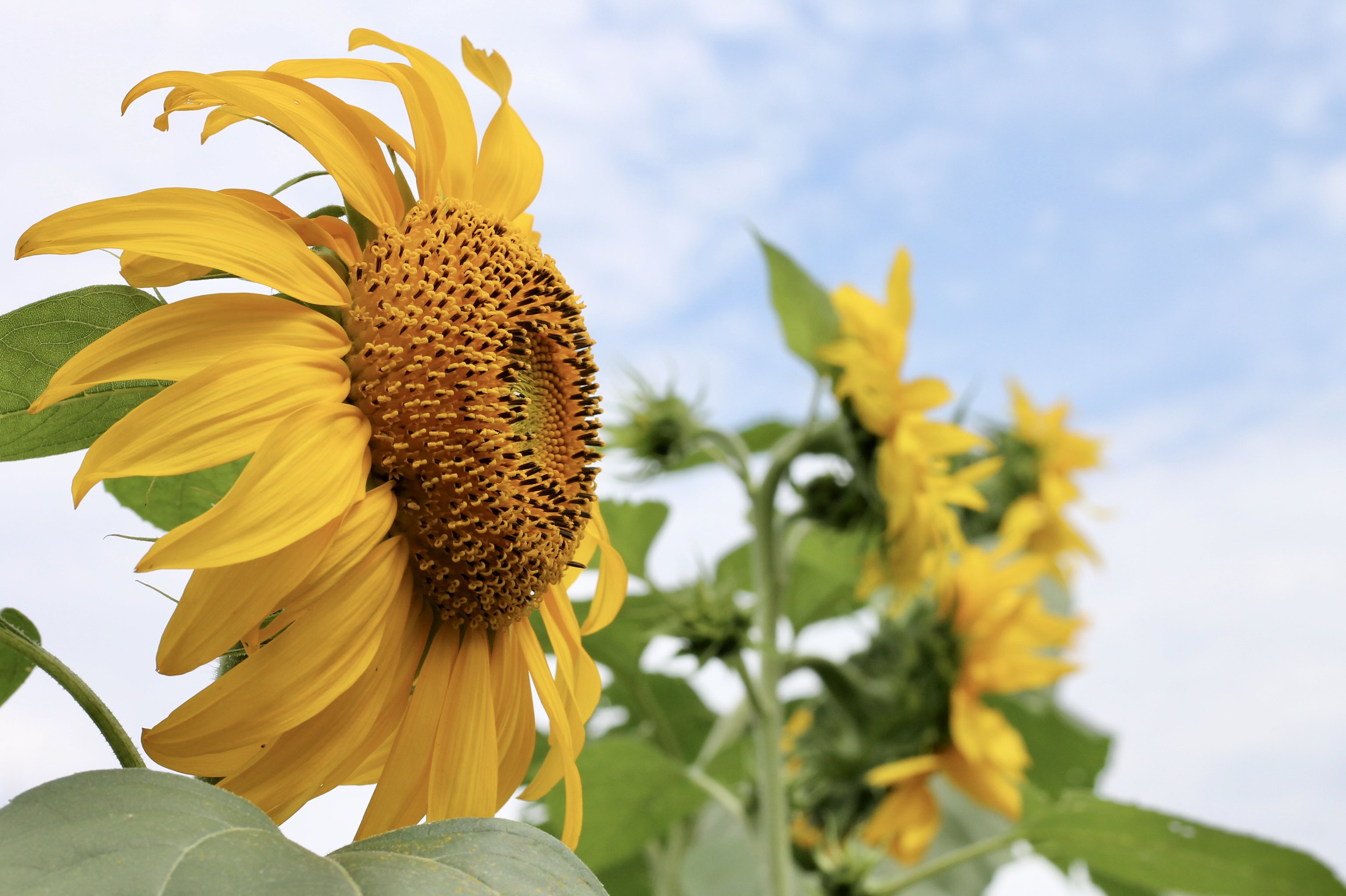
    And that, I think, is about as good a plan as any: when things don’t go as hoped, reach for the sunflower seeds.


    *I’m paraphrasing wildly, and my pastor may not even have saidthose things, but that was my takeaway.


    This same time, years previous: the quotidian (9.30.19), hey-hey, look who’s here!, welcome home to the circus, the myth of the hungry teen, chocolate birthday cake, dumping: a list.

  • the quotidian (9.28.20)

    Quotidian: daily, usual or customary; 
    everyday; ordinary; commonplace


    For my birthday: the chef made me chef salads.

    From our tree. 


    For Magpie: crucial research.


    Salted caramel: test run. 


    For anyhow: peach, blackberry, and red raspberry. 


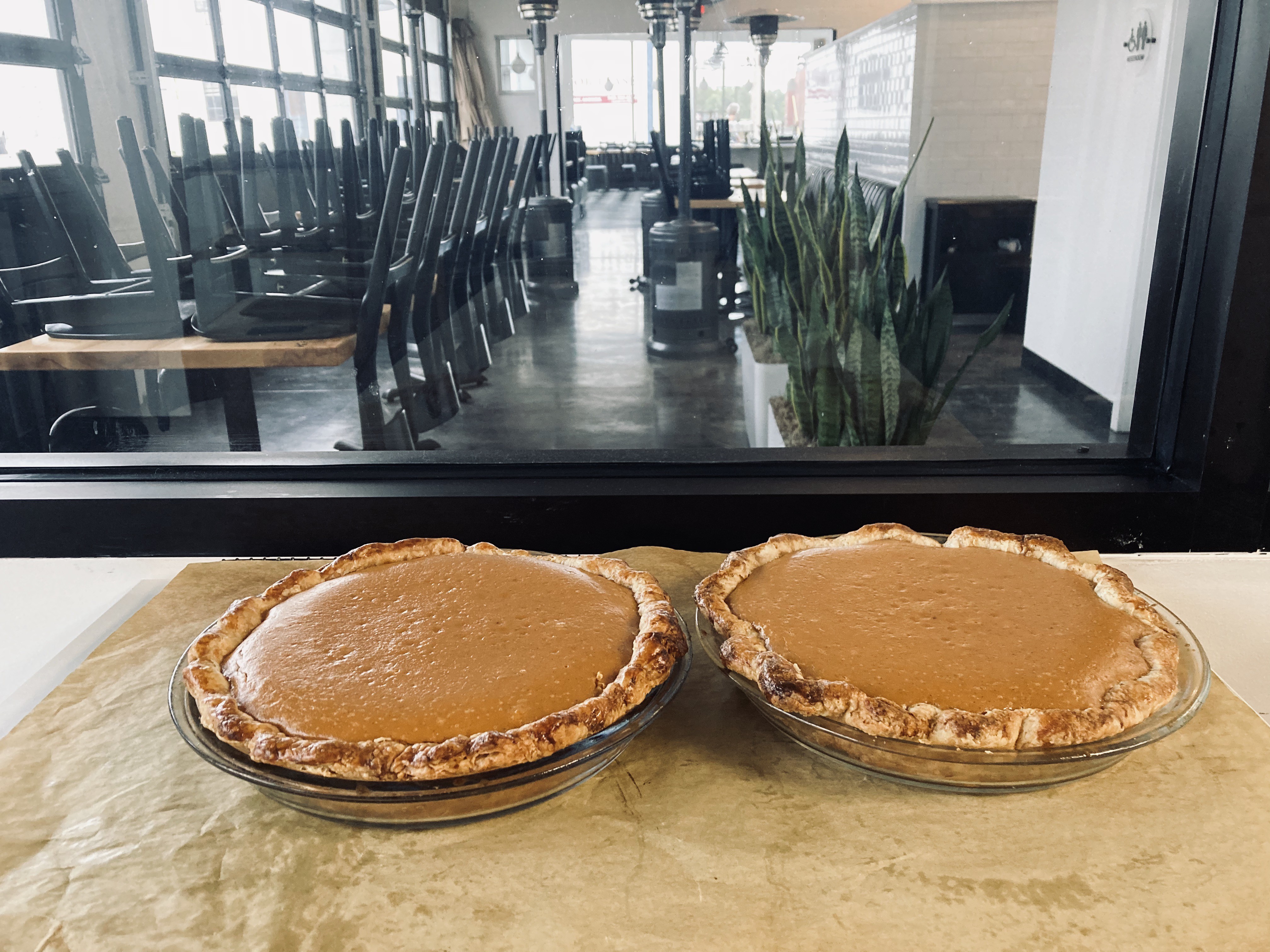
    This week’s special: sweet potato.

    Fake.

    This (so good I bought it and am making it required reading) and this

    Lazy afternoons are the best.

    This same time, years previous: what we ate, for my birthday, evening feeding, you’re invited, the soiree of 2016, getting shod, the quotidian (9.29.14), pointless and chatty, 37.