• cheese tasting

    Finally, finally, finally, I’m beginning to cut into my cheeses!

    My plan is to share all my taste test results here; as for the actual recipes: only after we figure out which ones we like best and I’ve locked down my method will I post a recipe. (Well, unless it’s a kicker cheese. Then I might just go ahead and post it.)

    Note: To track methods, notes, and results, I number my cheeses. Thus, the numbers. Obviously.

    ***

    Cotswold (Number 8)
    This one’s probably going to make it into my recipe files in short order. It was the one my local cheese coach recommended I start with, and it was the first one I cut in to. 

    Cotswold is like a Double Gloucester, for those of you who know what a Double Gloucester is (they’re both from England and in the cheddar family), but with the addition of dried onion, dried garlic, and dried chives. Minus the garlic, Cotswold is known as a ploughman’s cheese which, apparently, is a type of cheese that’s served on a ploughman’s breakfast platter which is an English pub “thing,” or so I’ve been told. Cotswold takes only four weeks to age, which makes it a great starter cheese.
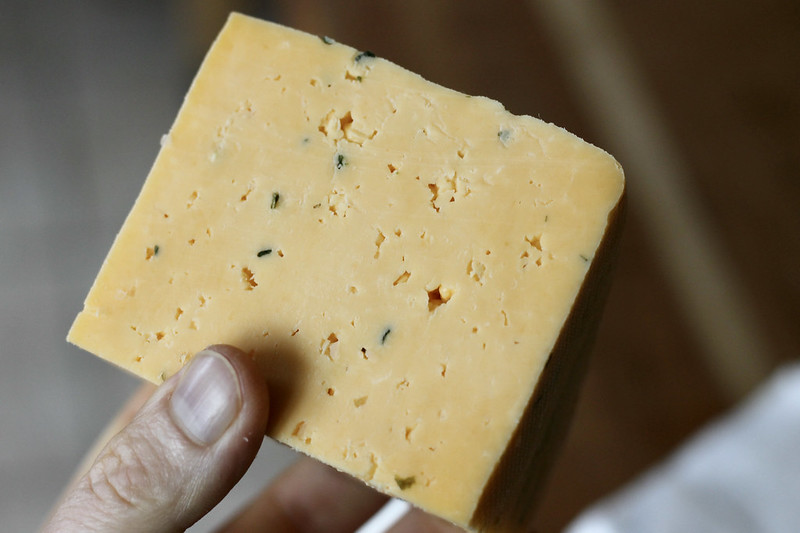
    As for the cheese? A solid five stars. Soft and dry, and a little creamy. Salty and flavorful. Not crumbly, and no funk or acidic tang. Just, a straight-up fabulous cheese. I was so pleased and proud, I cackled with glee for days: I made cheese! I MADE CHEESE.

    We ate it sliced, with crackers, mostly, and shared it with friends and, before I knew it, it was gone. I never even got around to cooking with it to see how it melted. 

    I have two more Cotswolds aging now, and I hope to make several more soon. With this one, I want to be well-stocked.

    ***

    Colby (Number 10)
    I don’t know what to say except: it’s actually a colby!
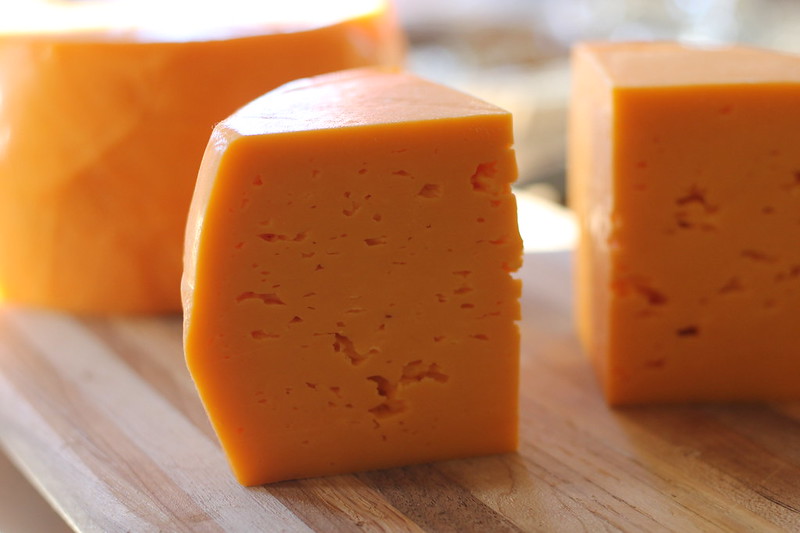
    I mean, seriously: how cool is that?

    There are little holes throughout, and it’s pliable and flexible, with the typical Colby chew. It’s soft and a little bit buttery, with a mild flavor. I did detect an ever-so-slight — and I mean slight slight; I’m being UBER picky— tang which, I’ve read, means it just needs to age more, so I packaged up the second half and am aging it for another month or so. Can’t wait to see how the extra time changes the flavor…or not.

    I did make grilled cheese with this one. The cheese bubbled and melted like a pro.

    And I grated a bunch to go with taco salad. It tastes like the real deal. No, it is the real deal.

    the little bits of white mold on the outside were both flavorless and harmless

    This one is a crowd pleaser and good for cooking, so lots more Colby coming up. 

    ***

    Dry Jack (Number 11)
    This one isn’t ready until March, but since I detected a bit of orange mold on the edge, I decided it was time to vacuum seal it. And since it was so big, I had to cut it in half to pack it. And since I had to cut it in half, I had to taste it. 

    It was sweet and mild, with a slight bite from the peppercorn, cacao nib, and coffee rub. The cheese was firm, solid the whole way through, and almost “glassy” looking, kinda like Swiss cheese. The flavor was good — not offensive or bad at all — but not exciting.
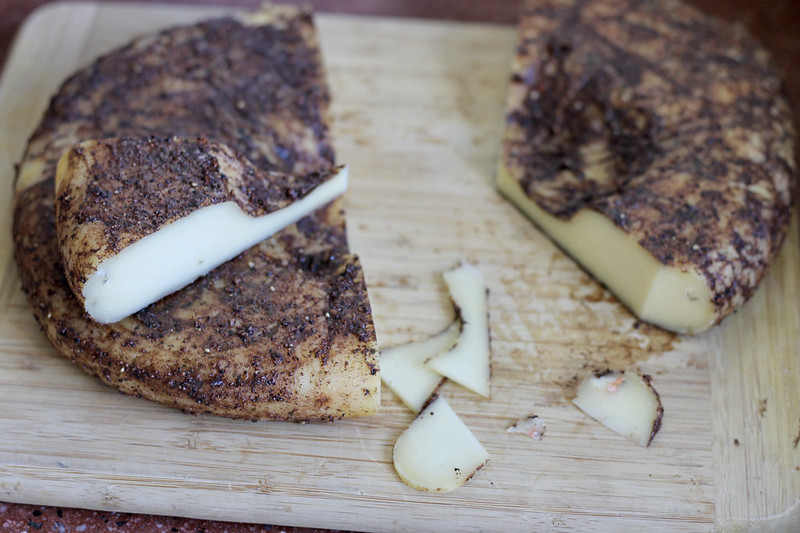
    Come March, I’m hoping there’s a noticeable change in the depth of flavor.

    I wasn’t sure if that red stuff was mold, but tasted fine and I didn’t die, so that’s cool.

    ***

    Monterey Jack (Number 2)
    Because this cheese had a bit of a dirty sock smell after drying it at room temp, and because the weather was so hot at the time, I thought it might be a flop.

    I opened it about a week early. The outside was slimy (which is normal, I understand), so I wiped it down with a salt brine and dried it. 
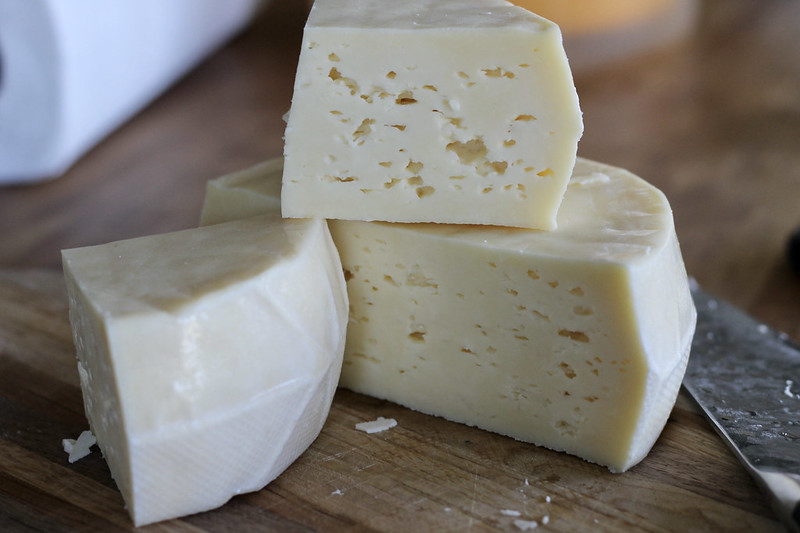
    The cheese was dry with little holes, and mild tasting. Again, there was a slight tang which, I’m learning to detect and identify as a sign of an under-aged cheese, but it was definitely not a failure. (About the holes: are they a sign of something gone wrong, or is this how it’s supposed to be? I do not know.)
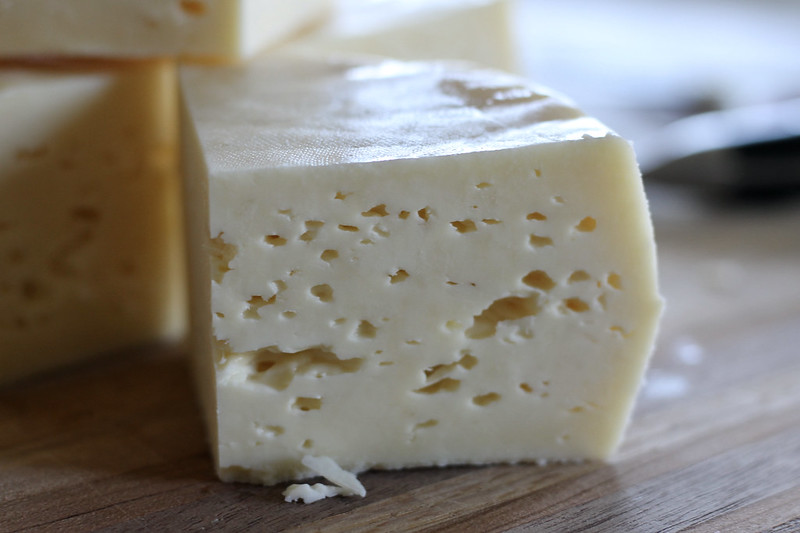
    I kept a quarter of it out for snacking and re-packaged the remaining cheese. We’ll see how it is in another month or so. 

    ***

    And now, lest you think I’m getting overly confident with my cheesemaking, here’s a photo from today’s project: 

    Camembert, my butt. I’m so mad! The curd took hours to set and then it was still too runny and leaked out the bottom and then the stupid mold decided not to stay put and the curd gush-pooped everywhere. I salvaged what I could (so much for sanitized conditions) and, because Gavin says no cheese failure is actually a failure, I strained the curd in a bag and then put it into ricotta molds. It’s a mess and I’m peeved because the instructions betrayed me and because white mold cheese already has me nervous and now I feel utterly incompetent and stupid for actually thinking I could do fancy cheese. The nerve!

    Signing off for now. Gotta go nurse my wounds…

    This same time, years previous: vanilla fondant, nourishment, letting go, growing it out, the quotidian (10.26.15), in the garden, sweet potato pie, the morning kitchen.

  • the quotidian (10.25.21)

    Quotidian: daily, usual or customary;
    everyday; ordinary; commonplace

    Reading material.

    I taught my older daughter how to make pie crust and then she left these in my freezer.

    Green tomato: does anyone actually like it?

    Stretching the salsa.

    Squeeze me. I’m soft!

    If kept unopened in the back of the fridge, it has a surprisingly long shelf life.

    Careful. Bundts stun.

    Work lunch: savory oatmeal.

    Hey.

    Simple pleasures.

    Tucci on my table.

    Thinking of making like Delilah and grabbing some scissors.

    Crisscross.

    Spooky.

    This same time, years previous: vote!, snowboarder cake, 2017 garden stats and notes, the quotidian (10.24.16), winter squash soup with corn relish, our cracking whip, random, breaking news, the first teenager, the quotidian (10.25.11), tales of terror and woe.

  • soft sourdough bread

    Know this: I was not after a soft sourdough recipe. I love our bakery sourdough, and I love my homemade sourdough. But when one of you pointed me in the direction of Kate of Venison for Dinner (because of all her milk and cheese posts which have been awesome, by the way— thank you!), I couldn’t help noticing she had this soft sourdough recipe that kept popping up in her posts, and I became curious. According to Kate, she uses this recipe for everything from buns to loaves to cinnamon rolls.

    Why soft sourdough instead of the regular fabulous stuff, you ask? Well, some people, apparently, take issue with sourdough bread’s crustiness. This, I think, is weird — the crunchy, chewy crust is half the fun, right? — but I do get it that for anyone with tender teeth or weak jaws, a hard crust could be an inconvenience. Plus, some people just prefer billowy, soft bread without a sour tang.

    Like I said, weird.

    But, since I have a raging case of FOMOOF (Fear Of Missing Out Of Food), of course I had to try it— and it was totally different from any sourdough I’d ever made!

    In fact, my family thought I was lying when I said it was sourdough. “Nah,” they said, “this is more like Wonder Bread,” a comment which, I suppose, could be seen as offensive, but I happened to agree. It was so soft and white and non-tangy that I actually made myself a peanut butter and jelly sandwich with the fresh bread, the first PB&J I’d made in years, probably, and it was divine.

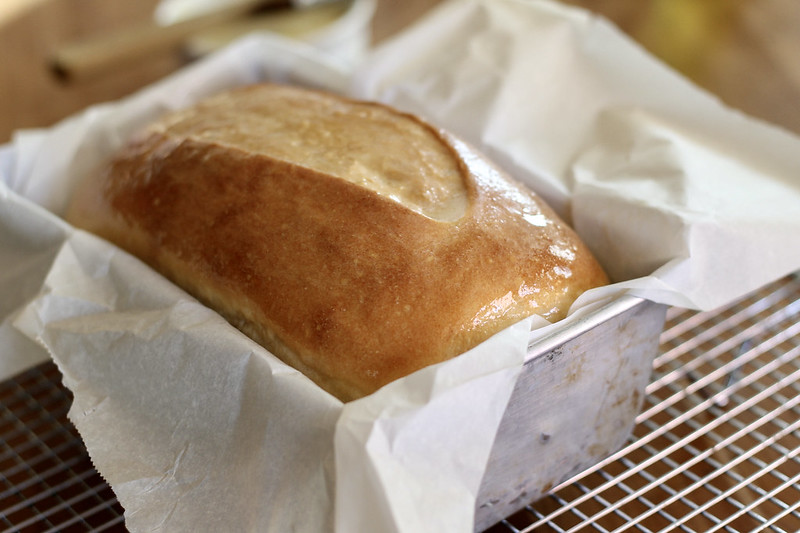
    Even though the bread is fully sourdough (which I still kinda can’t believe), it’s incredibly tender with just the gentlest bit of chew and only the faintest hint of sourness. And the loaves are so soft, they’re squeezable. Each time I pick one up, I think of babies’ butts.

    But wait! It gets better! Because then I decided to try making cinnamon rolls with the dough.

    Since subbing ordinary bread dough for cinnamon roll dough has never failed to be anything but a crushing disappointment — the rolls always seem to end up tasting like bread trying to be something it’s not — I was deeply skeptical. But they turned out wonderful: caramelly and soft and chewy.

    My husband says he much prefers this version to my regular potato-based dough which, he says, is too soft and sweet. This one has a little more heft, and it’s less sweet, so it feels more real. (Sweetness with a spine. Like me.) Normally, he eats one cinnamon bun and is done. With these, he couldn’t stop. 

    at night: my starter, my baby

    The process for this bread is simple but, since it stretches over two days, I recommend jotting down a schedule for the first couple times, just so you know what happens when and don’t have to think about it much.

    in the morning: double-batch of levain, ready to go

    While you can do these steps at different times so that you end up with fresh bread whenever you want it, for simplicity’s sake, my method goes like so: in the evening, make the levain; in the morning, make the dough, let it rise for two hours, punch it down, let it rise for another two hours, shape into loaves, buns, whatever, let it rise for two hours, bake. (For variations on the scheduling theme, see Kate’s post.) 

    baby butt-soft whole wheat sourdough buns

    As for ingredients, I’m still messing around with flours. I wonder if a higher-gluten flour may yield a chewier bread? When I want whole wheat, I use coarsely ground whole wheat in place of the AP flour for the levain (so far, using whole wheat in the main dough has resulted in a bread that’s too heavy) and then proceed as normal with the actual bread dough ingredients.

    soft whole wheat sourdough

    However, I think the all-purpose flour may be key to making a soft bread so I recommend starting with that and then branching out.

    Soft Sourdough Bread
    Adapted from Kate of Venison for Dinner.

    In place of butter, use coconut oil, lard, olive oil. Though I haven’t tried it yet, Kate says you can sub eggs for the milk — 1 egg for a quarter cup of milk. 

    Note: brushing butter all over the top after it’s done baking and then letting it cool in the bread pan are both key in getting a soft bread. Do not skip this step.

    I almost always double the amounts.

    evening levain:
    ½ cup cool water
    ½ cup sourdough starter
    ⅔ cups all-purpose flour

    Stir together, cover, and let set at room temperature overnight.

    morning dough:
    1 tablespoon butter, melted
    1 tablespoon honey
    ¾ cups milk
    the levain
    2 teaspoons salt
    2½ cups all-purpose flour, plus more

    Melt the butter and stir in the honey. Add the milk. Pour the liquids into the bowl of your stand mixer (they should be only slightly warm), and add the levain, salt, and flour. Mix until combined and then let sit for 20-30 minutes. (I’ve actually been skipping this step, but I think I oughta do it.) Using the dough hook, mix (or, if by hand, knead) for a long time — like 8-10 minutes. Cover and let rise until double, about 2-3 hours. Punch down. Let rise another 2-3 hours. 

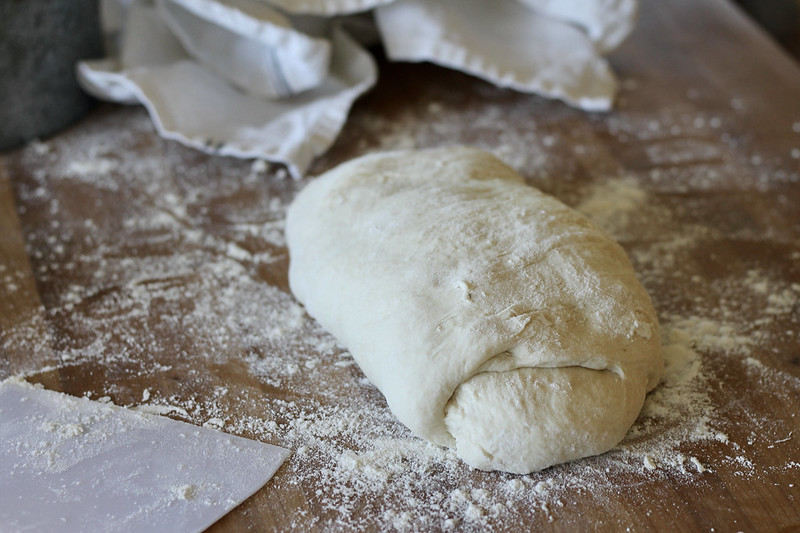
    Turn the dough out on a floured counter. Pat into a rectangle and fold into thirds, as though folding a business letter. Place seam side down on the counter and rest for ten minutes. (If making cinnamon rolls, here’s where you roll the dough into a rectangle and then fill, roll, and cut as per any other recipe. Or, if making buns, same thing — shape and proceed.) Pat the dough into a rectangle — or circle or triangle or whatever — and then roll into a loaf shape, tucking in the ends as you go. This sounds complicated but is really easy. Just do it. Place seam side down into a greased bread tin. Let rise for another 2-3 hours.

    Slash the top of the loaf and bake at 375 degrees for 30-40 minutes, rotating halfway through, until golden brown and the internal temp is 190-195 degrees. Remove the pan from the oven and brush butter all over the top. Let the loaf cool for at least 20-30 minutes in the pan before turning out on a rack. Both the additional butter and the cooling in the pan are key to getting a soft loaf.

    This same time, years previous: another farm, another job, impressing us, three feet, field work, the reading week, autumn walk, a pie party!, moments of silence.