• babies, boobs, boo-boos, and bye-byes

    Continued from we’re back! and 
    joy 

    Day 12
    Elias, the kid who threw rocks at his sister as he chased her down the path by our house and who stole candy and then lied about it, shows my older daughter how to milk the cow. She never quite catches on.

    ***

    My husband takes the truck and a whole bunch of neighbors way back in to the boonies to visit Don Humberto’s coffee farm.

    Don Humberto with son Moises’ son.

    While they are gone, I take the kids and, starting up at one end of the community, work my way down through, visiting all the neighbors.

    At Maribel’s house, her husband lets the kids ride the horse.

    Doña Angelina, one of the more educated women in the group, has moved to Spain to work as house help. Her husband tried to kill her, so she fled.

    At Marina’s house, she shows me the cross and stone marker on her front porch where, about ten years ago, her husband was murdered.

    Don Alejandro and Doña Angélica’s house is now surrounded by their children’s houses. It’s a colony, the neighbors joke. (The community has nearly doubled in size—there are new adobe houses everywhere.)

    ***

    When we lived here, I held weekly meetings for the community children. Some have moved away (I’m sad I don’t get to see Flor Elizabeth, the girl who carried our baby with her everywhere she went), but Ofelia and Meyling are so excited to see me. They recount the scrapbooks we made, the cookies we baked, and the songs we sang. Ofelia now has two children of her own, and Meyling has a cherubic baby girl.

    ***

    Regarding Jeaneth and Gustavo
    Jeaneth and Gustavo were the couple closest to our age, and always appreciated their can-do spirit. I am in awe, even more now than before, of their passion, drive, and never-ending energy.

    When we left, they had two little boys. Now they have five; the youngest is forty days old, the magic age at which the mother and baby are allowed to emerge from the bedroom and join the living.

    Jeaneth steams around her house making tortillas, nursing the baby, showing us her bio-stove (or whatever you call it—a burner that’s fueled by methane gas that’s collected from cow poop) and the bicycle mill sitting in the middle of the kitchen.

    gassy cow poop

    She makes me a fresh tortilla and pours in a little runny, off-smelling sour cream which kinda ruins the experience. When I discreetly set it down and try to ignore it, she picks it up and hands it to me again, so I eat it all.

    Her boys are amazing to watch: quiet, helpful, smart, and handsome. She proudly tells me that her boys and husband know how to make tortillas, take care of the house, and do the laundry—she was able to rest in bed for the required 40 days after this last baby because they did everything. This is extremely unusual and I tell her so.

    Besides raising her herd of boys, she teaches at the local school and is the community leader. She’s been aggressively advocating for running water in the community but has yet to succeed.

    Gustavo is excited to show my husband his welding mask, the house he built, the ovens he makes for people who ask (he improved upon the ovens my husband built), and the well he dug for a neighbor.

    Left: the kind of oven the women and I worked with. (Make a fire, sweep it out, bake.)
    Right: a new and improved oven. (Firebox underneath, no sweeping, smaller batches.)

    He has continued his education and is now a leader in the Catholic church.

    ***

    Observation #1: The community is much more green than I remember it being. It’s practically lush.

    Observation #2: There is almost no trash. All through Nicaragua, streets and gutters are clean! We ask what happen and are told that there was a massive push for awareness raising. Guatemala, get your act together!

    Observation #3: This community is really isolated! It’s farther out then I remembered, and it’s still pretty disconnected from the rest of the world. Cell phones hang from the porch eaves because that’s the only place they can get reception. 

    Observation #4: Conversations go nowhere. People talk about the basics—who is doing what, projects, weather, crops, health—and then they do it all over again. After only 36 hours in the village, already I am starved for a deeper connection. No wonder I felt like I was going out of my mind when we lived here!

    Observation #5: Rural Nicaraguan Spanish is hard to understand! I catch 70 percent of what is said…if I’m lucky.

    ***

    As the children and I set off to visit the lower section of the community, my older daughter, who is wearing flip-flops, playfully kicks at a rock and takes off the entire nail on her second toe. My son carries her back to Dona Aurora’s and we assess the damage. It’s not pretty.

    Doña Aurora brings out a pan of warm water with salt and lemon leaves for soaking, I give her two tylenol, and the pain gradually subsides.

    (Later that day, she puts a band-aid on the toe, but then it sticks and we have another ordeal on our hands. Eventually, my husband just rips it off, which ends up not being as painful as my daughter thought it would be. She travels the rest of the way through Central America with an exposed and bloody toe.)

    ***

    Because of the toe injury, I don’t end up getting to Cristela’s house until shortly before it’s time to leave. I had visited her the day before, but Jeaneth had accompanied me then. This time it’s just the two of us.

    Cristela’s husband Evelio, a good friend of ours and one of the most forward thinking men in the village, left her three years ago. This morning I ask, “What happened?” and she plunges into a story of a good marriage gone strangely sour, a terrifying episode of physical abuse, and then complete abandonment.

    The marriage break-up isn’t her only hardship. Three years ago, her daughter Ruth (a beautiful little girl who participated in my children’s group) died from an unspecified illness that involved horrible headaches and blinding pain (perhaps a brain tumor?). Ruth left behind a then two-year-old son who lives with Cristela. Cristela’s older daughter, Carolina (I taught her English until she ran away at the age of 14 with her boyfriend), has two kids in their early teens and all three of them live with Cristela. Anita, the youngest daughter, has an eight-day-old baby who, the doctors say, has an undeveloped brain. They sent mother and baby home from the hospital saying, The baby won’t live beyond three days. They didn’t bother to schedule another check-up.

    “It’s like the baby is already dead,” Cristela says, heat in her voice. “It’s like she doesn’t exist. But look! It’s been eight days and she’s doing fine!”

    Anita seems disconnected from the baby. It’s Cristela that smothers the infant in kisses.

    So Cristela is running the homestead by herself, struggling to plant the beans and corn and make ends meet while caring for a house full of children and daughters, plus her senile grandmother. I listen, and when Cristela finishes talking, we sit together, quietly. There is nothing for me to do. It hurts to see this sharp-tongued, witty, good-hearted friend so alone. I linger until my husband comes to get me. I have to tear myself away.

    From that point until we leave an hour later, I cry. Through the tears, we take pictures of families and give our final hugs.

    Don Humberto and Doña Aurora and crew

    Gustavo and Jeaneth, Francisco, Gustavo, Ceasar, Juan de Dios, and Brian

    Don Kilo and Doña Paula, parents of Silvia, Gustavo, Evelio, and Egma (the woman in El Jícaro)

    Who knows, we might see you again, my husband tells everyone, but I know better. We won’t be going back. This is goodbye for good. I think they know that, too.

    My husband lays on the horn as we slowly drive out of the village. My boys are the only ones not crying—the girls have their heads down, sobbing, and my husband can’t talk. I ugly cry the whole way to El Jícaro.

    To be continued…
    (It’s like the song that never ends.)

  • joy

    Continued from we’re back! and 

    Day 11, continued

    The road between El Jícaro and our community is not paved.

    We walked this road every day while we were building our house, we brag to the kids.

    There’s where we took the short cut…
    There’s where people drive down to the river to get sand and wash their trucks….
    This bridge got washed out in the hurricane…
    There’s where Papa forded the stream in his underwear.

    As we approach our village, we scrutinize faces of the people we pass. Do we know anybody? We drive by the first house without recognizing it. But then we start to see familiar buildings, and then—there’s Doña Aurora’s gate! Pull in! (We built our house on Doña Aurora and Don Humberto’s property, and we even lived with them for a couple months while we finished up our house.)

    We turn in and my husband jumps out to open the gate.

    I get out of the truck and here comes Doña Aurora walking down the steps towards us, an incredulous look on her face. We hug fiercely, all of us crying, then step back, look at each other and laugh, and then hug some more.

    Within minutes, Aurora is taking us on a tour of the property. She shows us the new well, the fruit trees, the corn field with four different varieties of corn (an experiment funded by an outside group). As we finish up the tour, she hollers across to her daughter’s house, “Guess who is here!”

    News travels fast—her daughter yells back, “Jennifer?”

    I respond with a loud hallo, and then I’m wiggling between two strands of barbed wire and hugging Jeaneth, her newborn baby wedged between us.

    “making” tortillas with Jeaneth

    Doña Paula, Jeaneth’s mother-in-law, is in the garden, hoeing. There are more clinging hugs, more tears. “We never thought we’d see you again! We thought you forgot us!” This is what everyone says, over and over again.

    My favorite part of this picture? Jeaneth’s hands.
    Also note, no plastic covering on the diapers.

    Just as we feared, no one knew we were coming. Their letters of the last few years never got through to us, and vice versa, so it’s been years since we’ve had communication. And, as no other foreign volunteers have ever returned, they’d given up hope.

    What a miracle! they tell each other, shaking their heads.

    The men come in from the fields. Children cluster round. The children we left thirteen years ago are now young adults, married and with children of their own. It’s both heartbreakingly nostalgic and gratifying to see that life has, indeed, gone on.

    Don Kilo slaughters a kid (a goat kid, not a child) in honor of our arrival.

    No small children are permitted to watch the killing, but afterwards they all gather to watch the master machete-wielder at work. Don Kilo’s wicked knife skills impress my husband to no end.

    My younger son quickly makes friends with Jeaneth’s boys.

    cooking the tortillas over a barrel stove 

    My younger daughter becomes bosom buddies with Aurora’s granddaughter.

    Soon my children are running back and forth between and through houses, exploring wells, discovering shortcuts, and chasing pigs.

    I need to do laundry, so Jeaneth sets me up at the well.

    I welcome the solitude, a brief reprieve in the storm of emotions. Afterwards, she helps me hang the clothes on barbed wire and I hope I haven’t just succeeded in poking holes in all our clothes. (I haven’t.)

    I visit with Doña Paula while she makes cuajada, something I’ve watched her do so many times before…

    dog on her kitchen floor
     

    David, the youngest of Aurora’s 12 children, shows us our old house which is now his house.

    He and his wife and their little girl sleep there, but they have a kitchen (with wood-burning stove) up at his mother’s house.

    Thirteen years ago, we were the new family, posing for pictures on that same porch.

    Our little house now has green walls, and a peace corp worker who lived there painted some trees on the walls, but aside from that (and minus our pretty lamps, cozy rugs, and rocking chairs, tables, mini fridge, and gas stove), it looks pretty much the same: sturdy and cute.

    I am standing in the far corner of our one-room house. 
    People didn’t believe it was possible to build a second story (loft), 
    but we proved them wrong.

    David takes us on a walk down to the well where we used to get our water.

    In the beginning, we hauled the water up in a little bucket, and later my husband helped them seal the top and add a rope pump, but now the well is used mostly for watering animals. The baby trees that Doña Aurora planted are huge—it’s practically a forest.

    Everywhere we go, there are pictures of us on people’s walls and in their photo albums.

    My parents and younger brother  with Jeaneth’s two babies.

    And everywhere we go, people feed us.

    Doña Paula plies us with large mugs of milky, sweet coffee and fresh rosquia and mango cake (I taught them how to make cake!) from the previous day’s baking. Doña Aurora is dismayed that we won’t be eating supper at her house and shows me the freshly killed chicken simmering away on the stove.

    But we’re having goat for supper up at Doña Paula’s, I apologize.

    What? You’re eating there? But what about all the food I made for you! she says, pretending to be stunned by my “betrayal.”

    Irritated with her controlling, possessive behavior (she and I have always had a prickly relationship), I refuse to eat. My husband, however, accepts a plate. And then she hands out loaded plates to the children, too. They have yet to recuperate from their big lunch and look at me, panic in their eyes. You don’t have to eat it, I say. Just taste it and then hand it back and say thank you.

    That evening, the women’s group and some of the husbands gather for dinner at Doña Paula’s house. Her daughter Silvia has come from up the road, and Teresa has come from a community an hour and a half away.

    The women fill us in on all the group’s activities:

    *After all these years, they are still an active group.
    *They have a community “bank” and each year different members take on the role of accountant and president.
    *They have guided three other communities in forming women’s groups and starting “banks.”
    *They are a registered group, which means that the government sends new projects their way because they know the women of Casas Viejas will get the job done.
    *They make braided bread and French bread at Christmas.
    *They have taught other women’s groups how to make donuts and the metal cake pans that my husband taught them to make. “We teach anyone who is interested,” they say proudly. “There’s no point in keeping what we know a secret.”
    *They tell me, “We have had other groups and organizations come to help us, but you were our base. We didn’t do anything before you came.”

    I helped to get them started, sure, but they—these hardworking, capable, intelligent, go-getters—did all the work. I am so, so, so incredibly proud of them.

    After supper, we get baths down at Doña Paula’s well, in the dark. It’s … an adventure.

    And then we head over to our little house to sleep. David and his family have generously turned the whole place over to us. I am briefly dismayed by the sleeping arrangements: two beds—one a single and the other a smaller-than-normal double bed—and a hammock.

    My older son sleeps in the hammock, just like he did when he was a baby, and  Doña Aurora tucks him in.

    The rest of us line up like sardines and do our best to find a comfortable spot on the rock-hard beds.

    To be continued…

  • heading north

    Continued from we’re back! and 

    A year after we got married, my husband and I moved to Nicaragua to work with MCC for three years. Our job was a typical MCC job: learn the language and then work with a partner organization somewhere in the boonies. We lived eight hours (over very bumpy roads) north of Managua, almost to the Honduran border, in a community called Casas Viejas with about 35 or 40 other families. The first year we built our house out of mud. The second year we tried to figure out why we were there, bought a dog, and survived a hurricane. The third year we had a baby. And then we came home. That was thirteen years ago.

    Those three years were some of the hardest years of my life. There was no phone, no internet, no running water, and no gringos. We were isolated, we fought a lot, and I struggled with depression. Our work was sporadic. Any job we did, we had to create ourselves. There was no direction and not much inspiration. I started a women’s group and while we had a great time together, our weekly meetings only used up 3-6 hours—I filled the remaining 34-37 hour work week with visiting, doing laundry, and wishing there was a giant TV hidden behind the wall hanging.

    Still, we loved the people. They were uneducated, and we didn’t have much in common with them (talking about babies, weather, and corn crops gets dull after a bit), but they loved on us and claimed us as their own. When we left, we were relieved and sad (but mostly relieved). We promised we would visit, but we didn’t know when.

    For years, we diligently saved money for a return trip. But we kept having children, and then we bought a house in the country, and swoosh, there went all our savings. We eventually came to terms with the fact that we would probably never get to visit our friends in Casas Viejas again. Giving up that dream was hard for me. I grieved its loss.

    And then we got this job in Guatemala. In one of our first Skype calls with our country reps, they said, “We expect you to attend team meetings as well as the regional retreat that is being held this year in … Nicaragua.” We were beyond ecstatic.

    So obviously, we knew from the very beginning that we would be staying in Nicaragua for a few days after the retreat. We had some people to visit!

    ***

    About six weeks before our trip to Casas Viejas, I sent a letter to our community informing them of our impending arrival. We hadn’t had communication with them for years, so all I could do was give them our cell numbers and hope for the best. I searched for hotels in El Jicaro, the closest town, but couldn’t find any information either on line or in the guidebooks. Did the place even exist anymore?

    As the time for our trip drew close, my anxiety levels reached a fever pitch. What if no one was there anymore? What if they had all died or moved away? What were we doing taking four children into the middle of nowhere?

    “Look,” my husband said. “Everyone out there owned land. They are farmers. They haven’t gone anywhere. Relax.”

    He had a good point. I did my best.

    Day 10
    We drive to the MCC house to show the children where our older son spent his first days of life.

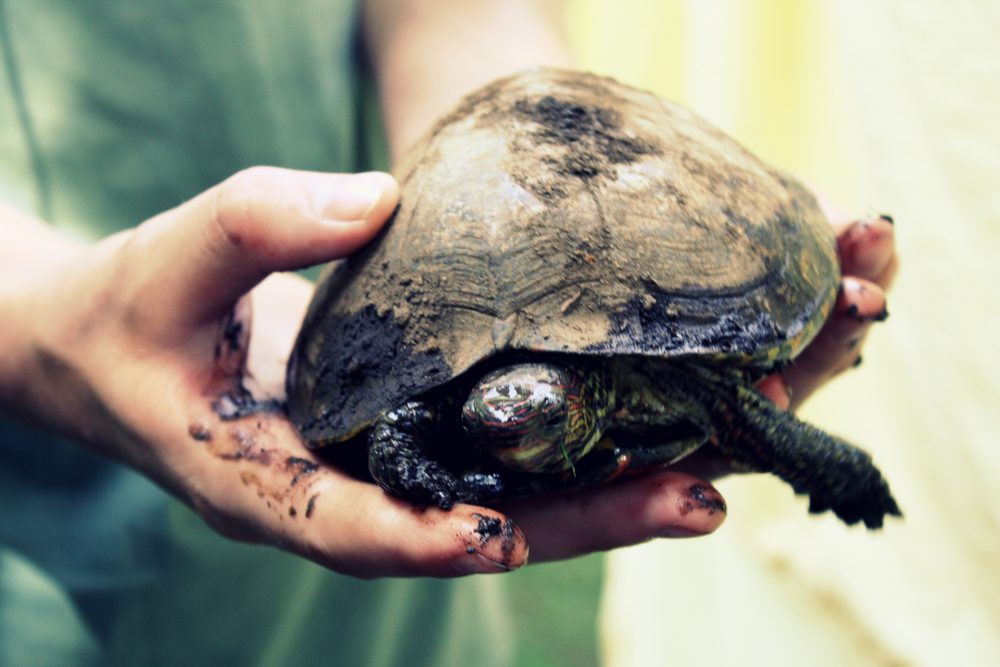
    The same turtle that lived in the back yard is still living in the back yard. It’s estimated to be about 25 years old.

    We stop by the lab where I first learned, via a blood test, that I was pregnant. The name of the lab is Inmaculada Concepción, I kid you not.

    His was not an immaculate conception, I assure you.

    We get donuts and cookies at a bakery around the corner, where I spent hours writing letters and trying to escape the heat. We buy tarp and rope to secure the baggage in the back of the truck, find city and country maps, buy our bus tickets for the return trip, and finally, finally, we head north.

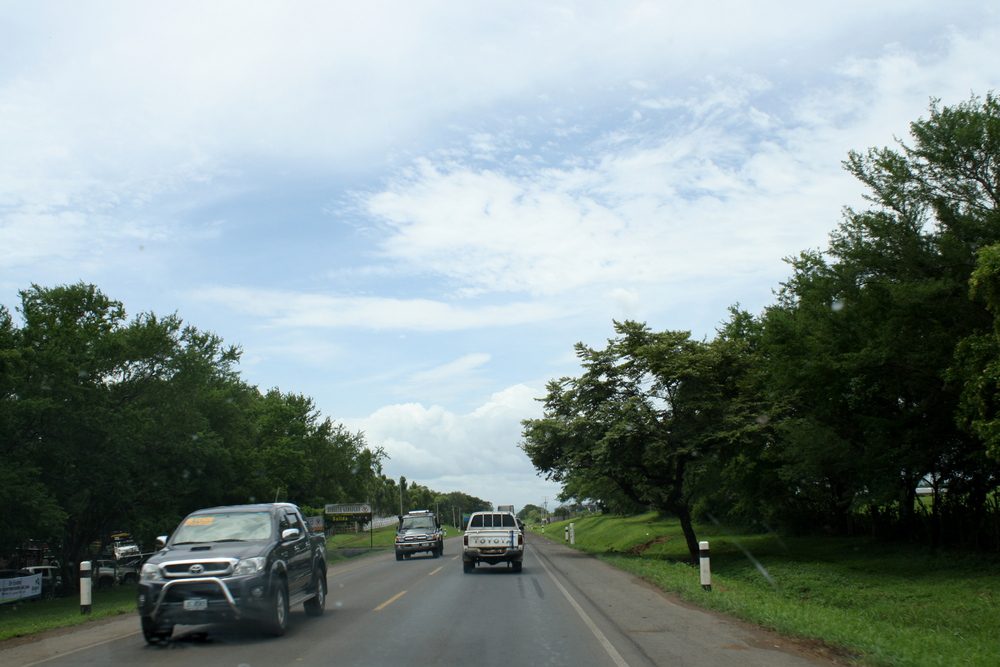
    We zip through Estelí and then Ocotál. To our delight, the road to El Jícaro is paved! And it’s gorgeous!

    “It’s like the yellow brick road!” my husband squeals, and then, “Look, there’s even yellow bricks!”

    Sure enough, where they had to repair the roads, they dug up the bricks and then replaced them so that the yellow line got broken up and dispersed, giving the road a yellow-brick feel.

    We see two (or was it three?) rainbows.I am not superstitious, but I take them to be a good omen.

    When we get to El Jícaro (about five and a half hours after leaving Managua), it is almost dark. We decide to find a hotel and then head out to the community first thing in the morning. Despite what the guidebooks say (or did not say) we find a hotel. We get supper at a little comedor and then turn in for the night.

    Sleep isn’t easy to come by, however. It is the anniversary of the Sandinista revolution and between 12 and 2, the quiet night is blasted to bits with explosives, horn-honking parades, and shouting people.

    Day 11
    I am up early, chomping at the bit, but it takes us a couple hours to get our act together and move out. We decide to leave our stuff at the hotel since we may, depending on how we find the community, need to sleep there again that night.

    On our way out of town, we search for a panaderia (bakery).

    (Note: it is a lot harder to buy things in Nicaragua than in Guatemala. On every street in Guatemala, there is at least one store, maybe five. Nicaraguan stores are few and far between, and they are a whole lot sparser. I had wanted to bring fruits and vegetables to give as a gift to the community, but in our excitement we had forgotten to pick stuff up. I figured there were surely be more of a variety in El Jícaro after 13 years—something else besides potatoes, carrots, and onions. But no. There is nothing. And finding a bakery is hard work.)

    We weave back and forth through the side streets, following first one person’s directions and then another’s. Finally we get to the spot but see no bakery, only a woman in her housecoat sweeping the street. I approach her. “Excuse me, but can you please tell me if there is a bakery around?”

    “Of course,” she says, and then stops short and stares at me. Hard.

    I wait.

    She stares some more.

    I stare back.

    She leans in and then says tentatively, “Jenny?”

    It is the sister and daughter of our dear friends! We don’t know her well, but she certainly remembers us. We laugh and hug, and when I ask if the community knows we’re coming, she says she thinks not. She’s heard nothing, and her mother would certainly have told her.

    She assures us that everyone is there, alive and well. We head out of town, now more excited than nervous, but at the crest of the hill, we stop. There is an old woman who wants a ride. She is heading somewhere else, it turns out, but while we converse, a man jumps into the back.

    The kids, who were all sitting in the back, scramble out and climb into the back of the cab. “That man is drunk,” they report worriedly.

    We take a look. Sure enough, the man is woozily perched on the tailgate, a large, half-empty bottle of tequila in his hand.

    A tense conversations ensues:

    Husband: There’s a drunk man in the truck! What do we do!
    Me: I don’t know! We can’t take him with us!
    Husband: Why did you make me stop?
    Me: I thought we could help that old woman!
    Husband: I can’t take him to the community!
    Me: Make him get out!
    Husband: How?
    Me: I don’t know! Just tell him to get out!
    Husband: How?!
    Me: I don’t know! JUST MAKE HIM GET OUT.

    We turn off the road and drive halfway around the block. My husband stops the truck, gets out, and says something to the man. The man offers him a styrofoam cup of tequila. My husband declines.

    My son hisses, “You should get a picture, Mom!” (I don’t—the moment is a little too touchy for such shenanigans.)

    The man drains the cup, shakes hands with my husband, and then follows it up with a first bump. The man gamely hops out and we drive off.

    To be continued…