• chile cobanero (hot sauce)

    The K’ekchi’ are known for their passionate love affair with hot sauce. It’s on the table for every meal, and they call it “the angry one.” Spoon with caution.

    At Bezaleel, there are two common hot sauces in particular: green and red. I love them both. The green, made from fresh chiles, adds a vibrant, nasal-clearing bite, and the red, from dried chiles, is smoky, deep, and packed with flavor. I have long wanted to learn how to make the sauces, but it wasn’t until several weeks ago that I got serious and wandered up to the kitchen to do some culinary investigating.

    About the kitchen. Bezaleel has two cooks. Both are K’ekchi’, but only one speaks Spanish. They alternate days, arriving at school at 8 am and staying 24 hours before heading home for their off day. Each woman single-handedly preps and serves three meals on her shift, serving well over a hundred hungry teenagers at each. (The female students pat out the tortillas, but the cook is responsible for cooking the daily 100 pounds of corn of which the tortillas are made.)

    The weekly menu is limited, thanks to bare bones funds and no time. Breakfast and supper consist of beans, and the lunches, the main meal of the day, follow a basic schedule:

    Monday: a single scoop of potatoes (in any form: mashed, in broth, etc.)
    Tuesday: one spoonful of green beans with a few bits of scrambled egg
    Wednesday: chow mein (noodles with bits of chicken, carrots, and guisquil)
    Thursday: a piece of fried chicken with a scoop of soupy, spicy salsa
    Friday: Tuesday’s meal, again, or maybe a brothy soup with greens

    After being served the allotted portion by the cook, students walk to the next table to get their tortillas, dress up their meal from the communal bowl of hot sauce, and get a cup of some sort of grain drink. (There’s also a mid-morning snack of corn/wheat/rice drink and a mid afternoon snack of fruit.)

    When I wandered up to the kitchen several weeks ago, Doña Ana, the Spanish-speaking cook, was on duty. While she julianned carrots for the chow mein, I quizzed her on the intricacies of chile making. And then I asked for a knife and cutting board and joined in on the julianning. Thirty minutes later, I had an inch-long blister on my finger and a new friend.

    I like to visit Doña Ana when I can. Conversation with her is always easy and thoughtful. She’s merry and interested, and there’s always something for me to do. Earlier this week when I visited, we sat on low stools and peeled potatoes.

    Doña Ana (she has five children and one grandchild and is only one year younger than me) absolutely, positively adores cooking. She took a cooking class at the vo-tech school in Cobán. She has worked as cook for a couple of Cuban doctors (and will be returning to them after this school year is up). One time they took her with them when they went on vacation to Belize.

    “We ate garlic bread,” she said, her eyes sparkling. “When they said we’d be having garlic bread, I thought, ‘What? I wonder what that is like!’” And then she ate it and fell head over heels in love.

    Also, “In Cobán there’s this place that makes a delicious Chinese rice. I tried to replicate it at home, and I almost got it right!”

    And a question, “Have you ever had orange rice?” is followed with fascinating, step-by-step instructions.

    People, I do believe I have encountered my first Guatemalan foodie!

    Now. For the chile sauce and this fabulous food that we have here: chile cobán.

    Chile Cobán’s smoky flavor is similar to the chipotle chile, but hotter. Baskets of the dark red, wrinkled beauties are everywhere in the market—an ounce costs less than fifty US cents. In my efforts to find a source for the dried chile in the states, I have searched the web backwards and forwards, but to no avail. This distresses me. I am keeping my fingers crossed that I can import a personal, lifelong supply. (The dry powder—which we use for our sweet and spicy popcorn—can be purchased here. Or here.)

    The sauce is easy to make. The process goes like so:

    *toast the dried chiles.
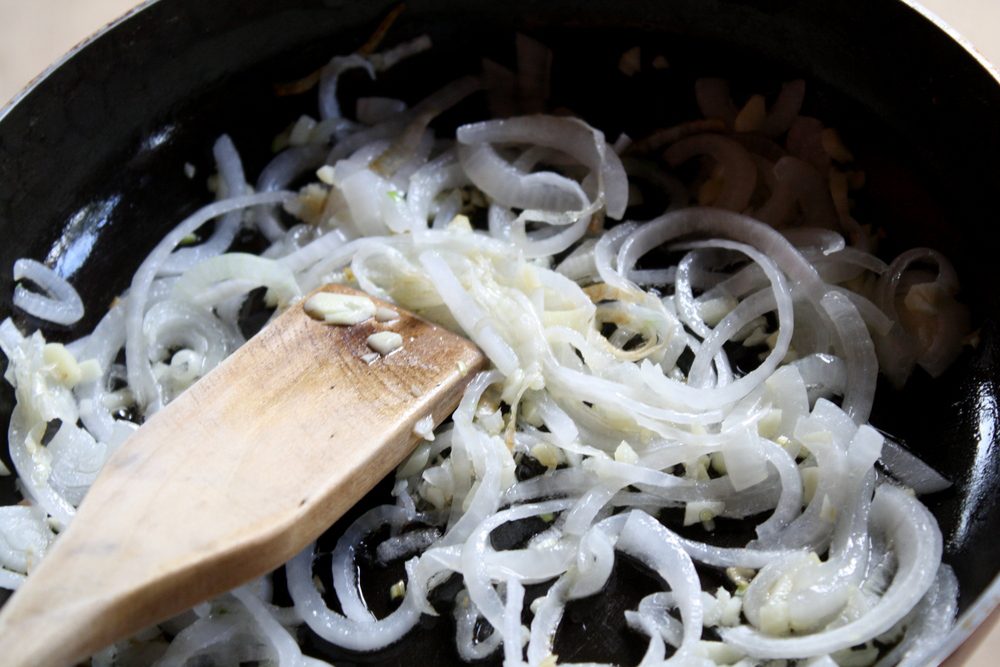
    *saute an onion and some garlic in a bit of oil.
    *puree chiles and aromatics in a blender with a bunch of tomatoes.
    *simmer the sauce to cook through and reduce to the desired consistancy.
    *add a glug of vinegar and salt to taste.
    *store in the refrigerator.

    toasted

    For a green chile sauce, first cook the fresh chiles in water until very soft before pureeing them in the blender along with the cooking water, salt, and the sauteed onion and garlic, no tomatoes.

    in the Bezaleel kitchen

    I made this version once and scorched my nasal cavities, esophagus, and lungs when I lifted the lid of the blender after whizzing it smooth and took a sniff. The burn is hot and swift, but there’s not much flavor. (I think I used a fiercer chile than they normally use at school.)

    The variations for a homemade chile sauce are endless. Aside from the plethora of dried and fresh chiles, each with their distinct flavor, you can add different amounts or varieties of tomatoes (or ground tomatoes or tomatillos) as well as vinegars, salts, and aromatics. And, of course, the level of heat is completely up to you.

    As for what to do with it, I like to add a couple scoops to a pot of cooked dried beans. (I’m slowly—and successfully!—building up my family’s tolerance for heat.) The chile disappears into the broth and the deep, smokey flavors elevate the whole dish. When the MCC team came for supper, I seasoned the sloppy joe meat with my homemade sauce instead of the dried stuff I’d imported from the states. (Well, I did add a couple teaspoons before I realized that I had a better option available to me.)

    This most recent batch turned out a bit angrier than I wanted. (I used a whole ounce of chiles to one-and-a-half pounds of tomatoes.) My husband walked in the door just as I was bottling it for the fridge.

    “Here,” I said. “Have a taste of this spaghetti sauce.”

    So he did. And then he made a beeline for some cold, soothing milk.

    Chile Cobanero (Hot Sauce)

    ½ to 1 ounce dried, whole chile cobán
    1 large onion, sliced into rings
    4-8 cloves garlic, chopped
    1-2 tablespoons flavorless oil
    1-2 pounds paste tomatoes, such as Roma
    1-2 tablespoons vinegar
    1-2 teaspoons salt

    Put the chiles into a skillet or saucepan and cook over low heat for 20-30 minutes, shaking the pan every few minutes. The goal is to dry out the chiles completely, not brown them (though a little of that will happen, too).

    In a separate skillet, saute the garlic and onion until translucent and soft, but not blackened.

    Wash and roughly dice the tomatoes.

    Put all three components—chiles, aromatics, tomatoes—into a blender or food processor. Blend until smooth. Pour the contents into the still greasy skillet (or another sauce pan, your call), add vinegar and salt, and simmer on low heat until the desired consistency, about 20-30 minutes. Taste to correct seasonings—don’t skimp on the salt!

    Store in a glass jar in the fridge (once back in Virginia, I plan to freeze the extra in ice cube trays before storing in glass jars in the freezer) and add to everything.

  • the good things that happen

    My younger daughter has taken to crying that she doesn’t want to leave.

    “This is why I didn’t want to come in the first place,” she sobs. “Because I knew I’d have to leave all my friends here. Why did you have to do this to meeeee!”

    I pat her back and tsk-tsk, but inside I smile at her edited memory (That’s not why you didn’t want to come, dearie) and because she is actually, oh joy, sad to leave! We had hoped the children, at least some of them, would connect enough that leaving would be hard, so, Yay success, and, Pass the tissues.

    Last week, one of our teammates asked her which place she liked best, Virginia or Guatemala, and she said Guatemala.

    All this, coming from the child who was the most resistant. Wonders never cease.

    ***

    In the past two days:

    *I spent both mornings visiting with the teachers in the teachers’ room. Topics covered: Syria, how pregnant/menstruating women (or simply anyone who is sweaty hot) has the ability to break the set on a pudding, census counting, the separation (or lack thereof) between Catholics and Evangelicals, polygamy, recipes, etc. We laughed a lot.
    *The new neighbors came up to the house to invite us to their little boys’ birthday party on Sunday.
    *Walking into town, another neighbor’s green Mercedes slowed instead of passing us, the window rolled down, and the woman, the mother of one of my older son’s classmates, offered us a ride. We accepted, of course.
    *This morning, the school director greeted me with a warm, two-armed hug and a firm kiss on the check.
    *Shop owners call out to me by name. Taxi drivers ask after “Mister John.” A teacher from my children’s school interrupts a cell phone conversation to toss a greeting my way.
    *Walking back from town, three K’ekchi’ women asked me to walk with them. We talked about pregnancy, mostly. The young-looking mother had 10 children. (The youngest was 11. She was 40. Oof.)

    ***

    In the beginning, no one knew us. We were just people from The Rich North. I felt that people only viewed us as Money Bags. It made my skin crawl.

    But I don’t feel that way anymore (or at least not nearly as much). Little by little, we have woven ourselves into the fabric of this community. We are becoming known for who we are: neighbors, co-workers, friends, market customers, and the parents of four very different children who each have their own friends, classmates, and teachers.

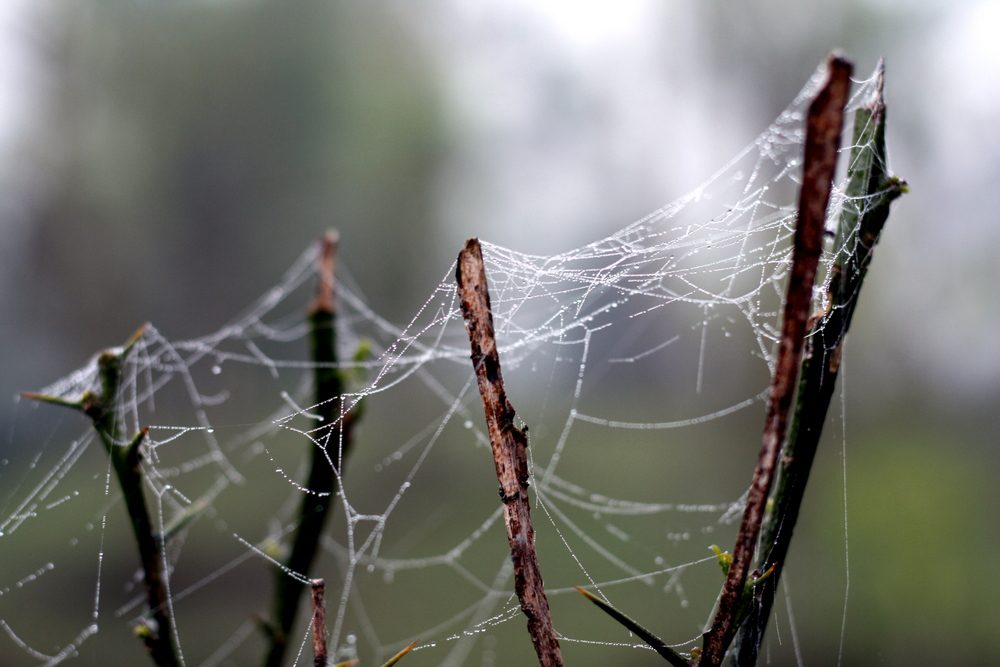
    Our web of connection has grown steadily thicker and stronger. Given more time, it would no doubt transform into a sturdy safety net.

    But soon we will extricate ourselves from our baby web and fly back to Virginia, the sticky tendrils still clinging to our feet.

  • retreating


    As anyone who has worked with a relief agency in a foreign country will attest to, team cohesion (or the absence of) is a big deal. To some degree, this is probably true of all work situations, but when living far away from home and all that’s familiar, the importance of the team carries a bit more weight. When it’s good, it is very, very good, and when it is bad, it is horrid. Or something like that.

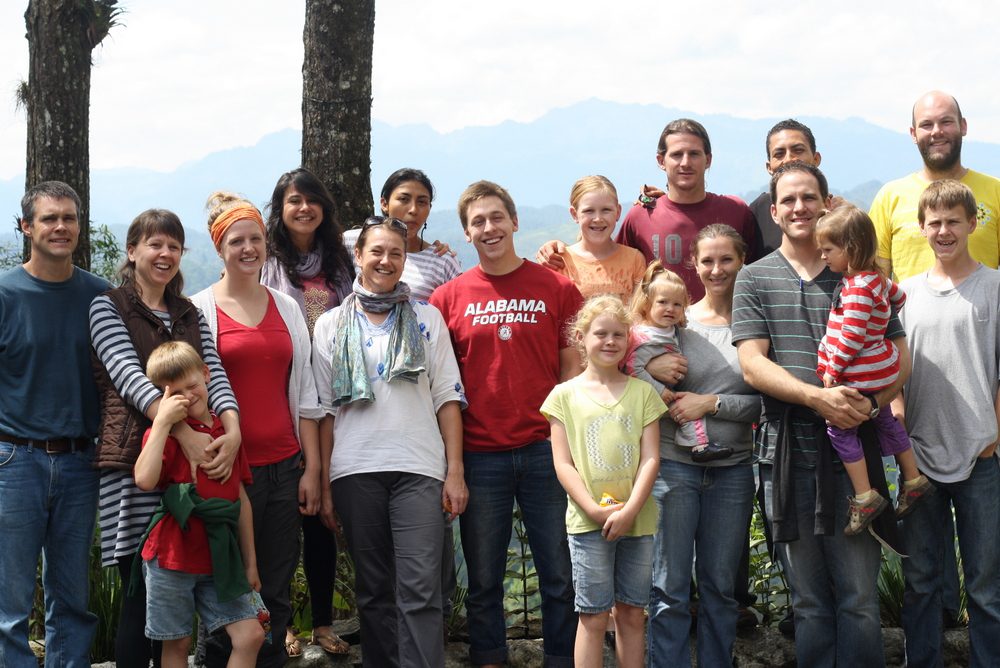
    This past week, we hosted our team retreat here in Alta Verapaz. They traveled; we cleaned, cooked, and arranged lodging for nineteen. (I am a homebody. We clearly had the better end of the deal.)

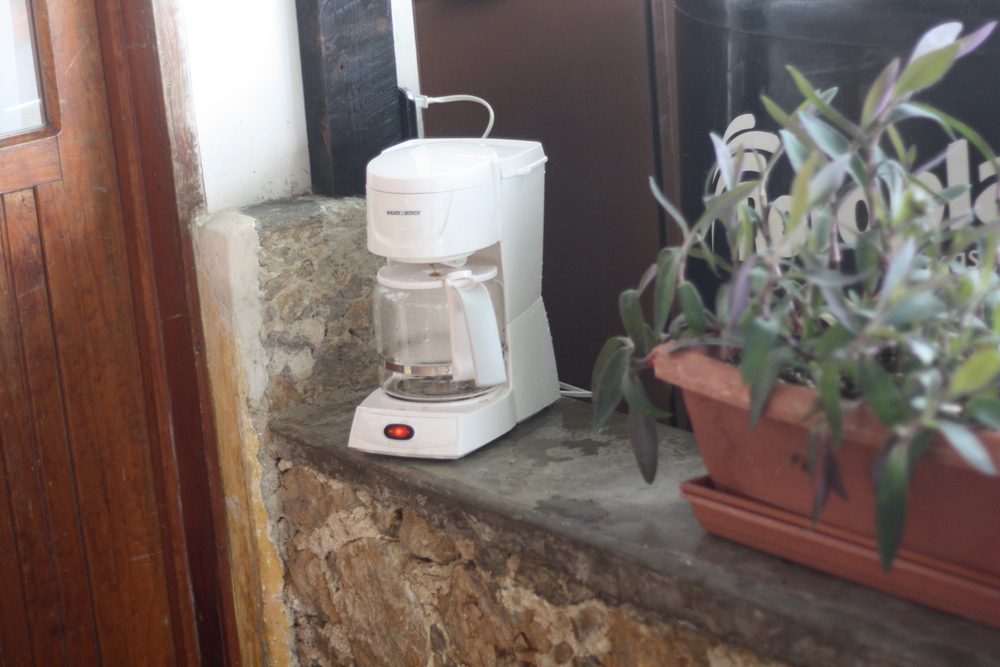
    (Side note: I met my first detail-oriented, stressed-out Hispanic. They exist!!! Because Latinos are so super laid back, I didn’t think it was possible, but the hotel manager, a very kind, gentle man, proved me wrong. Very wrong. He was flat-out obsessed with the details. He fretted and called me and fretted some more. I only caught on to how bad it was when I asked him for a whole carafe of coffee for the Thursday morning meeting. The dismayed look on his face told me I had gone too far. I backpeddled real quick. Never mind, just serve juice with all meals, I said, and then I packed up my coffee pot.)

    When we worked in Nicaragua, all the team members were white, from the US or Canada, and spoke English. Our current team is very different. Checking in last week (because teams are always in flux, what with all the comings and goings) were:

    2 Canadians
    1 Michigonian
    1 Kentuckian
    1 Salvadoranean
    6 Virginians (guess who!)
    2 Columbians
    4 Californians
    1 Paraguayan
    1 Honduranean

    Some people spoke only English. Some people spoke only Spanish. There was a lot of translating going on.

    People always feel so sorry for us when they hear that our team meetings are in Spanish (this is the first time the meetings were partly in English, too, and that’s just because of the new Spanish learners—next meeting will probably be in only Spanish). It does change the feeling of the meetings, it’s true, when you’re limited to sharing in your second language. But when issues got emotional, it was perfectly acceptable to slip into the mother tongue and let others fill in the gaps.

    It only makes sense, I think, that we conduct our meetings in Spanish since we’re in a Spanish-speaking country. Doing so makes me feel like we’re just that much less foreign (not like anyone’s fooled). Also, team meetings are where I learn tons of Spanish. The conversations are deeper—more feeling-oriented—so I pick up on ways to better express myself. Plus, it’s easier to understand English speakers who are more fluent in Spanish; we express ourselves similarly so bridging the language gap is easier.

    Confession: next to other Spanish language learners, I used to (and sometimes still do) feel inferior. I didn’t measure up. I’d imagine everyone listening to my mistakes and rolling their eyes. She still makes THAT mistake? Pul-eeze!

    I don’t feel nearly as insecure now. Maybe it’s because I’m more mature, or maybe my Spanish is improved (not that much really), but I think the real reason is the team’s added native Spanish speakers. I don’t know if it’s a cultural thing, but I never, ever, ever feel judged by a native Spanish speaker. They are patient, generous, and warm. When I pop up with questions like, “What’s the difference between dispuesto and disponible,” they simply explain. The point is not how we’re communicating, just that we’re communicating. It takes the pressure off.

    Our new team leaders are bravely climbing an excruciatingly steep learning curve (the country
    rep position is said to be the most difficult position in all of MCC) yet are still managing to be helpful to the rest of us. What amazes me most is their ability to tackle mountains of work, parent two little girls, and be fully present to the team. What gems.

    Actually, the whole team is bundle of fun. There’s a wealth of stories and talents. I find myself grasping for more time, more conversations. I want to know everyone better, learn more about what it is they do and why they do it and how. (This is becoming my refrain.) It’s better to leave wanting more than craving an escape, right?

    Photo Captions
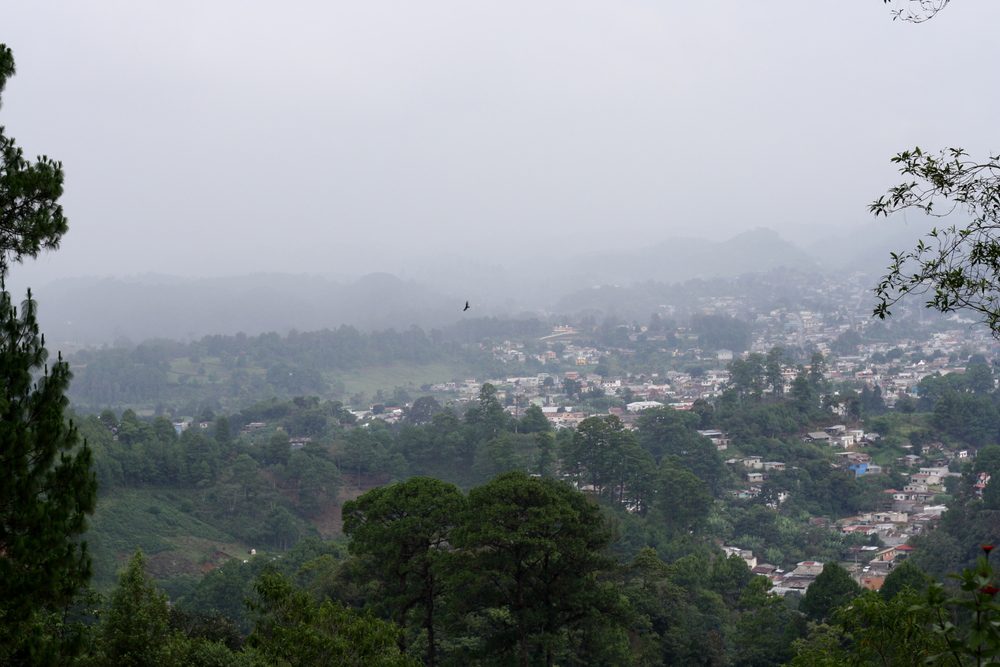
    *Cobán, the view from the hotel.
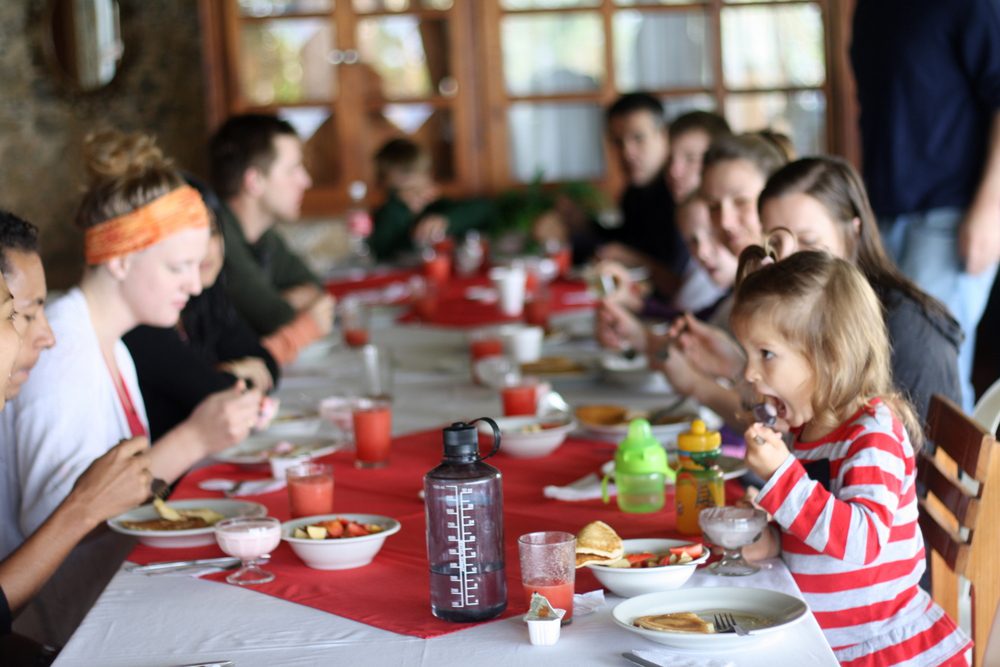
    *Pancakes and fruit.
    *My lifeline: cheap and stress-free.
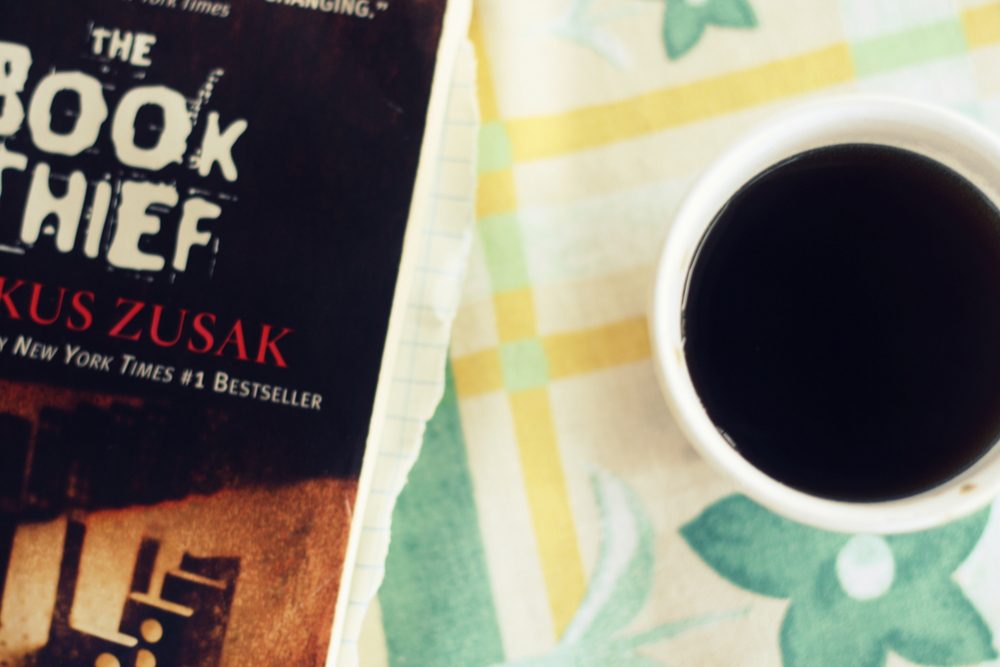
    *Current read. Sugar, no cream.
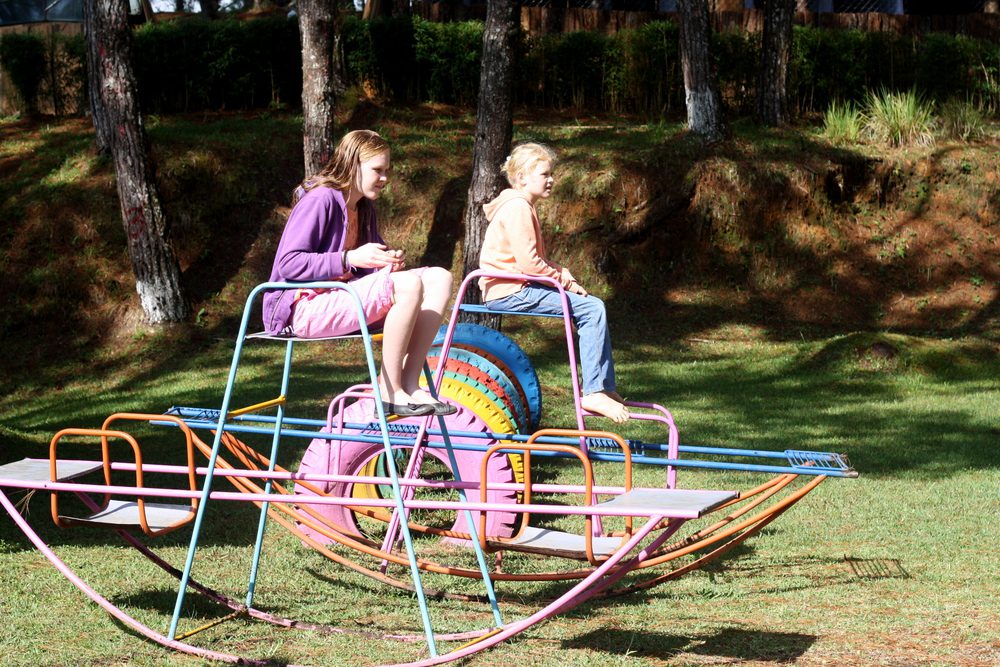
    *Push.
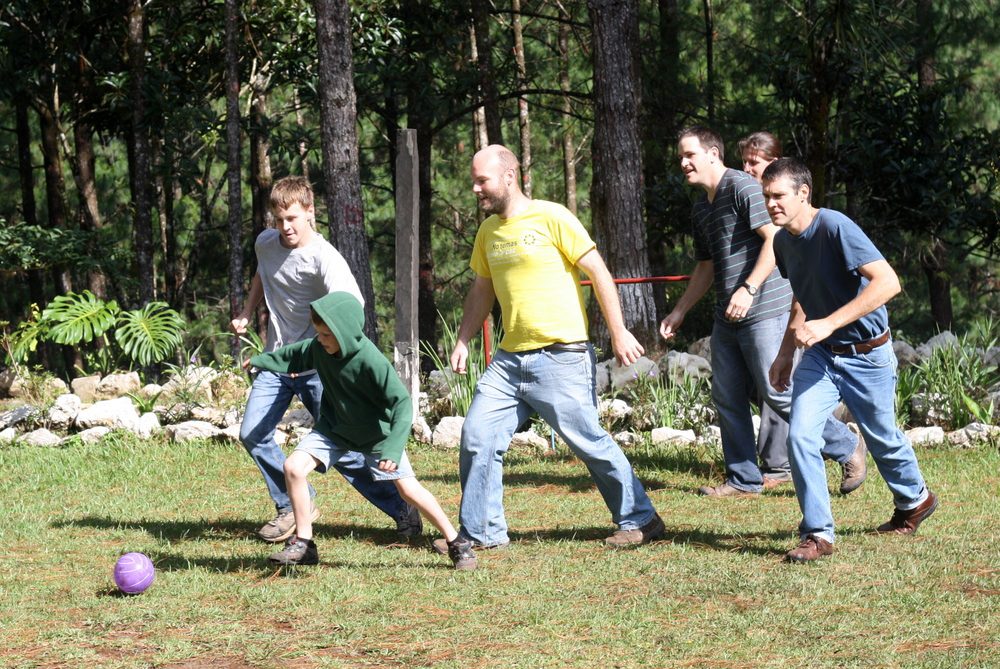
    *A pick-up game.
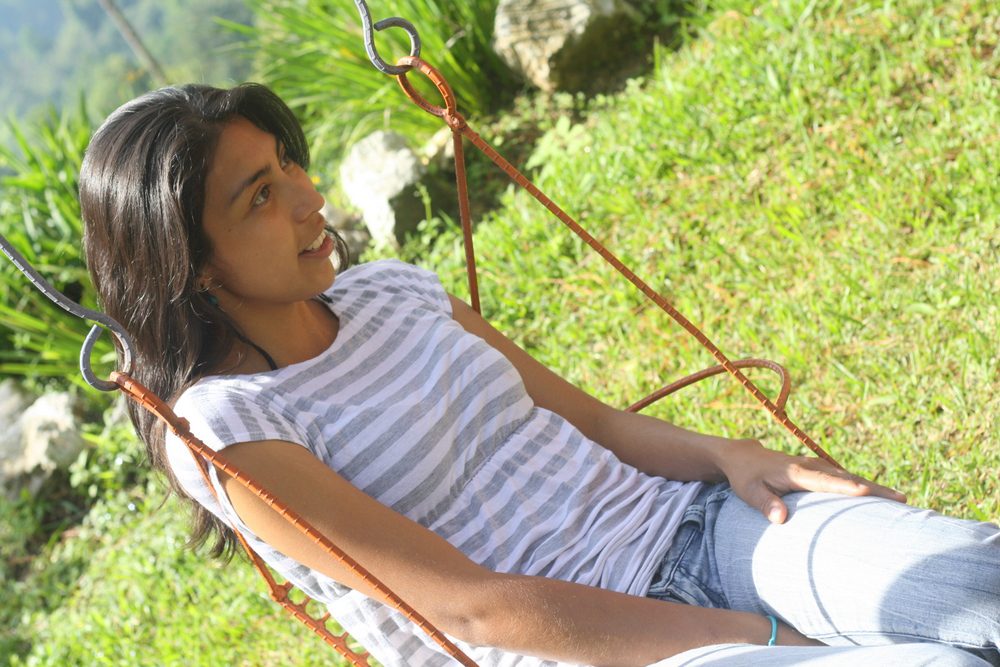
    *One of the people I want to know more about.
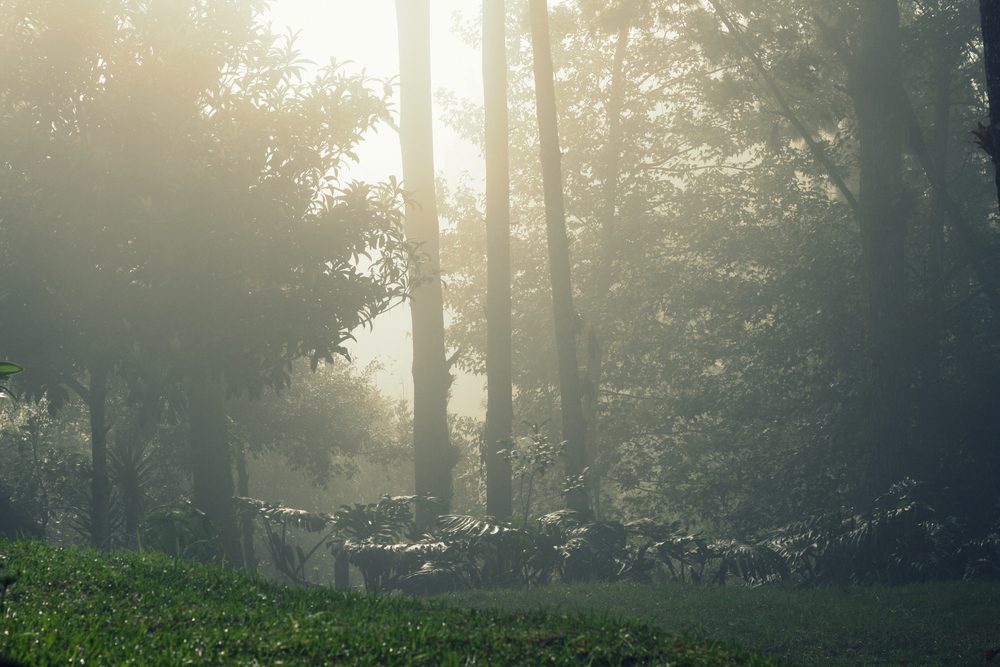
    *Morning: misty and magical.
    *Go team!
    *Lookout spots.
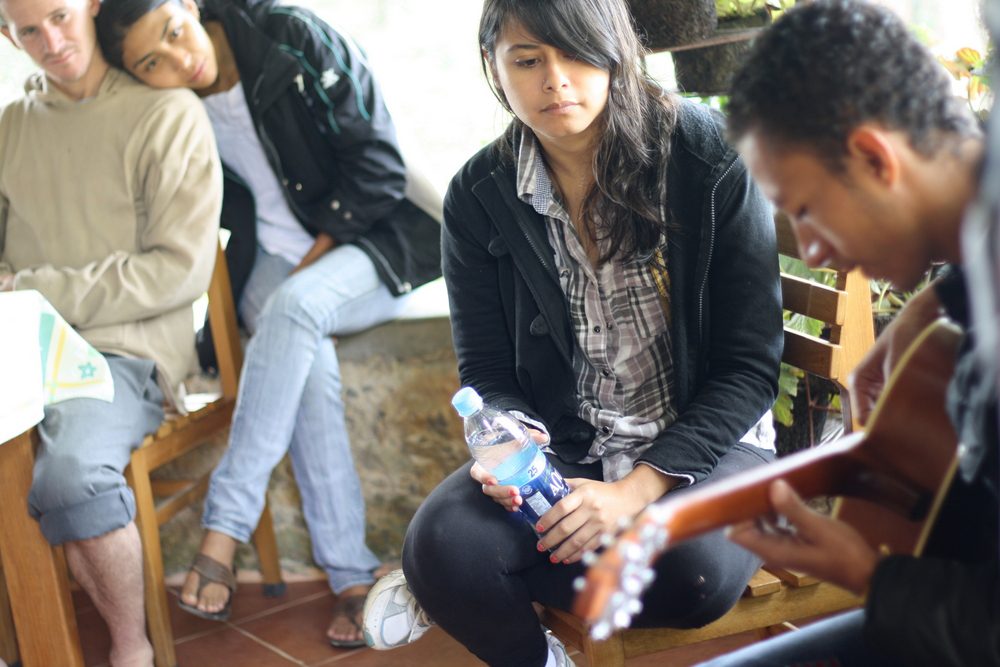
    *We have a guitar player!
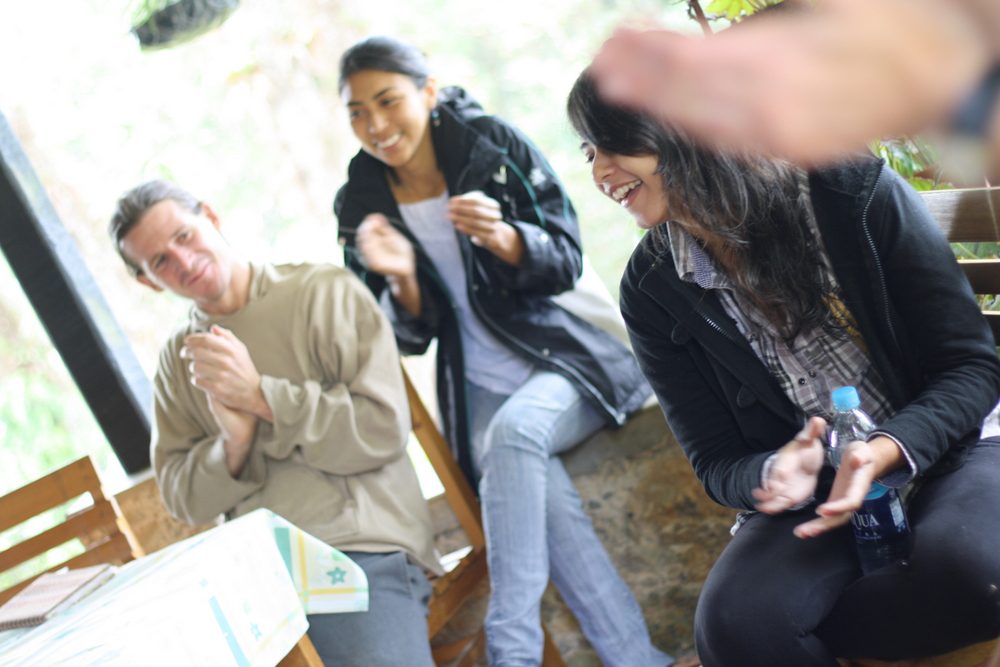
    *And we like it!
    *Reps.
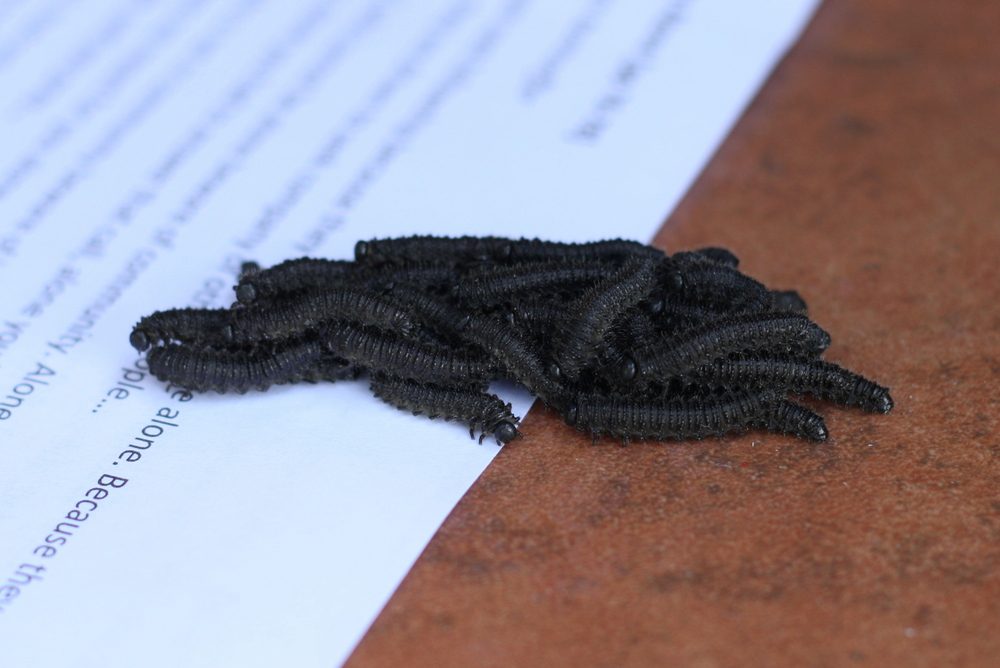
    *Worms. They travel like geese, but instead of V-formation, it’s heap-formation.
    *Cobán, again.
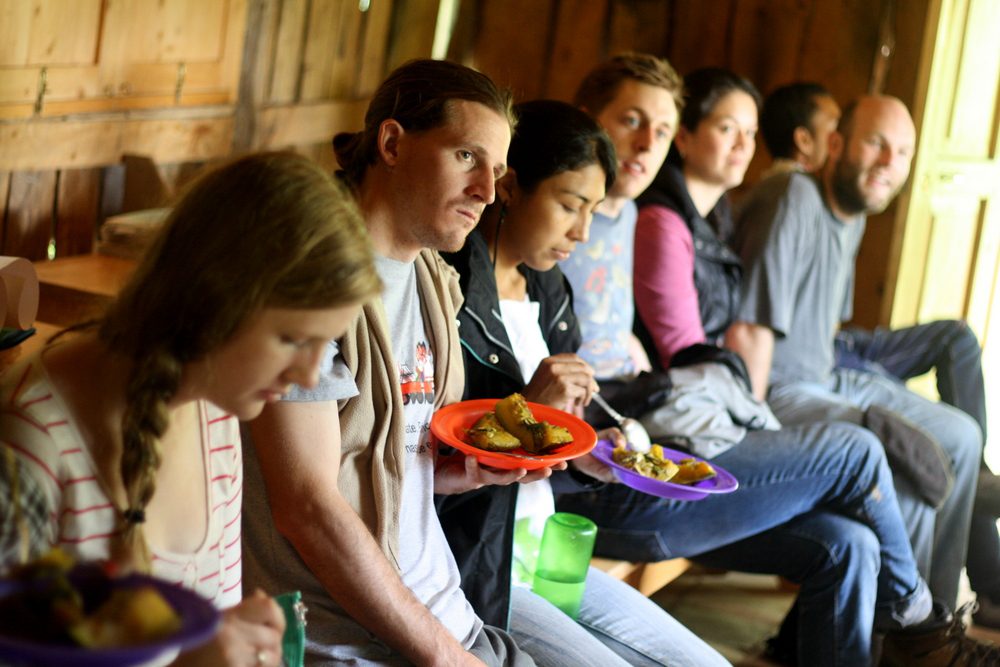
    *Eating a snack of boiled pumpkin at the farm.
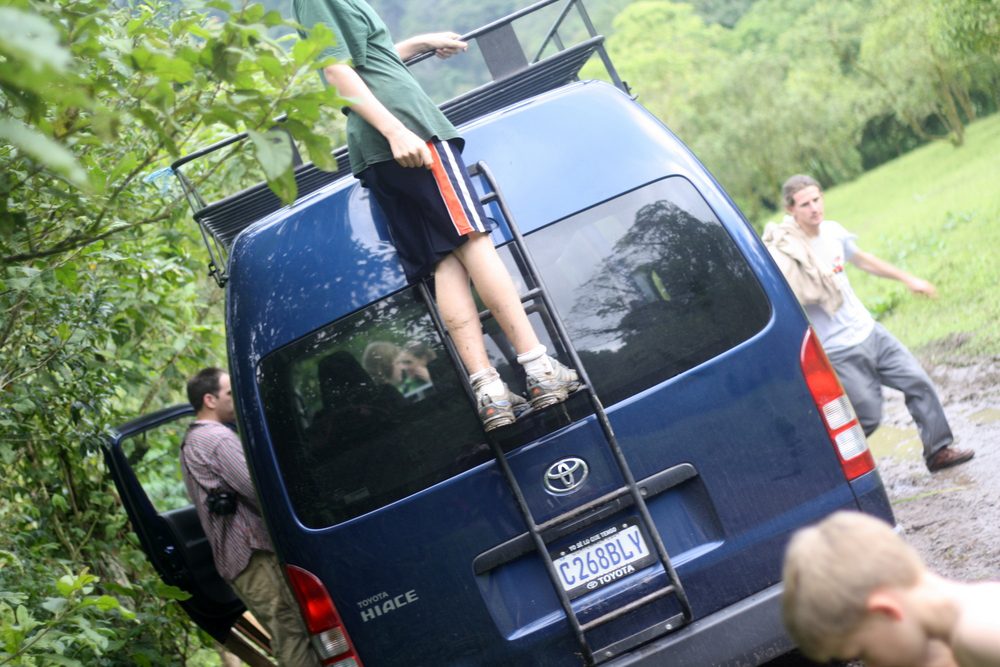
    *Transportation.
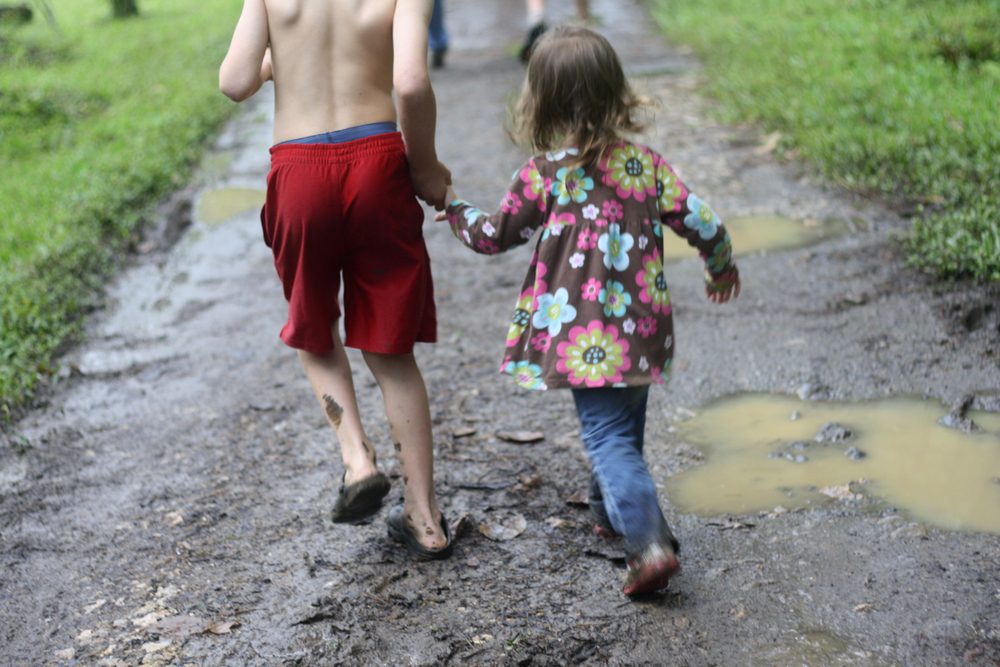
    *Mudpuddles and friends.
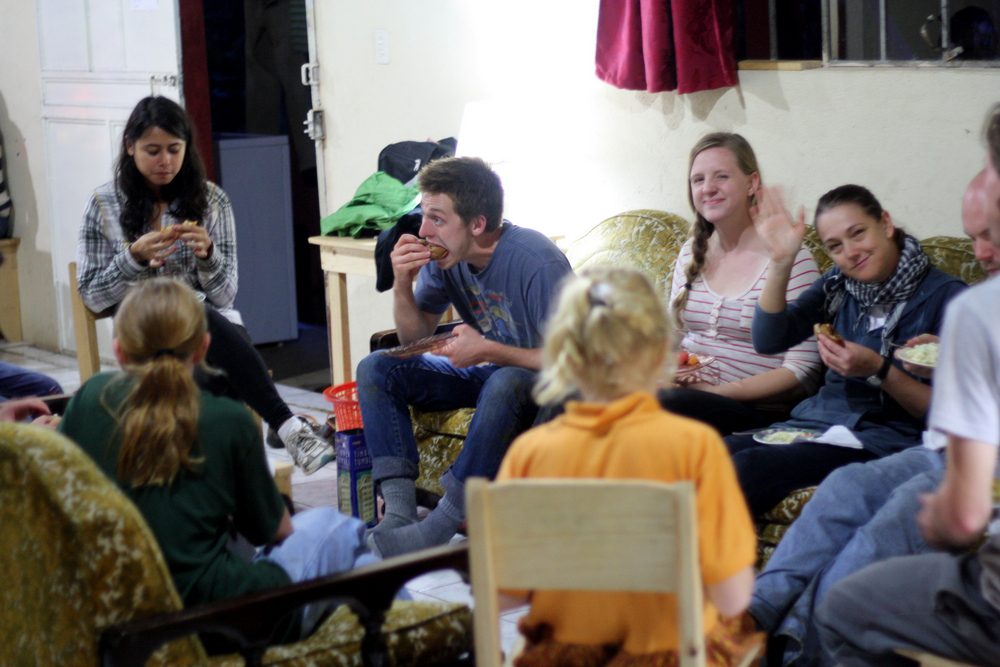
    *At our house: sloppy joes and birthday cake. (Slow down, David! There’s a whole bunch more in the kitchen!)

    PS. Here’s another perspective on the retreat…and another.