• work

    Word on the street is that The Masses want to know how Our Work is going and What We Actually DO All Day.

    Why, shop at the Walmart grocery store and go to the market! I thought I told you already!

    (Kidding.)
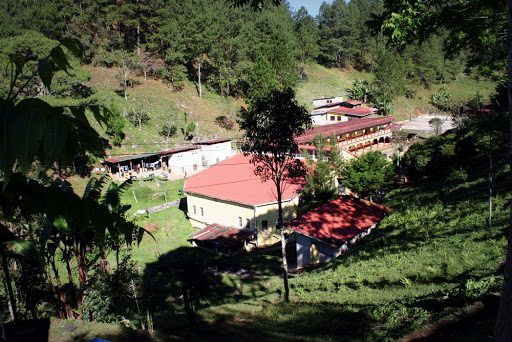
    from the entrance at the top of the hill

    Just the other day, my husband and I read over our job descriptions again. One phrase in particular caught my eye: of the ten qualifications for an MCC worker, the last one read, “Willingness to live simply.”

    We both kinda snorted. “Living simply” is a nebulous and fraught phrase the world over, perhaps all the more charged when living (simply) in an impoverished culture.

    “It should read “willingness to simply live,” I quipped, and only after I said it did I realize how true those words are.
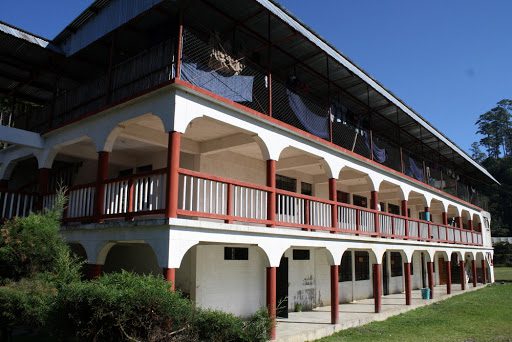
    the girls’ dorm: the entire third floor is reserved for laundry

    Yes, we get Work done (on our better days), but much of what we do here, and much of what we did for our three years in Nicaragua, is simply live. (I can’t italicize that word enough. In developing countries, “living” takes on a weight that it doesn’t have in the States. I’m not glorifying it, and I’m not implying it’s worse—it’s just very, very different.)
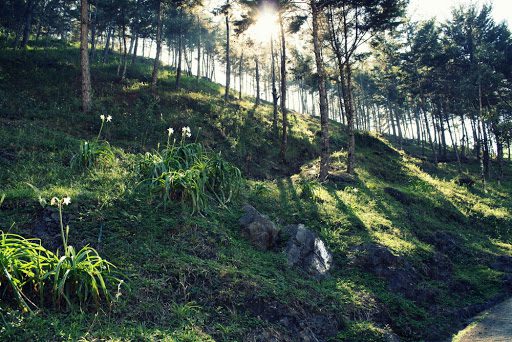
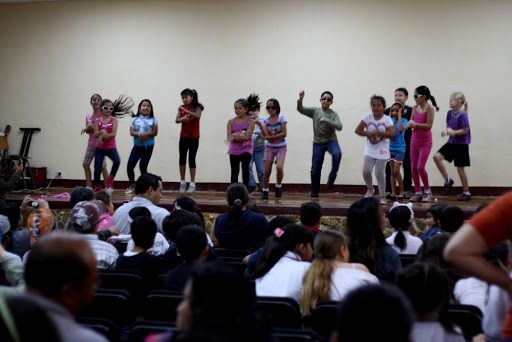
    We traipse through town and say Buenos dias to every Diego, Roberto, and Javier we pass. We squish into buses. We get ripped off in the market because we don’t know any better. We buy the wrong kind of ajax (“ah-hax”) for the house help because we can’t find it in the fancy grocery store. We experiment cooking with the fat purple beans that we find for sale along the road, the vendor squatted down by the basket, her snotty-nosed, ebullient little boy sifting through them like it’s his own private sandbox. We travel to other towns to make bank deposits. We wake our children at 5:45 every school-day morning and then deal with the fallout. We make connections and phone calls and purchases. We read maps and ask questions. We order (and finally get!) the kids’ long lists of school books. We get a call from our children’s school explaining that our little boy got into a pretend scuffle with another little boy, but then the other little boy, who just happens to know karate (at which point I interrupted the soft-spoken school director and with loud guffaws) got mad and punched our little boy in the face. Twice. (Our little boy didn’t even mention his purple face when he came home—I had to approach him to get the story.) Almost daily, we wash uniform shirts by hand (yes, even though we have a machine now) and hang them up to dry. We spend hours at the kids’ school enduring blasting loud music and watching a slew of talent shows that mostly involved dances based on this song. We pack lunches and make beds and clean and oversee (kinda) the pack of firecracker-loving boys. We read books and buy jugs of purified water and try to keep the dogs from attacking the taxi drivers that drop us off at our door. We argue and cry and tell jokes and problem solve and dole out consequences and laugh. We live.
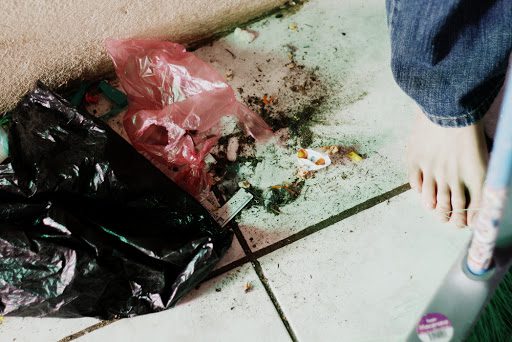
    The Face That Got Punched
    See the purple spot? The picture doesn’t do it justice—there’s a strip of purple from the inside corner of his eye across to his cheekbone, and it’s swollen and glossy. 
    Quite dashing, no?

    But this still doesn’t answer the question: what about work? Because really, that’s why we’re here, right? Right?

    Our job descriptions were clear and succinct. Our actual jobs are not.

    We fully expected this. Most MCC assignments are complex and complicated and a wee bit ornery. But so are we. It’s a good match.

    At present, we’re taking it a week at a time. I mean this literally. Every Sunday, my husband and I look at the kids’ school calendars and our own calendar. We assess what needs to happen and how to go about getting it done. We divide up our hours at the school—who will be there when and for how long. And then every night we review the next day’s schedule—what needs to happen at school, what needs to happen at home, who will have time to buy the eggs on their mad dash from work to home in an attempt to get there before the kids do.

    Currently, I’m teaching two English classes—4th  and 5th grades (US 10th and 11th). (When I start two paragraphs in a row with words like “at present” and “currently,” it’s an indicator of how temporal our work really is!)
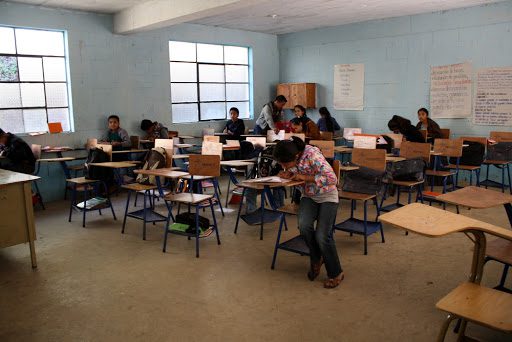
    one of my classrooms, but not my students

    I love teaching, and I love the students. Some of them struggle with the basics, and some of them are whipsnap smart. I have zero discipline problems.

    My default work involves hanging out in the library and in the teachers’ room, visiting, asking questions, and observing how the school is run.
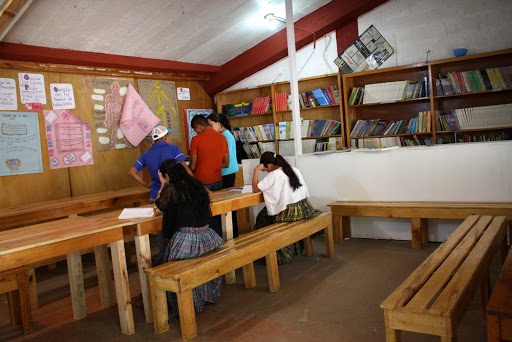
    the library and its single wall of books

    Some days it’s excruciatingly boring, and other days it’s lots of fun.
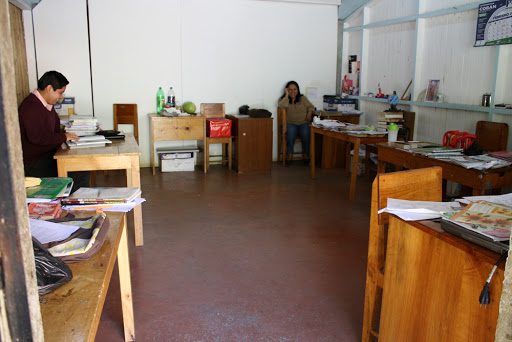
    the teachers’ room
    (I’m not sure why the picture turned out so light—it’s more of a hobbit’s hole.)

    The teachers are friendly, generous, and welcoming. One morning I took in a bag of hot biscuits and jam. In return (or maybe, just because), they tell me the best un-touristy vacation spots, how to cook the new-to-me vegetables, and laugh at all the dumb stuff I say.

    I’ve been interviewing students, finding out their experiences at Bezaleel, and, in particular, in relation to MCC’s Saturday Vocational Arts program. The students love the final step of the interview process: getting their pictures taken.


    Virginia, age 11

    Antonio, age 16

    I’m hoping to find ways to tutor some of the students who have a faulty educational background. Also, I’d like to start a mid-week baking class for the 4th grade girls.

    My husband spends his days helping out the maintenance guys.

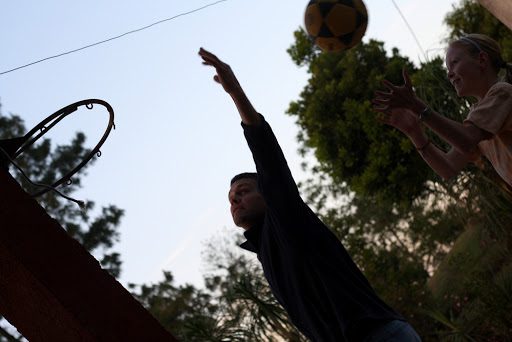
    For a couple weeks, some masons were redoing the concrete court, so he helped with that.
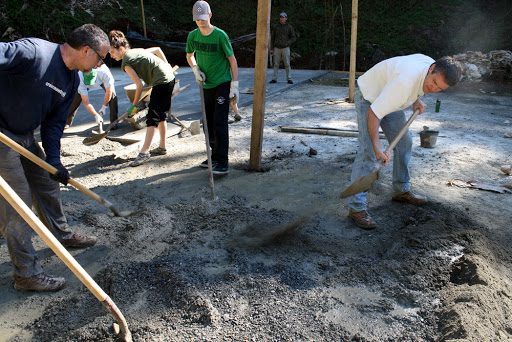
    The high school students from Canada helped, too.

    He’s been making cake pans out of tin and wire for the baking class, and he wants to teach the students to make them themselves. These days, he’s been working at organizing and sorting the storage shed.

    He’s hoping to teach carpentry to the 4th grade boys (for some undetermined reason, the entire 4th grade class is not participating in the vocational arts program), and to help build a carpentry workshop for the school while including the students in the process.
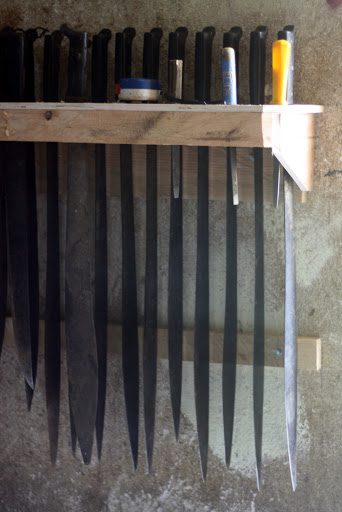
    newly organized machetes

    While we were originally sent to provide support to the Saturday Vocational Arts Program, we have not been able to find our niche in that particular area. They already have teachers and classes lined up, and it seems to be running smoothly, so my husband goes for part of the day while I usually stay home with the children who, by the end of the week, are in desperate need of an unstructured day.

    There’s lots of work to be done at the school, but the way to accomplishing it isn’t very straightforward. Therefore, it’s kind of hard to talk about our work in terms that people back home will be able to relate to, and so I keep quiet. However, don’t equate my silence with lack of trying! We are constantly wrestling with the issues at Bezaleel, looking for ways to fit in and be helpful without taking over or bulldozing the local culture.

    There. Are The Masses sufficiently placated?

  • to market, to market

    Chamelco has a great little market. It’s one, large block-sized building packed with stalls, meat shops, and little comedores (eateries). There’s a second story that I’ve never explored, and on market days (Monday and Friday), the surrounding streets are so thick with vendors that the roads are shut down. (The market is open seven days a week, but outside vendors only flood the place on official market days.)

    My husband and I pass through the market on our way to and from work. We always put a market bag or two—large, reusable plastic-weave bags with handles—in our backpacks. This way we’re always prepared to haul whatever it is that catches our eye and strikes our fancy. Yesterday morning on the way to work, I bought two pounds of popcorn and a pound of spicy peanuts (and two bottles of imitation vanilla, one light and one dark, to experiment with) from a bulk foods vendor. That afternoon, my husband was assigned the task of getting some fruit. He came home with a watermelon, pineapple, tangerines, and mangos.

    The other week, I photographed the contents of my market bag for your viewing pleasure.

    This is a limón, otherwise known as a giant green lemon:

    But it’s kind of like a lime, too. Except limes are really small and dark green. So really, I don’t know what this is exactly. I squirt some of the juice over my mashed avocados and the rest of the juice (and there is certainly a lot of juice), I mix with sugar and water for a juice. Each one costs about a quetzal, or US$0.13.

    The green beans cost Q3.50 (about US$0.45) a pound. They are tougher and a bit more fibrousy than the green beans we grow at home, but given a long boil in salted water, they are equally delicious.

    Cilantro (Q2.50 or US$0.32) is everywhere. I see it growing it corn patches, and the market women have large baskets filled with the herby bunches of green goodness. (Cilantro Haters, you are missing out so bad.) I chop the cilantro into fresh tomato salads or mix it with avocado or flurry it over the supper tacos. Invariably, I end up throwing part of the bunch away—they are big and I can never seem to use it all before it goes yellow-limp on me.

     Bananas: we can’t get enough of ’em. They usually cost about Q0.50 or US$0.07, each, but sometimes our neighbors give us bunches of bananas for free. I prefer the locally grown bananas even though their peels are crusty, sticky, and black. The fruit is more yellow and sweeter, and doesn’t go all mushy as fast. These bananas that you see above are white bananas, the same kind that you get in the states. Here, they seem to go bad awful fast, so I try to buy them on the green side and use them up quick. Which isn’t too much of a problem—the other morning my youngest ate five.

    Broccoli runs about Q2 (US$0.26) a head, but the other day I got some heads for one quetzal each. I always have a couple heads on hand for roasting, boiling, or turning into a favorite cheesy potato broccoli soup. They are like candy.

    The broccoli (and all other fruits and vegetables) is heavily sprayed, so there are no worms, bugs, anything. I wash/soak all fresh vegetables with a liquid soap that’s designed specifically for this purpose. I have no idea how well it works (and I’m washing the food in unpurified water), but we haven’t gotten sick yet.

    Potatoes and tomatoes: I feel naked if I don’t have any on hand. Potatoes cost about Q2.50 (US$0.32) a pound. They are always new potatoes, and their skins are pale golden and delicate. The other day I bought two one-pound bags of new baby potatoes for Q2 each, perfect for drizzling with oil and roasting, which I did.

    Tomatoes are always Roma and always delicious. They cost about Q4 (US$0.52) a pound. I slice them up to add to our cheese sandwiches, or, today, tuna sandwiches, and we eat them in homemade salsas, soups, and curries.

    We are coming to the end of avocado season. These avocados I bought were extra large, and, it turned out, rotten. I prefer the hard, crusty, perfectly round avocados that pop open when you give them a good squeeze. The little ones usually cost about one quetzal each, though I think, if I’m remembering correctly, that I once bought four for one quetzal from a street vendor (US$0.03 each!).

    Tostadas: not a fruit or vegetable, but a market purchase nonetheless. Some students served us chicken-topped tostadas for Valentine’s Day, and they were so good that I stopped by the market that evening to buy some for ourselves. They’re just fried tortillas (Q15, or nearly US$1., a bag). The vendors have them hanging around the tops of their stalls.

    To eat, I smear each tostada with a scoop of refried beans, a drizzle of sour cream, some grated cheese, a blob of salsa, some guacamole (for me only), and then we chow down. Once the beans run out, we eat them plain, broken into bits and dipped in salsa.

    Along with watermelons, cantaloupes, papayas, and honeydew melons, pineapples are everywhere. Each pineapple costs between Q10 and Q15 (US$1.30-1.95), depending on size. They are juicy, sweet, and delicious.

    Some sunny market morning, I’d love to go to town with my camera, both literally and figuratively. Give you a real
    eyeful. But I don’t know. Playing the role of tourist makes me feel loud and obnoxious.So, we’ll see… Maybe eventually, some day when I can summon the necessary devil-may-care attitude.

    Update: my husband just not-so-kindly informed me that my numbers are completely off. So now I’m re-doing the math part. (Actually, he’s helping me do it. I’m hopeless.) (If you want to be a fact checker yourself, it’s 7.8 quetzales to 1 US dollar.)

  • grocery shopping

    One of the things that has been difficult for me to adjust to is the grocery shopping. In the states I had two large freezers, one large refrigerator (with yet another freezer up top), a basement stocked with dozens of jars of canned goods, and a pantry stuffed to the brim with sacks of oats, wheat, gallons of oil, etc. Here, I have one medium-small refrigerator with a small freezer on top, a few small baskets for storage, and no stash of home-canned/frozen foods to draw upon.

    Oh, and no vehicle. (How I long for the ease of loading up the back of a van with bag upon bag of groceries and then driving directly to wherever it is I want to go, no waiting, no paying, no walking, no hauling, no flagging down of taxis or buses, no getting my toes squashed…)

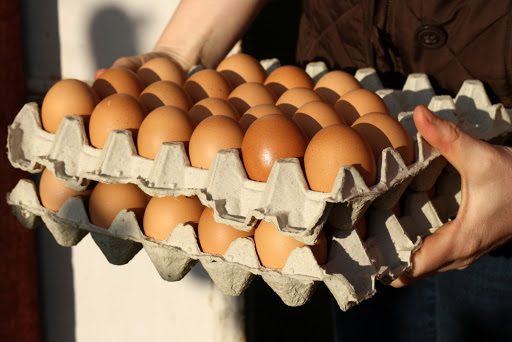
    This means that anything purchased in town has to be lugged—via taxi, bus, or foot—to our house. A gallon of milk is heavy. An open flat of 30 eggs is cumbersome. A watermelon, two pounds of potatoes, a bag of sugar, and a bottle of oil will break your back, given a mere twenty minutes of toting.

    jelly and peanut butter: the empty containers make perfect drinking glasses

    That, combined with the sticker shock—Q22 for a box of cornflakes! Q42 for 8 ounces of cheese! Q26 for a 3-quart jug of milk (it’s about Q8 to the US dollar, so even though the prices might be reasonable, or even cheaper than in the States, it feels everything is through-the-roof expensive)—means that I can hardly stand to buy more than one of each item. “Stocking up” means spending hundreds of quetzales in one quick go which is oftentimes more than my psyche can stand.

    So…here’s how I do it. Every day on the way back through town, I (or my husband) pick up some groceries. If we space out the acquisition of the melons, flats of eggs, jugs of milk, loaves of bread, and dozens of bananas, then it doesn’t feel quite so overwhelming.

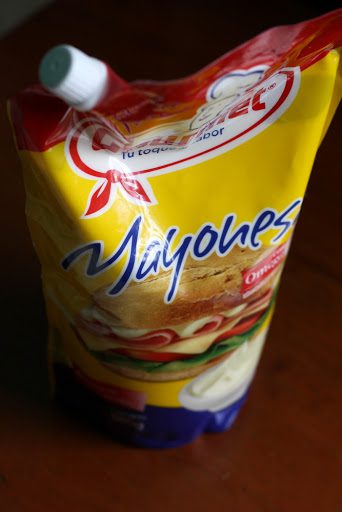
    mayonnaise: the condiment of choice in these here parts

    Despensa Familiar is the name of the one grocery store in Chamelco. If I understand correctly, it was recently bought out by Pais, another grocery store chain, which, in turn, is owned by Walmart. Which means that I get my groceries at Walmart.

    shelf-stable regular and lactose-free milk: we keep a collection always on hand, for just in case

    La Despensa, however, doesn’t look anything like a Walmarts in the States. In our little Despensa, there are about three aisles of food (about half of which is cookies, soda, and candy), and tiny sections each of produce, meat, and frozen goods. There are several aisle of toilet paper and shampoos.

    fabulous, wonderful, oh-so-delicious honey

    Upon entering the store, shoppers are required to place all bags and packages into one of the lockers right inside the entrance. There are keys dangling in the locks—lock your stuff up, take, the key, go shopping, and then fetch your stuff before exiting the store, leaving the key in the lock for the next person. The couple of bored guards stalking around the entrance are added protection should the locks not be adequate.

    Once the stuff is safely stashed (often times I feign cluelessness and keep my backpack on my back—I have yet to be reprimanded), I grab one of the drag-along-behind wheel-y baskets and begin the task of searching high and low for grocery items. Often on my list: oil, butter, yogurt, milk, cornflakes, bread, rice, baking powder, spaghetti sauce, pasta, coffee, jelly, flour, sugar, crackers, raisins, etc.

    an eight-ounce block of butter: it’s good

    At the checkout line, the cashier runs everything through and plops it into baskets. If I want plastic bags, I have to tell her how many and she’ll scan them, too—each one costs a few pennies. After paying, I haul my basket of goods over to the counter by the door and bag them up. I retrieve my stuff from the lockers, nod to the guards, and stagger out the door, past the destitute father and daughter crouching along the wall under the sign that cautions parents against leaving their children unattended in cars (see, this is Walmart!), and across the mostly empty parking lot to the road and the line of waiting, beat-up taxis.